Palm trees and forests? A new future for the Antarctic
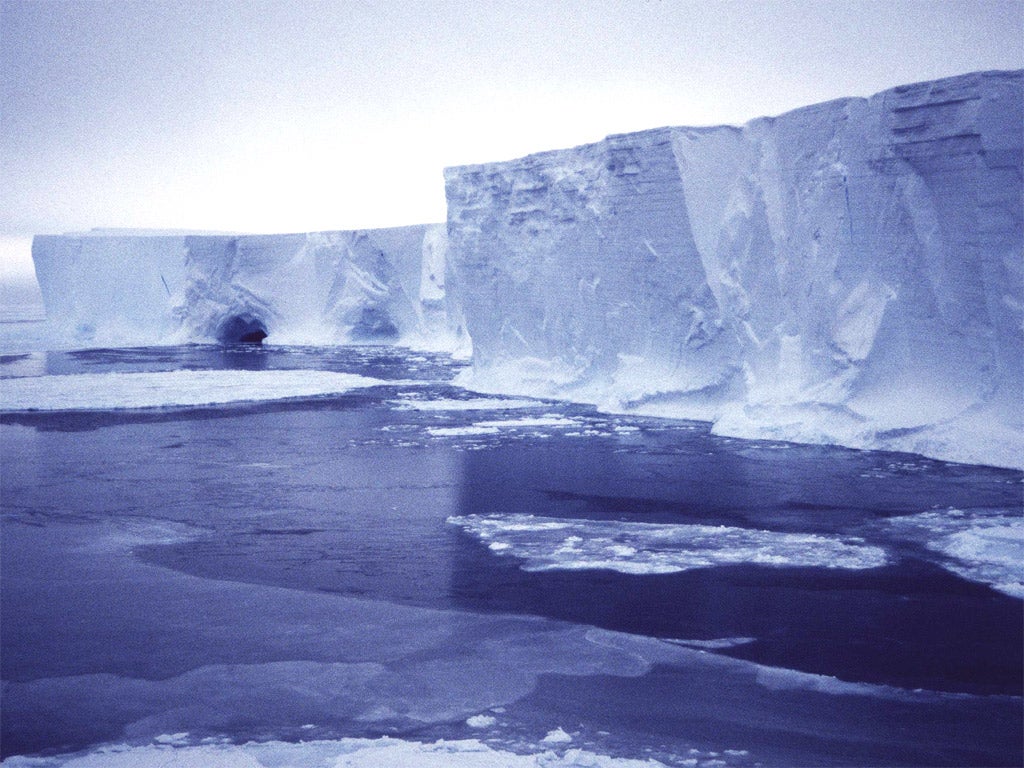
Palm trees could grow in the Antarctic if climate change continues unabated, new research has shown – just as they did 55 million years ago.
A study has found that similar trees grew in the region during the early Eocene epoch, when the area had a near-tropical climate with frost-free winters, even in the polar darkness. Global levels of the principal greenhouse gas, carbon dioxide, were nearly three times as high then as today.
It has long been known that the start of the Eocene was a "thermal maximum", one of the hottest periods in Earth's history, and that Antarctica as a continent would have been ice-free and much warmer than at present.
But the new findings, based on sediment cores taken from the Antarctic seabed and disclosed today in the journal Nature, have enabled the first-ever detailed reconstruction of its environment and thus its climate.
This was previously impossible because any Eocene sediments remaining on land were destroyed by the subsequent glaciation of Antarctica, or covered with thousands of feet of ice. But pollen grains were washed, blown or transported by insects on to the shallow coastal shelf, where they settled in the mud and were preserved for 50 million years.
Analysis of the pollen in the sediment reveals two plant environments, one being a lowland, coastal warm rainforest similar to that in northern Australia or New Guinea, dominated by palms, tree-ferns and members of the Bombacoideae family, which include the famous baobabs of Africa.
The other was an upland, mountain forest region, further into the continent's interior, with beech trees and conifers.
The presence of the various plants indicates that temperatures on the Antarctic coast were around 16C and summers reached a balmy 21C. Antarctica was in nearly the same position it now is, over the South Pole, so the winter months would have been dark, like today, but the presence of the flora indicates it was warmer than 10C, even during the coldest and darkest months.
The study was carried out by a team of 36 scientists involved in the Integrated Ocean Drilling Research Programme, a project set up to research the early Eocene climate. Off the coast of Wilkes Land, they dropped a drill through 4km of water, then bored 1km into the ocean floor to collect the sediment samples.
Dr James Bendle, of the University of Glasgow, one of the authors of the study, said: "The samples are the first detailed evidence we have of what was happening on the Antarctic during the Eocene, this vitally important time.
"Our work carries a sobering message. Carbon dioxide levels were naturally high in the early Eocene, but today CO2 levels are rising rapidly through human combustion of fossil fuels and deforestation. Atmospherically speaking we are heading rapidly back in time towards the Eocene."
Bleak but beautiful: Antarctica today
The vegetation of Antarctica today could not be more different from its state in the Eocene epoch. There are no trees and shrubs on the continent, and only two species of flowering plants, pearlwort and hair grass, are found along the western side of the Antarctic Peninsula. But lower plants are comparatively plentiful: there are more than 300 species of lichens and about 100 species of mosses. The continent of Antarctica, with 5.4 million square miles, 98 per cent of it ice, is the fifth largest after Asia, Africa, North America and South America.
Join our commenting forum
Join thought-provoking conversations, follow other Independent readers and see their replies
Comments
Bookmark popover
Removed from bookmarks