Phase out coal and burn trees instead, urges leading scientist
Current targets on emissions are 'a recipe for global disaster, not salvation'
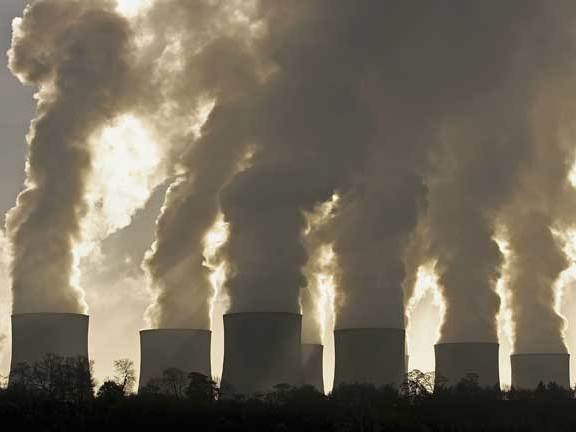
Humanity must urgently embark on a massive programme to power civilisation from wood to stave off catastrophic climate change, one of the world's top scientists has told The Independent on Sunday.
Twenty years ago, Professor James Hansen was the first leading scientist to announce that global warming was taking place. Now he has issued a warning that a back-to-the-future return to one of the oldest fuels is imperative because the world has exceeded the danger level for carbon dioxide in the atmosphere.
Growing trees, which absorb the gas from the air as they grow, burning them instead of fossil fuels to generate electricity, and capturing and storing the carbon produced in the process is needed to get the greenhouse effect down to safe levels, he says.
Professor Hansen's assertion that there is too much carbon dioxide in the atmosphere will alarm governments and environmentalists, who are concentrating on the already daunting task of limiting its build-up, while allowing it to rise well above present levels. However, his views will command respect because, as director of Nasa's Goddard Institute for Space Studies for the past 27 years, he has been one of the few climate scientists ready to risk his reputation by openly stating what many suspect to be true.
In 1988 Professor Hansen put global warming on the political agenda by telling the US Congress that he was "99 per cent certain" that human activities were warming up the planet. It took the Intergovernmental Panel on Climate Change until last year to catch up, by which time nearly two vital decades had been lost.
In the UK last week, his evidence helped to secure the acquittal of six Greenpeace activists charged with causing criminal damage to the Kingsnorth power station in Kent.
The level of carbon dioxide stands at 385 parts per million (ppm), about 100ppm above what it was at the start of the Industrial Revolution. It is rising by about 2ppm a year. The most ambitious international efforts focus on stabilising it at 450 ppm, though few see this as achievable.
But Professor Hansen says this goal "is a recipe for global disaster, not salvation" and that present levels have already "brought us to the precipice of a planetary tipping point". He adds: "If we go over the edge we will transition to an environment far outside the range that has been experienced by humanity, and there will be no return within any foreseeable future generation."
He is convinced that 350 ppm is the absolute maximum that will avoid the loss of the polar ice sheets and other disasters. He says that all coal power stations must be phased out by 2030, unless they are equipped with special "carbon capture and storage" equipment that stops the gas escaping into the atmosphere. If that was done, the level could be stabilised at 400 ppm. After that, a vigorous programme of planting trees to suck up carbon dioxide – coupled with the use of carbon capture equipment when the trees are burnt, and improvements in agricultural practices – could get levels down to 350 ppm "within a century".
Join our commenting forum
Join thought-provoking conversations, follow other Independent readers and see their replies
Comments
Bookmark popover
Removed from bookmarks