Prescott: cutting emissions by 80% will not be enough
Warning by former minister who helped broker Kyoto Protocol
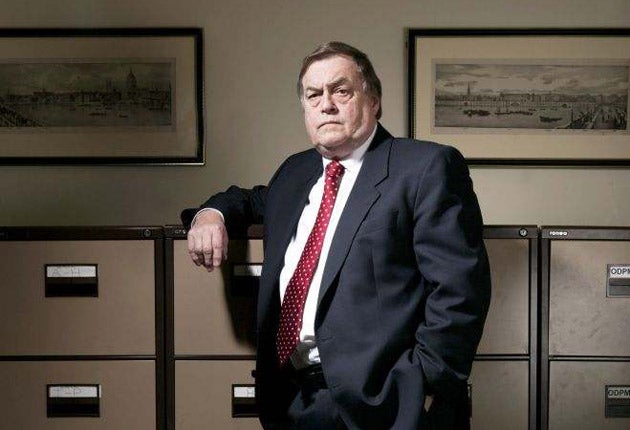
Europe's climate targets of cutting carbon emissions by 30 per cent by 2020 and 80 per cent by 2050 may not be tough enough to get developing countries into a worldwide global warming deal, John Prescott has warned.
In an interview with The Independent, the former Deputy Prime Minister, who brokered the current climate treaty, the Kyoto Protocol, said a 90 per cent cut might be needed in order to secure an agreement at December's UN climate conference in Copenhagen.
Countries such as India are likely to ask rich Western countries to cut back on atmospheric CO2 still further so that developing countries can continue to expand their economies and pull more of their people out of poverty, said Mr Prescott, who has taken on an influential new role as the rapporteur on climate change for the Council of Europe.
They believe the developed world has done most to pollute the atmosphere, and so developed countries should do most to clean it up, Mr Prescott said – adding that he thought the European Union targets might have to be toughened to a 40 per cent interim cut by 2020 and a 90 per cent cut by 2050. Otherwise, he said, India, China and other developing countries would not agree to cut their own emissions in a new climate treaty.
Mr Prescott knows all about how to reach climate deals having played a central role in brokering the Kyoto agreement in December 1997 after negotiations in the Japanese city had reached deadlock. Now he is returning to a major role in climate politics; both with the Council of Europe, which is holding its own pre-Copenhagen conference in Strasbourg later this month, and in the UK. From 21 September, he will be touring English schools lecturing on the importance of the meeting, and this week he is in China giving a speech on the need for a climate deal at Xiamen University.
Mr Prescott said that the European model of future cuts – already regarded as very demanding to some developed countries – would not be tough enough to bring the developing world on board at Copenhagen, where the international community will seek to replace Kyoto with a treaty that is capable of keeping the temperature rises of global warming to below C, thought to be the maximum that society can safely endure.
"The targets we've set are not going to be accepted by the developing countries as fair," Mr Prescott said. "Europe has set a 20 per cent cut as an interim target, which will become 30 per cent if we reach a deal at Copenhagen, but the developing countries are likely to say it should be 40 per cent, and 90 per cent as the long-term target.
"The current European figures, which I take to be the template, are not enough to make an agreement with the developing world. I don't think there's any doubt about it – the rich countries have got to give more on emissions. The heart of the developing countries' argument is: 'You carry the highest burden because you're the polluter'. And India's being much more truculent about this, saying, 'Listen, you should clear it up while we get on with our development'."
Mr Prescott believes that equity has to be central to any deal – that is, the sharing out of the amount of carbon emitted globally, without causing a climate catastrophe, must be fair.
But he is aware that there are many obstacles to an agreement. Europe's proposed cuts, never mind not being tough enough for China and India, may be seen as too tough by some of the rich countries. "Securing a deal will be 10 times more difficult than Kyoto," he said. "But the climate change we're experiencing across the world has been caused by developed counties. They must now recognise that the polluter pays."
Join our commenting forum
Join thought-provoking conversations, follow other Independent readers and see their replies
Comments
Bookmark popover
Removed from bookmarks