Welcome to the age of extremes

Recent weather disasters are consistent with a warming planet, says Steve Connor. Could the trouble have started already?
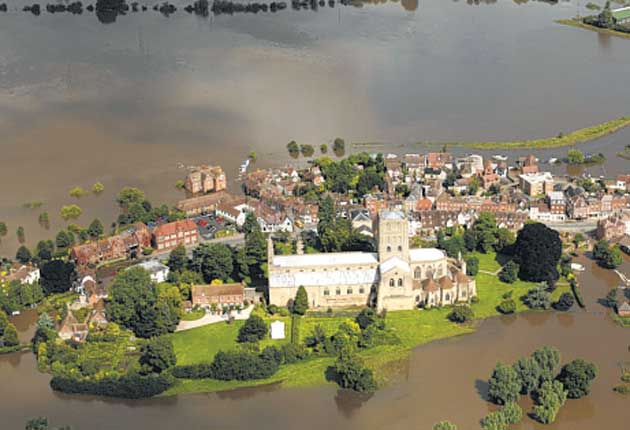
The difference between climate and weather is one of scale. Climate is what happens over decades, centuries and millennia, whereas weather occurs on the human timescale of hours, days and weeks. Climate is what you expect, and weather is what we get, and this is the rub when attributing any single extreme event, such as a flooding or a drought, to global warming.

As events in Cumbria have shown, with its record 24-hour rainfall, the weather is full of surprises. This is because it is essentially a chaotic phenomenon with a wide, natural variability. It is not for nothing that the science of chaos theory is so often illustrated by the apocryphal story of a butterfly in Brazil causing a hurricane in Florida. Small perturbations in one part of the global climate system can have far-reaching consequences for weather patterns in other parts of the world. As more energy in the form of heat enters the system, climate models run on computers suggest there will be more weather extremes.

The signs of climate change are all around us, such as the melting of mountain glaciers and Arctic sea ice. But the question is whether it has already begun to trigger the extreme weather events predicted. A growing body of expertise suggests that it has.

"The evidence is growing that damaging climate and weather events – potentially intensified by global warming – are already happening and beginning to affect society and ecosystems," says a recent joint statement by the Royal Society, the Met Office and the Natural Environment Research Council.

The heatwave in western Europe in 2003, which killed more than 35,000 people, is widely considered to have been too extreme to have been part of the natural variability of the climate. By 2040, such temperatures may have become commonplace, and could be considered unusually cool by the 2060s.

Computer models also predict that, in a warmer world, Britain will be at risk of both droughts and flooding. The apparent contradiction is explained by changes to the rainfall pattern. Summer rainfall totals have already declined, as the models predict. Yet when it does rain there is a greater chance of it falling as intense downpours.

Sea levels around Britain have risen by about 10cm since 1900 and are expected to rise further by between 11cm and 76cm by the end of the century. This, combined with the threat of storm surges and swollen rivers, increases the flooding threat to coastal towns and estuaries. But the situation is far more serious in those countries that are even more vulnerable to sea-level rise, such as Bangladesh, the Maldives and other low-lying island states where there is literally nowhere to retreat from the rising salt water.

Some scientists believe that hurricanes and typhoons will become more frequent and more intense in a warmer world, since hurricanes are triggered by high sea-surface temperatures.

One of the greatest fears is that global warming could trigger large-scale changes to weather patterns affecting crop production. There are already signs in sub-Saharan Africa that semi-arid regions are becoming uninhabitable. Some scientists fear that changing patterns in the wind and ocean circulatory systems may lead to the failure of the Indian monsoon, on which hundreds of millions of people depend for food.

"In the absence of action to mitigate climate change," says the joint statement, "we can expect much larger changes in the coming decades than have been seen so far."

The weather has always broken past records and will continue to do so. But in a warmer world, we are destined for even greater extremes and more uncertainties. Above all, we must expect the unexpected.

Independent Comment
blog comments powered by Disqus
News in pictures
World news in pictures
From the blogs

Dish of the Day: Could new brews win over craft beer drinkers?

Cask ale brewers don’t come much bigger than Marston’s. In fact the brewery, which also owns thousan...

Nadine Dorries’s new business: an engineering consultancy that has become a media consultancy

Nadine Dorries talks freely about many things, but not whether she was paid to go on I'm a Cleberity...

Children’s Books: Recommended read – ‘A Monster Calls’ by Patrick Ness

Thirteen-year-old Conor awakes in bed one night to discover that the yew tree outside his house has ...

Made in Chelsea – Series 5, Episode 11: Louise plays and wins at Spencer’s game

It’s hard not to feel sorry for doe-eyed Andy. He spends months pining after Louise, has huge nostr...


iJobs Job Widget
iJobs General

Senior Electrical Engineering Consultant – Renewable Energy Grid Connections.

Negotiable Depending on Experience: The Green Recruitment Company: The Green R...

BREEAM Consultant

£25000 - £30000 Per Annum: The Green Recruitment Company: The Green Recruitmen...

Design Engineer - ProE, Hand Calcs

Negotiable: Progressive Recruitment: Dear Sumadhab, A growing engineering comp...

Year 6 Teacher / Year Group Leader

Negotiable: Randstad Education Ilford: We are currently recruiting for a Year ...

Day In a Page

Beards, brawn and body art

Beards, brawn and body art

Meet London’s new batch of male models
Scandi-geeks descend on Nordicana for fan-convention

Scandi-geeks descend on Nordicana for fan-convention

British love of shows such as The Bridge, Borgen and The Killing shows no sign of fading
Behind the rhetoric what is really being done to combat desertification?

The Great Green Wall of Africa,

Behind the rhetoric what is really being done to combat desertification?
Laughter Inc: the cheering growth of the chuckle industry

Laughter Inc

The cheering growth of the chuckle industry
The bad science scandal: how fact-fabrication is damaging UK's global name for research

The bad science scandal

How fact-fabrication is damaging UK's global name for research
To the manor born: The female aristocrats battling to inherit the title

Female aristocrats battle to inherit the title

A passionate protest is gathering pace among the women of Britain's aristocracy, who believe that men should no longer automatically inherit the family pile and title.
Love struck: Photographs of JFK's visit to Berlin 50 years ago reveal a nation instantly smitten

In pictures: JFK's visit to Berlin in 1963

Photographer Ulrich Mack accompanied Kennedy on the entire trip. The results are an astonishing record of a watershed moment.
Eat shoots and leaves: Mark Hix gets creative with fresh peas, mangetouts and sugar snaps

Mark Hix gets creative with English peas

English peas and their offsprings, such as mangetouts and sugar snaps, are great tossed into a salad, says our chef.
Ceviche with a smile: Chef Martin Morales has turned South America's elegant cuisine into one of London's hottest food trends

Chef Martin Morales: Ceviche with a smile

Morales has turned South America's elegant cuisine into one of London's hottest food trends
Incredible edible: Guerrilla gardeners are planting veg for the masses in West Yorkshire

Incredible edible: Guerrilla gardeners

Holly Williams joins the volunteers who have turned a small town into a thriving community with a guerrilla gardening scheme that has provided a blueprint for sustainability.
Seasoned to taste: The restaurants that draw happy diners back year after year

Seasoned to taste: Food institutions

In an industry famed for short-lived success and pop-up pretenders, it takes something special to stick around.
Anatomy of a waiter: Service staff spill the secrets of their trade

Anatomy of a waiter: Staff spill their secrets

Next Sunday is the first ever National Waiters' Day. To celebrate, we share tales from the restaurant trenches by those in the front line.
Drink in the sun: The season's best wines

Drink in the sun: The season's best wines

From complex English sparkling wine to juicy Sicilian reds...
Iran election: Farewell Mahmoud Ahmadinejad, we’ll miss you – but not that much...

Robert Fisk

Farewell Mahmoud Ahmadinejad, we’ll miss you – but not that much...
India sends its final telegram -(Stop)-

After 163 years India sends its final telegram -(Stop)-

Mobile phones and the internet have superseded the once-essential service