Budget cuts may trigger 'perfect storm' of threats to UK wildlife
Conservationists voice concern as environmental policy faces massive shake-up

Sign up to the Independent Climate email for the latest advice on saving the planet
Get our free Climate email
Britain's countryside and wildlife face a looming "perfect storm" of threats to environmental protection, conservationists warned tonight.
The threats are headed by the possibility of massive cuts to EU funding for farmland wildlife schemes, which provides hundreds of millions of pounds annually to help British farmers look after the often-declining species on their land, from birds to butterflies to bumblebees.
The cuts may be outlined this week when EU leaders, including David Cameron, meet in Brussels to decide their budget for the next seven years – a budget which seems certain to be slashed.
But also greatly concerning environmental campaigners is the real possibility that the Government’s wildlife watchdog, Natural England, will be swept away and merged with the much bigger Environment Agency.
If this happens, it will be the first time since 1949 that there will no longer be a dedicated official body acting as a champion for habitats and species.
At the same time, local authorities are making swingeing cuts to their own environmental services and staff, an extensive new road-building programme is threatening valuable wildlife sites, and Conservative ministers are looking again at the possibility of undoing powerful EU wildlife laws which provide the strongest countryside protection of all in Britain.
Any of these threats would concern wildlife lovers, but the fact that they are all coming together has senior conservationists seriously alarmed.
“We may be witnessing the greatest shake-up in environmental protection for a generation,” said Martin Harper, director of conservation at the Royal Society for the Protection of Birds (RSPB).
The greatest concern among environmentalists centres on possible EU funding cuts. Funding for agri-environment schemes from the Common Agricultural Policy (CAP) is the biggest single pot of money for wildlife protection available in Britain.
About £450m is spent annually on these “Environ- mental Steward- ship” schemes in England alone, 75 per cent of it coming directly from Brussels (with the rest put in by Whitehall), with another £70m-plus spent on similar schemes in Scotland, Wales and Northern Ireland.
They have made a real difference in enabling farmers to repair much of the damage caused by intensification of agriculture – bringing back birds whose populations have been devastated, such as the skylark, and in particular the rare cirl bunting, whose recovery would have been otherwise impossible.
But when EU heads of government meet in Brussels on Thursday they seem certain to reduce the Union’s overall budget. Reduced funding for CAP is a likely consequence, with the parts of the programme that protect farmland wildlife particularly vulnerable. During the November budget negotiations, EU leaders discussed cuts of 13 per cent.
Analysis by the RSPB, however, suggests cuts might be as much as 23 per cent over the whole budget period, which the society thinks could prove disastrous.
The other threats are causing similar concern. The Government’s public consultation exercise on the future of Natural England closes today and many observers think it will be swallowed by the Environment Agency, meaning the independent voice for wildlife and landscapes will disappear with the larger body.
Local authority cuts to environment services and staff include proposals from Somerset County Council to cut the whole of its countryside service, and major losses of countryside rangers in London boroughs such as Ealing, Barking and Dagenham, while the Government’s new roads programme will, according to the Campaign for Better Transport, impact on four National Parks, seven Areas of Outstanding Natural Beauty, 39 Sites of Special Scientific Interest, three National Nature Reserves, 54 ancient woodlands and 234 local wildlife sites.
It is also clear that some members of the Government still wish to weaken the Habitats Regulations, which transpose EU wildlife laws – setting up Special Protection Areas and Special Areas of Conservation – into British law. These laws form the toughest environmental protection of all in the UK. In November 2011 the Chancellor, George Osborne, said the rules “place ridiculous costs on British business”.
In his major speech on Europe last month, Mr Cameron hinted that these rules might be on the table during his planned renegotiation of Britain’s relationship with the EU: “We need to examine whether the balance is right in so many areas... including on the environment,” he said.
If the cap fits: EU wildlife funding
The European Union money for wildlife matters enormously.
The agri-environment schemes funded by the CAP have spread extensively, and latest figures show they now cover a record 6.5 million hectares of England, which is 70 per cent of the farmland. About 60,000 farmers take part in the schemes, which are split into the basic Entry Level Stewardship and the more ambitious (and better rewarded) Higher Lever Stewardship, both of which began in 2005.
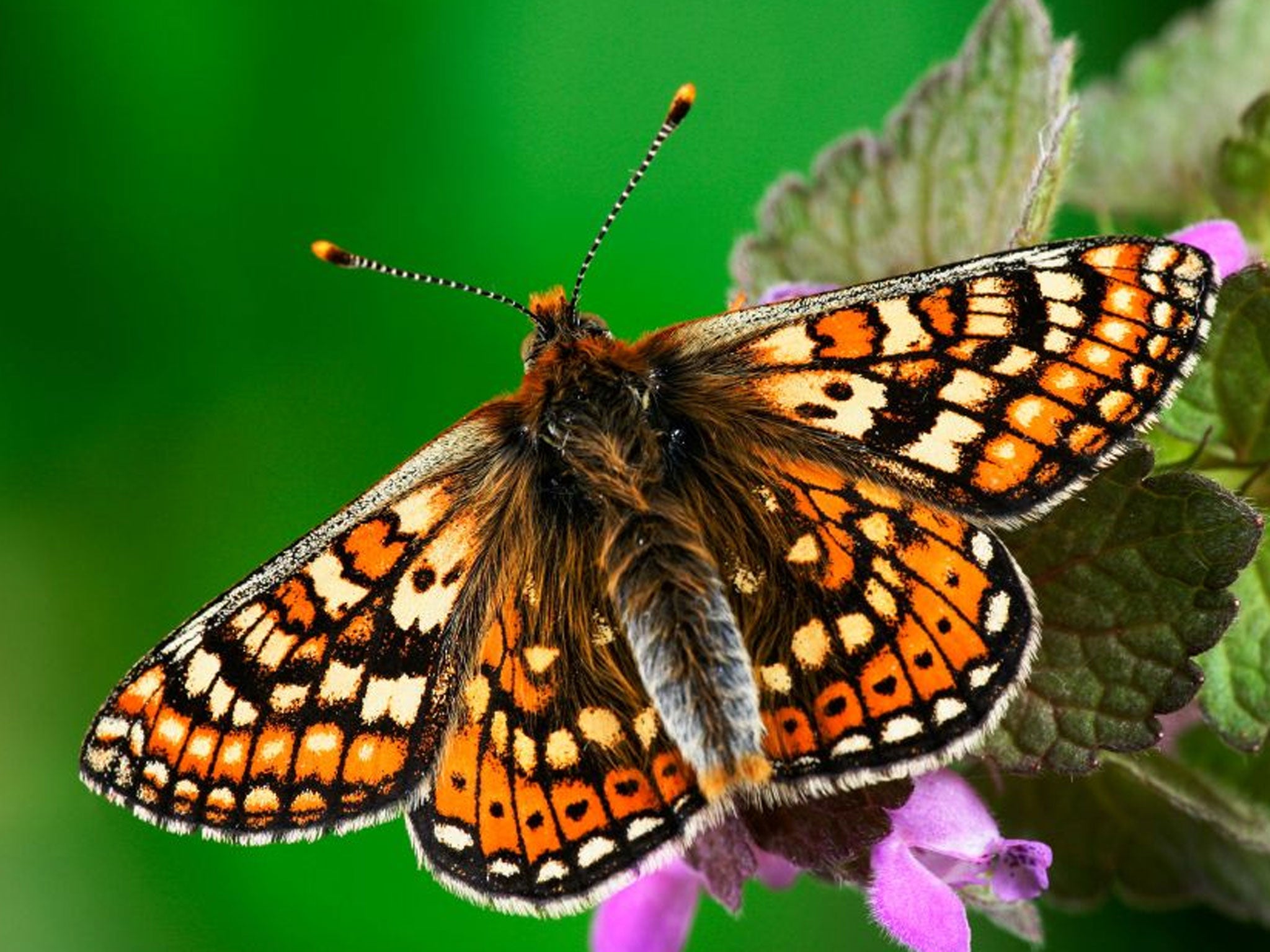
The HLS schemes in particular are making an enormous difference in bringing many species that had nearly vanished back to the countryside. The cirl bunting in Devon is one example, along with the marsh fritillary butterfly which is returning to parts of the West Country.
Subscribe to Independent Premium to bookmark this article
Want to bookmark your favourite articles and stories to read or reference later? Start your Independent Premium subscription today.
Join our commenting forum
Join thought-provoking conversations, follow other Independent readers and see their replies