Curry spices for cows and sheep could cut methane emissions
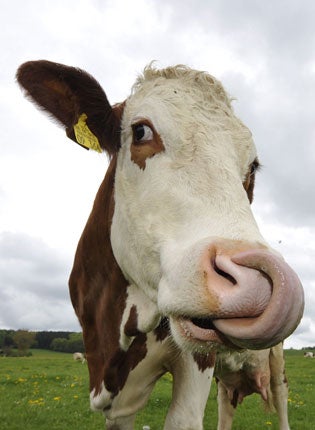
Curry spices could hold the key to reducing the enormous greenhouse gas emissions given off by grazing animals such as sheep, cows and goats, scientists have claimed.
Research carried out at Newcastle University has found that coriander and turmeric – spices traditionally used to flavour curries – can reduce by up to 40 per cent the amount of methane that is produced by bacteria in a sheep's stomach and then emitted into the atmosphere when the animal burps.
Working rather like an anti-biotic, the spices were found to kill the methane-producing "bad" bacteria in the animal's gut while allowing the "good" bacteria to flourish. The findings are part of an ongoing study led by Dr Abdul Shakoor Chaudhry at Newcastle University.
There are around 30m sheep in the UK, each producing around 20 litres of methane a day, emitted by burping. Methane (CH4) is more than 20 times as powerful in terms of causing global warming as the main greenhouse gas, carbon dioxide (CO2). As well as the environmental implications, the sheep itself also loses an estimated 12 per cent of its food energy to methane production, resulting in a lower milk and meat yield.
"Methane is a major contributor to global warming, and the slow digestive system of ruminant animals such as cows and sheep makes them a key producer of the gas," Mr Hasan explained. "What my research found was that certain spices contain properties which make this digestive process more efficient so producing less waste – in this case, methane.
"Spices have long been used safely by humans to kill bacteria and treat a variety of ailments," he added. The study looked at five curry spices – cumin, coriander, clove, turmeric and cinnamon. Each was "ground up" – as if chewed by the sheep – and added to an in-vitro solution mimicking that found in the rumen of the animal. The level of methane released by each was measured against a control.
The most effective was found to be coriander, which reduced methane production from 14 millilitres per gram of food to eight – a drop of 40 per cent. Turmeric produced a 30 per cent reduction and cumin 22 per cent.
Although the research was carried out using bacteria taken from a sheep's gut, Dr Chaudhry said the results are to be mirrored in other ruminants such as cows and goats.
"The rumen fluid in cows and sheep is very similar ...With an estimated 10m cows in the UK, each producing around 500 litres of methane a day, that would be a significant reduction." Antibiotics added to feed were banned by the European Union in 2006.
Dr Chaudry said: "Since antibiotics were banned, the hunt is on for new, safe, cheap ways to reduce methane production in ruminants. Plants like coriander are an ideal solution, especially in parts of the world where expensive treatments are not an option."
Join our commenting forum
Join thought-provoking conversations, follow other Independent readers and see their replies
Comments
Bookmark popover
Removed from bookmarks