It's a greener shade of green: Britain's first organic golf course
Traditionally they use huge amounts of water and pesticides. But now some clubs are trying to be more eco-friendly
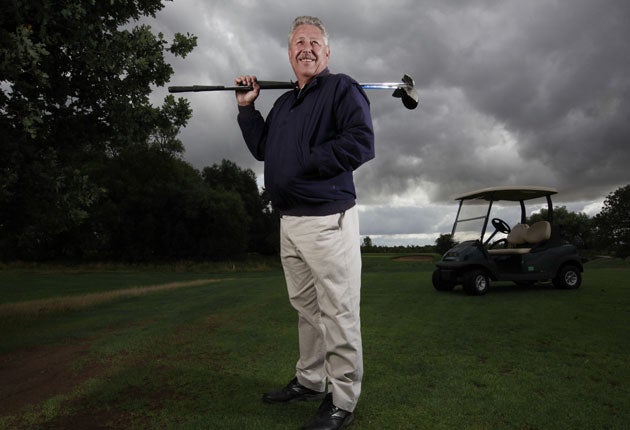
With their diamond-patterned jumpers, neatly pressed slacks and expensive club memberships, most golfers seem to have little in common with the unwashed eco-warrior brigade. The divide between the two groups is not just sartorial, but stems from the fact that many golf clubs use huge amounts of water, disfigure the landscape and use fertilisers and pesticides to keep their greens lush. However, this gulf may soon be bridged, as a Cambridgeshire club which boasts a full-time ecologist, not to mention a resident stoat at the eighth hole, is poised to become the UK's first organic golf club.
The owners of New Malton Golf Club, an 18-hole course, claim it has been chemical-free for a year, and they plan to apply to the Soil Association for organic certification. The course's out-of bounds areas are home to birds, including woodpeckers, kestrels, owls and pheasants, as well as hares. The owners plan to graze animals on the land, while also growing fruit and lavender.
"We don't use any pesticides and have been 100 per cent chemical-free for a year," said the golf course's co-owner Paul Stevenson. "We get water from the River Cam to water the greens... there will be traces of chemicals in it, but we are hoping to find a bore hole to get around that."
While Mr Stevenson claims the quality of the green is unaffected by his unorthodox approach, which involves using citric acid and sugar in lieu of chemicals, experts have questioned whether it is possible to create a quality golf course without the use of some weedkillers. Courses are often afflicted by various species of Fusarium fungus, which produce white rings on the grass, and are a prime breeding ground for anthracnose, a general term for a wide range of plant diseases especially common on turf that is under repeated stress. Golf professionals point out that the trend for chemical-free golf courses is also being undermined by an opposing trend for ever more luxuriant greens.
"We are fighting a marketing drive trend towards lusher, greener and more manicured courses – stimulating golfers to want to play on what they see on TV," said Jonathan Smith, chief executive of the Golf Environment Organisation. "New Malton is showing important leadership in a sector that already understands the need to minimise pesticide use."
Mr Smith points out that some small clubs in rural areas may already be chemical-free, but are simply not advertising the fact.
New Malton's owners believe that forsaking chemicals has economic as well as ecological benefits, saving tens of thousands of pounds a year. And encouraging stoats keeps the rabbit population down. Rabbits can be a blight on golf courses, as they dig up greens.
Environmentalists also object to the vast tracts of land courses take up, as well as the amount of water needed to keep them properly irrigated. A Unesco World Water Development report found that an 18-hole golf course can use as much as 2.3 million litres of water every day. The protests against Donald Trump's plans to build a £750m luxury golf course on the Aberdeenshire coast are testament to the strength of public feeling.
"In northern Europe, environmentalists are very proactive in trying to limit the development of natural land," said Phil Weaver, chairman of the Professional Golfers Association (PGA). "In the PGA, we're keen to have a more environmental approach to the golf industry. I'm not sure organic is totally achievable, but it is a great aim. But the other side of the coin is the member who pays his subscription wants to see the green out there, not a desert as it's not been watered."
However, there are thought to be 140,000 hectares of out-of-bounds areas on UK courses, which environmentalists believe could be put to good use for wildlife. "Some golf courses contain areas of recognised benefit for wildlife, and those areas should be nurtured," said Paul Wilkinson, who heads A Living Landscape at the Wildlife Trusts. "For this reason, it's important that any new golf courses planned do not impact on locally or nationally important wildlife-rich areas."
While numerous environmental certification systems have been set up to acknowledge golf courses that lead the way in terms of chemical reduction, some owners have argued that it is difficult for them to be recognised as fully organic.
"We've been working that way for several years, and talking to the Soil Association," said Colin Webber of Portmore Golf Park in north Devon. "The first thing I had to get over was their preconceptions that golf courses were covered in chemicals. I hit a lot of brick walls." Mr Webber's aim is to reduce the course's carbon footprint, while making it sustainable and massively reducing chemical use.
The Soil Association points out that for a golf course to attain organic certification, it would have to use organic grass seed and fertiliser, and no pesticides.
"The primary purpose of Soil Association's organic certification is to certify farms, food, health and beauty and textile products, so 'new' potential organic areas such as golf courses may present some challenges," said Molly Conisbee, campaigns and communications director at the Soil Association. "Of course, we want to help any organisation that wants to develop itself along sustainable lines - and it is certainly worth looking at how we can make [golf courses] 'greener'."
Many courses are making great strides, with recycling systems increasingly common, particularly on courses attached to hotels. The three courses at the De Vere Belfry in Warwickshire are irrigated using waste water from the hotel, while the new Machrihanish Dunes course on Scotland's West Coast operates a policy of minimal chemical use.
Join our commenting forum
Join thought-provoking conversations, follow other Independent readers and see their replies
Comments