Organic food becomes latest casualty of the credit crunch
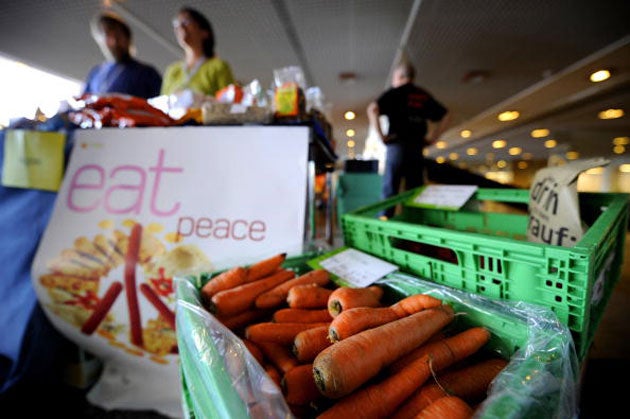
Dairy farmers are turning their backs on Britain's organic milk market as economic pessimism dents consumers' previously buoyant demand for organic produce. The organic goods market at large is being "credit crunched", particularly among new products like organic ready meals and home-delivery vegetable boxes.
Figures show there has been a dramatic reversal in the numbers of dairy farmers converting to organic farming from conventional methods.
Rises of up to 80 per cent in the price of organic feed for dairy herds mean that hundreds of organic milk producers are now running at a loss. So far this year, farms which were undergoing conversion to organic, and were capable of producing five million litres of milk, have abandoned the process and returned to fertiliser-intensive, non-organic farming.
The situation has prompted warnings of shortages and a "mass exit" by existing organic producers unless retailers agree to increase the farm-gate price paid for milk, to ensure farmers can cover rapidly escalating costs. For non-organic dairy farmers, joining the organic movement is no longer an attractive option.
The cost of feed – much of it sourced from as far away as China – has increased by between 50 and 80 per cent to about £400 per tonne. The 36p per litre that an organic farmer receives for milk no longer meets outgoing expenses, while the 28p per litre received by conventional farmers, which represents a substantial increase from the 16p they were receiving 12 months ago, makes non-organic dairy production more attractive.
Organic farmers say they need an increase of at least 4p per litre to return to profitability. However, retailers warn they have little room for manoeuvre in Britain's ultra-competitive supermarket sector.
"The costs being incurred by organic producers are rising much faster than for conventional production," said Richard Hampton, the sales and marketing director of Omsco, Britain's largest organic milk co-operative, which accounts for about 70 per cent of the UK's annual production of 450 million litres.
"The price we get currently for organic milk is not high enough to cover the cost of production. There will have to be an increase in the price that producers receive.
"In this context, it is no longer attractive for conventional farms to convert and we are seeing producers undergoing conversion exiting that process. The concern is that the relatively small number of leavers becomes a mass exit among existing producers."
He added: "There is a real danger that a supply shortage could take hold rather quickly. If just 30 of our larger organic farms revert to non-organic production, we will lose 10 per cent of our supplies."
The warning comes amid the first signs that the economic downturn is affecting the exponential growth in Britain's organic food market, which is worth more than £1.7bn and has grown by 70 per cent since 2002. Despite such expansion, the organic sector still only accounts for about two per cent of all UK food sales.
The Soil Association, which certifies much of Britain's organic food production, said it expects sales growth of about five per cent this year, compared to 30 per cent in previous years. The charity pointed out that the lower figure would still outstrip the general grocery market, which expands at between one and two per cent a year.
"Perhaps it is inevitable that we might see some decline in demand among less deeply committed organic consumers," said Patrick Holden, the director, adding he anticipated "a plateau rather than a reverse".
Industry analysts have warned that specific sectors of the organic market are likely to see a sharp reduction in sales. Organic Monitor, a London-based consultancy, last week predicted a drop in demand for newly established products such as ready meals, frozen foods and confectionery.
An unexpected casualty of price-conscious consumers seeking to do their bit for the environment is the "veg box" home-delivery market. The expansion of home-grown vegetables and allotment-keeping, which has seen vegetable seed sales rise by 10 per cent in the last 12 months, has resulted in a steep fall in seasonal demand for veg boxes.
Guy Watson, founder of Riverford Organic, based in Devon, and one of the largest delivery schemes, said: "It is a bitter irony for us but after so many years of talking about the virtues of growing your own and British produce, people are doing it and it is resulting in a fall in trade.
"We normally see a 20 per cent drop in sales in summer which lasts from July to September but now that period is being extended to from June until November.
"People are still coming to us but it is for more exotic things they cannot produce themselves and that means bigger imports. We have gone from being 85 per cent British to 78 per cent."
Join our commenting forum
Join thought-provoking conversations, follow other Independent readers and see their replies
Comments