Wind farm may be torn down to make way for nuclear site
A Cumbrian village has found itself at the centre of the debate over Britain's future energy policy
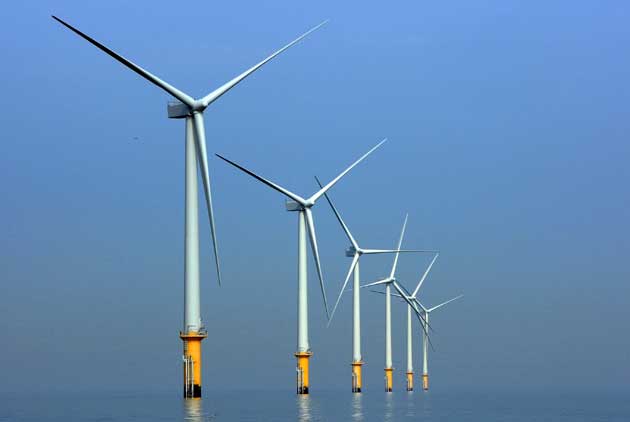
To passionate advocates of the atom and renewable energy alike, this says it all. One of Britain's pioneering wind farms is threatened with demolition to make way for one of the Government's planned new generation of nuclear power stations.
The tall turbines of Haverigg wind farm, only the second commercial one to be built in Britain, have been turning for 17 years between the hills of the Lake District and the waters of the Duddon estuary on the Cumbrian coast. But they also happen to be right on one of 11 potential sites for new nuclear reactors announced by ministers 10 days ago.
And here, not far from Sellafield – on what the Cumbria County Council likes to call "Britain's Energy Coast" – the atom is due to take precedence over the zephyr.
Six of Haverigg's eight turbines actually fall within the proposed footprint of the Kirksanton nuclear power station, where RWE wants to build up to three reactors. The German energy giant confirms that they would have to be dismantled if the power station were built.
The development will delight pro-nuclear anti-wind activists while dismayed environmentalists will see it as an all-too-obvious portent of a switch in government priorities from promoting wind to advancing the atom – and as proof that concentrating on nuclear will cripple renewable energy. "It beggars belief that, at a time when windpower has never been more vital to the UK, a viable wind farm is to be sacrificed on the altar of nuclear power," said Martin Forwood of the campaign group Cumbrians Opposed to a Radioactive Environment.
But RWE countered: "The wind farm currently produces 3.5 megawatts of energy while a nuclear power station would produce 3,600 megawatts, enough to power five million homes. So, from a climate change point of view, if the wind farm had to go it would not be such a bad thing."
Villagers, concerned about the prospect of the power station – one of only two in the country planned for greenfield sites, rather than being built next to existing reactors – appear on balance to favour the wind farm.
People in the tiny village of Kirksanton, just 150 yards from the power station's boundary, have formed a local action group that claims to represent the views of the majority of residents.
"[A nuclear power station] is completely unsuitable due to its proximity to the village and we totally oppose it," Michael Wills, the group's spokes-man, said last night. "We are concerned about the health risks and it will destroy a blossoming tourist industry."
Tim Kendall, representing another action group in nearby Whicham, added: "The wind farm has been here a long time. It's not aesthetically pleasing but we're happy to live with renewable energy.
"The nuclear power station will completely wipe it out because it will be difficult to make it work with large buildings surrounding it. Any development on that kind of scale would be totally inappropriate. It would dominate the surrounding landscape."
Baywind Energy, which operates the wind farm, appears to be resigned to its fate. "We don't want the turbines taken down but we're not sure there is an option to refuse," a spokesman said.
The county council said that it saw the West Cumbrian coast as a future hub of the emerging low-carbon economy but was awaiting the results of consultations with residents before deciding whether to back the Kirksanton plan.
Join our commenting forum
Join thought-provoking conversations, follow other Independent readers and see their replies
Comments
Bookmark popover
Removed from bookmarks