How to really get back to nature
Identifying animals and plants is all very well but binoculars and cameras are ruining our enjoyment of the countryside. Go naked, says Charlie Elder
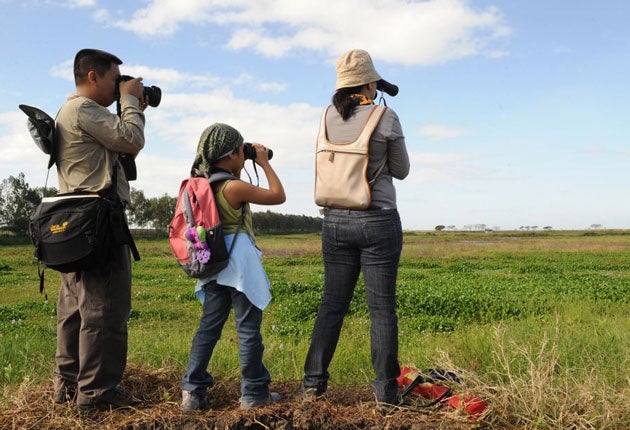
It's time to get naked with nature. No, I'm not advocating turning the great outdoors into a giant nudist camp – God knows the spectacle of Britain's wildlife watchers in the altogether would be enough to send terrified animals fleeing for cover. Instead I'm proposing we learn to appreciate our flora and fauna stripped of binoculars, guides, cameras and all the expectations that can encumber a visit to the countryside – that we get back to basics, and make the rural experience less intimidating and more enjoyable.
One of the pleasures of encountering wildlife comes with being able to identify what we see. Recognising a butterfly dancing over the flowerbeds as a red admiral, distinguishing a bird singing in the hedgerow as a yellowhammer or knowing that the frankfurter-shaped mammal dashing across the path is a weasel enhances our appreciation of the outdoors. Named species become familiar friends.
But, equally, a fixation with pinning a label on everything can make the beginner feel like an ignorant imposter in the countryside, ill-qualified for a ramble because they don't know a slow-worm from a glow-worm. Stepping outside shouldn't have to feel like entering an exam room. Leave the taxonomy guides on the shelf. It doesn't matter if you haven't a clue, or get things wrong. Our wild spaces are not for experts only.
Jettison the binoculars as well. A huge optics industry has grown up around wildlife watching and it is easy to become preoccupied with new technology. In some ways binoculars create distance instead of bringing us closer to what we view. We become detached observers, dissatisfied unless we can match the kinds of jaw-dropping close-ups that we have become accustomed to on television programmes.
And record nothing. Much of what is known about the status of British biodiversity is thanks to the vital monitoring work of tens of thousands of volunteers. Numerous surveys invite us to play our part as citizen scientists and contribute to the conservation effort by logging our sightings. Long may this continue. But we must stop feeling that what we see always has some wider significance.
Turn the collectors' compulsion on its head by being grateful for what you haven't seen and relish the fact that there is always something new to look forward to. Enjoy moments in themselves rather than as material for anecdote or one-upmanship. It's not all about sharing or showing off. And abandon the urge to capture everything on film. Tear up lists and lock the camera in the cupboard. Dump the tick-and-click mentality.
Forget your watch. Slow your pace and imagine winding back the clock through the centuries to a time when being outdoors was more a way of life than a day trip; when the seasons weren't defined by store promotions or sports events and you didn't need a weatherman to tell you it was raining outside.
Don't bring any money. Avoid visitor attraction reserves with entry fees, boardwalks and cafés. Our contact with nature has become overly managed. Find a piece of wilderness free from look-but-don't-touch regulations. Getting back to basics means stepping out of the hide and taking your place in our countryside. And dispense with any notions that an interest in wildlife is a hobby. Instead consider contact with the natural world a fundamental right as a member of the web of life.
Every day new facts emerge about the plight of our planet, the unremitting damage we are inflicting on the environment and the desperately depressing declines of so many species. A nagging sense of guilt can cloud our enjoyment of wild spaces. Lighten the load by casting off the hair shirt. And try to see threatened species as survivors rather than victims. Think positive.
Finally, switch off your mobile. Trust that you'll survive without it for an hour or two.
I'm lucky enough to live on the western edge of Dartmoor close to wild and rocky expanses of long grass and low gorse. The landscape can seem devoid of wildlife. Just a few birds make their home here out in the open: no star species worthy of noticeboards and nature trails, none of the profusion that you can get at wetland biodiversity hotspots. Here I have learned to relax and reconnect. I can plonk myself down on the turf, survey the scenery and say: "Well, this is nice". That is, until a peregrine flies past. At such moments worthy back-to-nature sentiments go out of the window. What I want is binoculars, a telescope, a camera...
Charlie Elder is author of 'While Flocks Last', which describes his quest to see Britain's most endangered birds, published by Corgi, £7.99
Join our commenting forum
Join thought-provoking conversations, follow other Independent readers and see their replies
Comments
Bookmark popover
Removed from bookmarks