Britain ignored risk of whale extinction in rush for oil and gas
Documents that government fought for three years to keep secret reveal warnings of devastation to wildlife
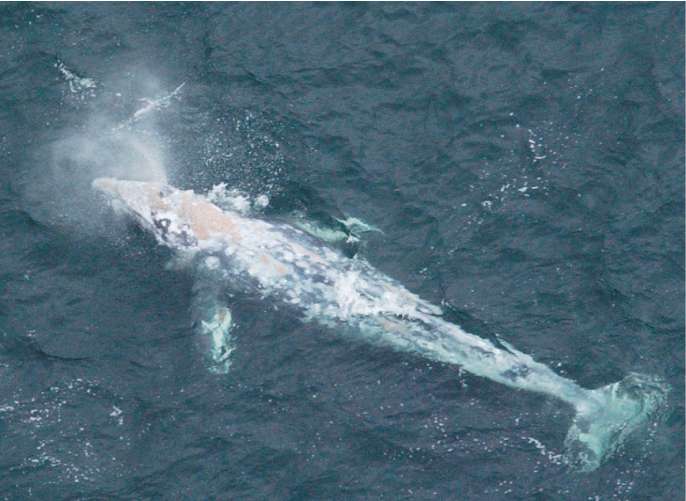
Britain agreed to bankroll controversial drilling for oil and gas, despite a warning from its own officials of the "potentially devastating effects" on a critically endangered species of whale. The decision to flout their own experts' advice is revealed in deeply embarrassing documents the Government fought for three years to keep secret.
The documents – finally released last week under the Freedom of Information Act after a High Court ruling – warn that the drilling, off Sakhalin Island in the far east of Russia, could cause the extinction of one of the world's most vulnerable populations of the marine mammals.
Nevertheless, the Government's powerful export credits and guarantees department (ECGD), which provides support to the exports industry, agreed to help back the $20bn (£10bn) project by Sakhalin Energy Investment Company, in which Shell has a major share.
The project, now nearing completion, is to exploit a "world-class oil and gas province" off the island, which is so remote that the playwright Anton Chekhov, who visited it in 1893, called it "the end of the world".
The same waters are the only known feeding ground for western grey whales. Only about 120 of them survive and they are listed as "critically endangered". Scientists say the death of just one of the breeding females each year for three years would be enough to lead to the species' extinction.
Yet in March 2004, the ECGD wrote to the Sakhalin Energy Investment Company to say it had approved conditional support for several UK contracts for the project. This flew in the face of warnings from both the Foreign Office and the Department for Environment, Food and Rural Affairs (Defra). The contracts were revealed only after the High Court last month ordered the ECGD to release them – although Friends of the Earth formally requested the documents under the Freedom of Information Act three years ago.
The documents show that, on 14 March 2003, Defra flagged "substantial concerns about this project". It said it had "significant worries about the possible impacts" on the endangered species, and that "any losses are likely to be significant to its future", adding it was "also concerned about the longer-term impacts on this population of disturbances caused by mining and explosions, or of oil spills".
The document states that oil spills were "potentially devastating" to the local environment, and logged "significant concerns" that a pipeline from the project could "interfere" with salmon stocks. It also questioned whether there were "adequate measures" for waste disposal.
It did note that the project could have some benefit in combating global warming because it would supply gas to a region that depends on more polluting coal, but concluded: "Our preliminary view is that the potentially devastating effects of this project on the local environment, and in particular on an endangered population of whales and biodiversity in a sparsely populated region are not compensated for by the positive effect of this project on the global climate."
The Foreign Office also said that "the potential negative environmental impacts, in particular of oil spills and on the western grey whale population, may be significant".
Regardless of such concerns, the Department of Trade and Industry, predecessor to the Department for Business, Enterprise and Regulatory Reform, said at the time it had "no concerns at this stage".
Two environmental groups – WWF and The Corner House – took the ECGD's decision to judicial review and last month the Sakhalin Energy Investment Company withdrew its request for backing.
Yesterday, Phil Michaels, head of legal for Friends of the Earth, said: "It is shameful ECGD should even consider supporting such a project and even more so that it should keep official warnings of the consequences secret for so long."
Join our commenting forum
Join thought-provoking conversations, follow other Independent readers and see their replies
Comments
Bookmark popover
Removed from bookmarks