Heatwave attracts an unwelcome visitor
Algae chokes estuaries on south coast as England enjoys hottest day of year
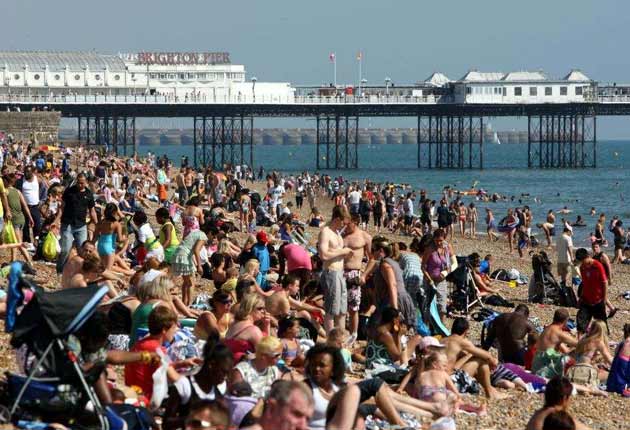
A combination of calm, sunny weather and high concentrations of nitrate pollutants running into the sea from local farms and sewage works has caused thick mats of green algae to form at a dozen sites on the south coast.
The Environment Agency said yesterday that it was concerned that the seaweed could cause long-term damage to the unique wildlife of some of the most important coastal mudflats which are being slowly starved of oxygen by the algae as it spreads over wide areas of the southern shoreline.
The development came as Britain suffered a north-south divide in the weather, with the south-east experiencing one of the warmest days of the year with clear skies and brilliant sunshine, while Scotland and Northern Ireland were covered in clouds with outbreaks of rain.
Sunny weather has helped the algae to grow. Near the Isle of Wight, the seaweed has formed layers up to a foot deep and the mud underneath has turned black because of lack of oxygen, said Dave Lothian, a marine scientist at the Environment Agency who is tracking the extent of the problem. "It's hard to gauge how bad it is this year but we know of several sites in and around the Solent that are affected. The point is, this is an unnatural state because there shouldn't be so much seaweed," Mr Lothian said.
"When you pull back the seaweed layer, the sediment underneath looks black because it has been depleted of oxygen. Some of the worms, which are vital for this ecosystem, disappear and others grow abundantly," he said.
Algae grows rapidly in the presence of nitrates from agricultural fertilisers and the effluent from sewage-treatment plants. There are two forms of marine algae that are affected by nutrient run-off from the land. One is the microscopic plants or phytoplankton that can result in toxic "red tides", and the other is the larger algal seaweeds that grow near estuaries and have no roots to anchor themselves to the seabed.
The algal seaweed affecting the south coast does not affect open beaches as much as enclosed estuaries. The Environment Agency said it is concerned about Portsmouth Harbour, Langstone Harbour, Chichester Harbour, Pagham Harbour, Newtown Harbour, Bembridge Harbour, Medina estuary, the Hamble estuary, Poole Harbour and Holes Bay.
"This is an issue because migratory birds are less able to physically access invertebrates in the sediment and when the seaweed breaks down and decays, it uses up the oxygen in the mud producing toxic hydrogen sulphide that can kill invertebrates. This in turn impacts on other marine species such as fish stocks," an agency spokesman said.
"Although this is not a UK-wide problem at present – apart from in enclosed waters such as harbours – in future we could see this problem growing due to increased rainfall events, leading to increased run-off of nitrates from farmers' fields, along with hotter summers – and sunshine provides the catalyst for the algae to grow. So we are working to tackle this issue now," he said.
Join our commenting forum
Join thought-provoking conversations, follow other Independent readers and see their replies
Comments
Bookmark popover
Removed from bookmarks