Last chance to save the tuna?
As demand soars and stocks dwindle, conservationists say time is running out for the fish
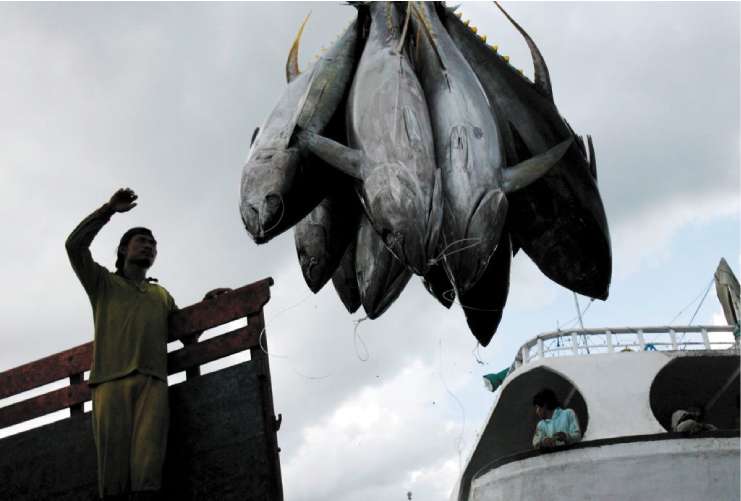
Urgent measures to save falling stocks of tuna in the world's second-biggest tuna fishery, the eastern Pacific, must be launched at a key international meeting this week, conservationists are demanding.
Closures of the fishery, both by area and by time, must be brought in to protect tumbling Pacific populations of skipjack and bigeye tuna, leading environmental groups warn.
They are calling on the Inter-American Tropical Tuna Commission (IATTC) to follow the advice of its own scientists and adopt forceful conservation measures at its annual meeting in Panama City, which started yesterday.
Tuna stocks around the world, especially of the five main commercially harvested species – skipjack, bigeye, yellowfin, bluefin and albacore – are running into trouble from increasing fishing pressure, because of the high value of the catch. Tuna is not only one of the world's favourite fish, being a major diet item for millions of people, it is also at the core of the luxury sushi and sashimi markets, especially in east Asia.
The Pacific Islands fishery is the world's biggest, taking more than 1.2 million tonnes of tuna annually, with the eastern Pacific second, with a yearly catch of more than half a million tonnes. But the latter's regulatory body is failing in its job, say the US-based green groups.
In the past, disagreement among the IATTC's 16 member states has blocked the consensus necessary to bring binding conservation resolutions, but the situation facing tuna stocks is increasingly serious, they say, stressing that the commission now has an opportunity to reverse a trend of inaction and take concrete steps to stop the decline of tuna stocks.
"Bigeye and yellowfin tuna populations are falling and the average size of captured fish is shrinking, a clear sign that those tuna are in dire need of conservation measures," the environmental groups say.
"At the same time, the size and efficiency of fishing fleets continue to increase. As fish become less abundant, their market value rises, and operators invest more in technology resulting in more pressure on the stocks. In the face of declining populations, some nations are demanding the right to increase the size of their fishing fleets."
Action must be taken now, the groups say. Scott Henderson, director of marine conservation at Conservation International, said: "Despite a clear legal mandate and declining tuna stocks, three international meetings of the IATTC held over the past year have failed to produce measures to protect the very resource upon which not only the tuna industry, but the health of the Pacific marine ecosystem depends."
"The IATTC once had an enviable track record of following scientific advice, conserving tuna populations and tackling major conservation issues like dolphin mortality," said Bill Fox, the WWF's vice president of fisheries. "It needs to recapture that spirit and dedication, perhaps using the new management ideas and methods it is exploring, like property rights for fishermen."
Meghan Jeans, Pacific fish conservation manager for Ocean Conservancy, said: "The health of the ocean environment, the long-term sustainability of tuna stocks and the interests of many are being put at risk by the short-sighted self interests of a few."
Humane Society International's vice president Kitty Block said: "As it currently stands, there's every incentive to block consensus and none to reach it. If, instead, the fishery was shut down until consensus is reached, member countries would undoubtedly work harder to agree on effective management measures."
In 2007, representatives of the IATTC agreed to be more proactive in mitigating and preventing tuna stock reductions, and to undertake a comprehensive review of its performance. This review has yet to begin.
How to eat sustainably
Opportunities for consuming tuna in an environmentally friendly way are steadily diminishing. In the past the concern was for the "bycatch" species – that is, where other marine creatures such as dolphins were being accidentally caught. Accordingly, tuna could be certified as "dolphin-friendly". But now concern has moved on to the tuna itself. There is only one tuna fishery – the American Albacore Fishing Association in San Diego, California – which is certified as sustainable by the Marine Stewardship Council. Other fisheries are cause for concern, but the worst is thought to be the Mediterranean and Atlantic fishery for bluefin tuna, which conservationists consider to be close to collapse. Recently the World Wide Fund for Nature called for a boycott by retailers, restaurants and consumers of Mediterranean bluefin tuna so that the species might have a chance to recover before it is too late.
Join our commenting forum
Join thought-provoking conversations, follow other Independent readers and see their replies
Comments
Bookmark popover
Removed from bookmarks