Meat back on menu for animal feed 20 years after BSE crisis
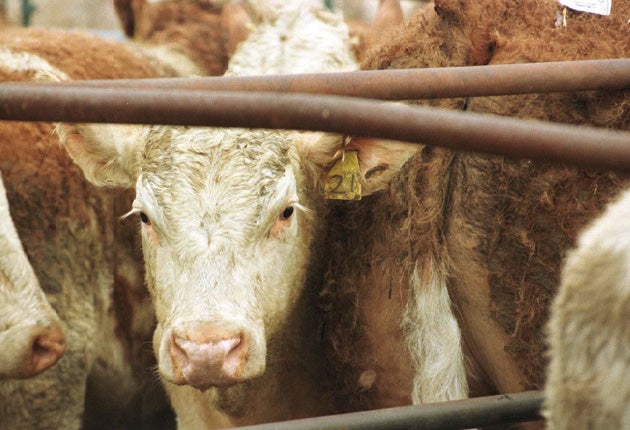
Meat could once again be fed to animals under plans to relax rules introduced to prevent the transmission of BSE more than 20 years after the emergence of "mad cow disease" caused a public health and political crisis.
The European Commission has published proposals to reduce the cost of guarding against BSE and its human form, new variant Creutzfeldt–Jakob disease, which has claimed the lives of 169 British people.
In a consultation document, Brussels said any changes would be based on sound science but acknowledged it was "impossible" to remove all risk of the disease entering the food chain.
Since 1986, 181,114 cattle have been confirmed with BSE, resulting in the culling of four million cattle, but in recent years it has been in sharp decline. Between 2007 and 2009, the number of annual cases in Britain fell from 53 to nine.
The European Commission said it wished to downgrade rules because of the disease's decline, and so it could concentrate on other conditions such as a salmonella and antimicrobial resistance that posed a greater threat to human health. Among the proposals floated by Brussels include relaxing a wide ban on the feeding of meat to animals and ending the requirement for mass slaughter in herds with infected cows.
The plans are set out in a document circulated to EU states, TSE Roadmap 2 – named after Transmissible Spongiform Encephalopathies, the group of brain diseases that includes bovine spongiform encephalopathy (BSE).
Although tentative, an end to the feed ban could be controversial because feed was the source of the crisis: cattle contracted BSE after consuming infected proteins from sheep that had died of a related disease, scrapie.
Because of concerns that the disease could have made further "intraspecies" leaps, a ban on feeding mammalian meat and bonemeal to cattle, sheep and goats was introduced by the EU in 1994. The EU later banned the feeding to farm animals of proteins from almost all animals with the exception of fish.
In TSE Roadmap 2, the EC said it was awaiting new scientific advice on a tolerable level of animal proteins in feed from the European Food Safety Authority later this year. The EC said it might then be possible to feed meat and bonemeal (MBM) from non-ruminants such as pigs and chickens to other non-ruminants. As such, bits of ground-up pigs could be fed to poultry and vice versa.
"Considering that the transmission risk of BSE from non-ruminants to non-ruminants is very unlikely, a lifting of the ban on the use of Processed Animal Protein from non-ruminants in non-ruminant feed could be considered, but without lifting the existing prohibition on intraspecies recycling [poultry MBM could only be fed to pigs and pig MBM to poultry]," the EC said.
It added that the reintroduction of animal feed would reduce the EU's dependence on other sources of proteins. Foreign-grown soya and other crops used in animal feed are in high demand globally and their price is volatile.
Also under discussion is whether the "specified risk material" (SRM) such as brain, skull and spinal cord should continue to be removed from animals before they enter the food chain. Any such change "should be based on new evolving scientific knowledge while maintaining the existing high level of consumer protection", the EC said. It added: "However, the list of SRM to be removed from the food and feed chains should also take into account the epidemiological situation based on the data gained from BSE surveillance."
Rules requiring the slaughter of all animals in a herd aged within one year of any infected cow might also be eased. Instead of culling all those animals, meat from this "cohort" group could enter shops after being tested.
The European Commission said the prevention of risk should be maintained or increased under the changes. It added: "It is impossible, however, to consider the complete elimination of risk as a realistic objective for any risk management decision in matters regarding food safety, where the cost and benefits of risk-reducing measures have to be carefully weighed in order to ensure the measure's proportionality."
Sue Davies, of the consumer group Which? said: "We consider a very cautious approach should be taken to any revision of the feed ban given animal feed was responsible for BSE's spread and there were problems with lack of compliance and cross-contamination when controls were introduced."
Join our commenting forum
Join thought-provoking conversations, follow other Independent readers and see their replies
Comments
Bookmark popover
Removed from bookmarks