Report on failure to halt wildlife decline is buried
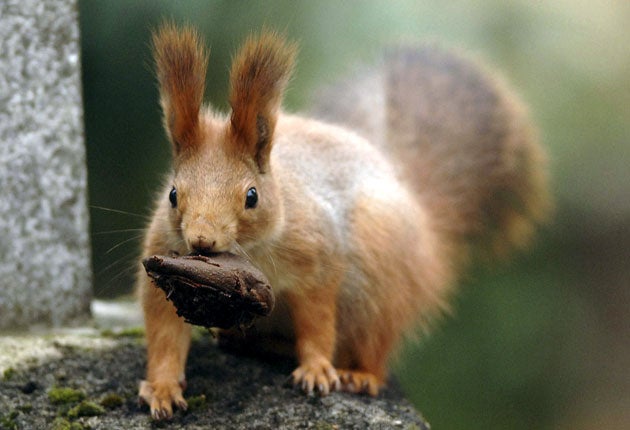
A report showing that Britain is failing to halt the declines of many of its highest-priority wildlife species and habitats, from the red squirrel, the juniper and the common skate to chalk rivers and coastal salt marshes, was "sneaked out" this week by the Government with no publicity, environmental campaign groups said yesterday.
More than twice as many conservation priority species and habitats are declining as are increasing across the UK, the report says, yet to find that study is virtually impossible without special knowledge. It was posted on the website of the Joint Nature Conservation Committee (JNCC), the Government's UK-wide wildlife advisers, on Thursday.
But it is buried deep in the site, there was no press release, and there is no reference to it or link to it on the website's front page. It is not even on the website of the relevant Government department, the Department of Environment, Food and Rural Affairs (Defra).
The report – "The UK Biodiversity Action Plan: highlights from the 2008 reporting round" – was finished more than a year ago, and wildlife campaign groups have accused the previous Labour government of deliberately sitting on it, and the new Conservative-Lib Dem coalition Government of actively seeking to hide it. It concerns the progress – or lack of it – of the 500-plus UK species and habitats which have been the subject of Biodiversity Action Plans, or BAPs, set up since the Convention on Biological Diversity was signed at the Earth Summit in Rio de Janeiro in 1992.
The report shows that 24 per cent of the priority species are declining (88 species in total), as against 11 per cent which are improving. Typical continuing declines, besides red squirrels, plants such as juniper and fish such as the common skate, include the turtle dove, the twinflower and the brindled beauty moth. And 42 per cent of the priority habitats (19 habitats in total, including wildlife-rich upland chalk grassland and upland hay meadows) are in decline, as against 18 per cent which are improving.
"These results are so poor so that it comes as no surprise that they have been hidden away," Mark Avery, director of conservation for the Royal Society for the Protection of Birds, said. "Can you imagine a report on the state of the nation's health, or economy, or education being ignored in the way that this report on the state of the nation's wildlife has been? It is vital that cuts in public spending don't harm the conservation of wildlife. We need to hear from the new government what measures it will take to reverse the declines."
Matt Shardlow, director of Buglife, the invertebrate conservation trust, said: "The handling of this report, sat on for almost a year then quietly slipped out without transparent supporting data, suggests the Government is ashamed its recent track record. There is now an urgent need for Government to re-commit to working with the public to save and indeed restore our wildlife."
Dr Jeremy Biggs, director of the charity Pond Conservation, said the report had been "sneaked out". He added: "Freshwaters in Britain, and especially England, are in a parlous state: 75 per cent of our rivers and streams break EU directive ecological standards, and 80 per cent of ponds are in poor condition, and have declined in quality over the past 10 years."
The JNCC said it was merely "hosting" the publication of the report on its website for the secretariat of the standing committee of the UK Biodiversity Partnership, who are civil servants in Defra. A spokesman for Defra said the findings in the report had already been made available, at the 2009 UK Biodiversity Partnership annual conference, and that environmental organisations had been "kept informed" of the development of the "highlights" report.
The news is not all bad: some rare, threatened or even formerly vanished species are now doing well. The once-extinct large blue butterfly has been reintroduced and is flourishing (mainly in Somerset), and once very scarce birds such as the stone curlew and the bittern are rising steadily in numbers. Also, the ladybird spider has been reintroduced into Dorset after a captive-breeding programme.
Join our commenting forum
Join thought-provoking conversations, follow other Independent readers and see their replies
Comments
Bookmark popover
Removed from bookmarks