Return of the ivory trade
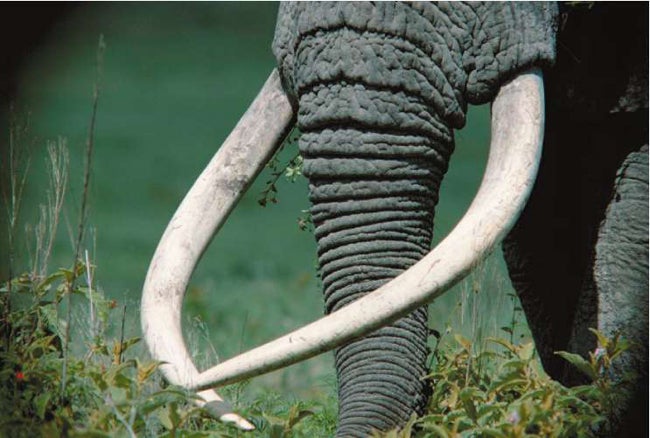
The world trade in ivory, banned 19 years ago to save the African elephant from extinction, is about to take off again, with the emergence of China as a major ivory buyer.
Alarmed conservationists are warning of a new wave of elephant killing across both Africa and Asia if China is allowed to become a legal importer, as looks likely at a meeting in Geneva next week.
The unleashing of a massive Chinese demand for ivory, in the form of trinkets, name seals, expensive carvings and polished ivory tusks, is likely to give an enormous boost to the illegal trade, which is entirely poaching-based, conservationists say.
"This is going to mean a return to the bad old days where elephants are being shot into extinction," said Allan Thornton, of the Environmental Investigation Agency (EIA), the group which provided much of the evidence on which the original ivory ban was based in 1989.
The ban succeeded in halting a headlong decline of African elephants at the hands of poachers, especially in east African countries such as Kenya. Elephant numbers across the continent were estimated to have crashed from 1.3 million in 1980 to 625,000 in 1989.
It was intended to be complete and worldwide but in 1997 four southern Africa countries: South Africa, Namibia, Botswana and Zimbabwe, persuaded other Convention on International Trade in Endangered Species (Cites) member states to let them opt out, on the basis that their elephant populations were stable or increasing, and they would only sell tusks of elephants that had died naturally or been shot as rogues. Their campaign was led by Zimbabwe's President, Robert Mugabe.
As a result, Cites sanctioned an auction of just under 50 tonnes of ivory from the four countries in 1999, but opened it only to "approved buyers" – countries whose enforcement provisions against illegal trading were deemed sufficiently rigorous. Japan was the only country approved.
Now, however, a second auction of 108 tonnes from the same four countries is being planned, and the Chinese, who were excluded from the first sale, are seeking "approved buyer" status, claiming they are much more active now in combating illegal trading activities.
Their application will be heard at the Geneva meeting next week of the Cites Standing Committee, which will also consider allowing the second ivory auction. Both proposals are likely to get the green light as the Cites secretariat is making a favourable recommendation in each case.
John Sellar, Cites' senior anti-smuggling and fraud official, said yesterday that China had made considerable improvements to its enforcement regime against illicit trading, and the country's score out of 100 for efficiency on the organisation's complex Elephant Trade Information System had risen from 5.6 in 2002 to 63 today. The recommendation would be that they should become an official ivory trading partner, said Mr Sellar.
Environmentalists fiercely dispute the effectiveness of China's crackdown and raise the larger issue of the huge ivory demand that is about to be unleashed from an increasingly affluent country with 10 times the population of Japan.
"In a country of 1.3 billion people, demand for ivory from just a fraction of one per cent of the population is colossal," said Allan Thornton of the EIA. "If these new legal imports go ahead, they will provide a gigantic cover for illegal ivory to be sucked in."
He went on: "Right now across central Africa, elephant populations are being destroyed in countries like Chad, the Central African Republic and the Democratic Republic of the Congo to satisfy illegal demand in countries such as China. The current estimate is that 23,000 African elephants are killed a year by poachers – which is totally unsustainable. If China becomes an approved trading partner, these figures will skyrocket."
Last year the EIA produced a detailed report on what it said was China's failure to address its illegal ivory trade. Mr Thornton said last night: "There is no evidence that the Chinese government has broken up or taken effective action against criminal syndicates behind the illegal flow of ivory into the country."
The EIA released an internal Chinese government document yesterday which, it said, showed that, over 12 years, officials had lost track of 121 tonnes of ivory from the country's official stockpile – equivalent to the tusks of 11,000 elephants. "We have not been able to account for the shortfall through the sale of legal ivory by the selected selling sites," Chinese officials reported in the document to Cites in 2003. "This suggests a large amount of illegal sale of the ivory stockpile has taken place."
Asked about the document, officials from China's Foreign Ministry said they had no information on the subject.
The question of China's trading partner status comes up at the standing committee meeting on Tuesday afternoon. Britain has a representative on the committee, Trevor Salmon, a senior civil servant who is head of the Cites policy unit at the Department for Environment, Food and Rural Affairs (Defra). Asked how Britain would vote on the sale and on the Chinese application, a Defra spokeswoman said: "The UK will only support this limited sale if all internationally agreed conditions – including that the proceeds of the sale are used exclusively for elephant and community conservation and development programmes within or adjacent to the elephant range – have been met.
"Before allowing China to become a trading partner in a one-off sale of stockpiled ivory, the Cites Standing Committee will consider all evidence on measures China has in place to prevent this sale from having a negative impact on the illegal killing of elephants.
"Decisions are taken based on information about the sustainability of elephant populations in the countries and the security of their existing stockpiles of legally acquired ivory."
Join our commenting forum
Join thought-provoking conversations, follow other Independent readers and see their replies
Comments
Bookmark popover
Removed from bookmarks