Slugs and snails munch their way back as top pests
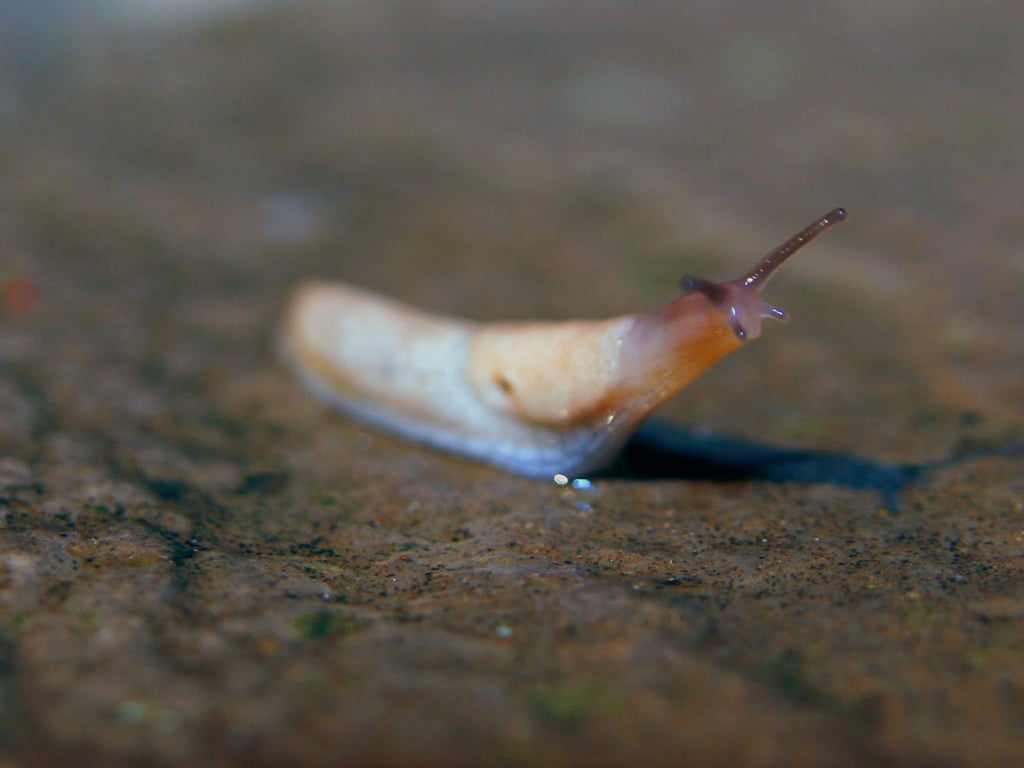
Slugs and snails have regained their crown as the most pesky pests to munch a destructive path through Britain's gardens. Having been toppled from their customary first place in 2010 by the viburnum beetle, they slithered back to the top of the list in 2011 as the pest gardeners most love to loathe.
Despite many areas being drier than usual the slimy gastropods were so numerous that they prompted more desperate gardeners to call the Royal Horticultural Society for advice on how to stop them making a meal of prized flowers, fruit and vegetables than any other pest.
"They have a good year most years," said Andrew Halstead, the chief entymologist at the RHS. "Most gardens have them, often in large numbers, and they feed on a wide range of plants. You're never ever going to get rid of them. The best you can achieve is to reduce the damage."
But they are increasingly being challenged by a host of introduced pests, and others that are spreading because of warmer conditions.
Among the challengers is the fuchsia gall mite, a tiny eight-legged creature just a quarter of a millimetre long. It specialises in sucking the sap of fuchsias and causes extensive damage.
The mite was first recorded in Britain in 2007 and early last year the RHS was hopeful it could be eradicated, but it spread through southern England so rapidly that it is now the sixth most troublesome garden pest.
The leek moth, in equal eighth place, is also expected to spread rapidly in the future because of warmer temperatures, and together with the allium leaf miner, which is still outside the top 20 but rising fast, could cause mayhem in vegetable patches.
They both attack leeks and onions. The moth is spreading northwards from the south of England and Wales while the leaf miner is spreading in all directions from the Midlands, with no suitable pesticide yet developed for gardens and allotments.
Cushion scale, a sap sucking insect that turns evergreens black, was the second most troublesome pest of 2011 and another that has become more common in recent years.
Harlequin ladybirds, despite becoming more common, fell out of the list of top 10 pests. It is thought that gardeners are becoming familiar with them and so do not need to call for advice.
Top 5 Garden Pests
1. Slugs and snails
Eat a huge range of plants, especially hostas, potato tubers and narcissus.
2. Cushion scale
Sap-sucking insect that attacks holly, rhododendron and other evergreens. Causes a sooty mould to build up on leaves during winter.
3. Vine weevils
The adults attack the leaves of a wide range of plants; the larvae eat the roots.
4. Ants
Several species are found in the UK and they upset gardeners by dumping piles of soil on lawns.
5. Viburnum beetle
The number one pest in 2010. They primarily attack viburnum with the larvae reducing leaves to lacework.
Join our commenting forum
Join thought-provoking conversations, follow other Independent readers and see their replies
Comments
Bookmark popover
Removed from bookmarks