The wombat: back from the brink
One of the world's most threatened mammals manages to go forth into the forest – and multiply
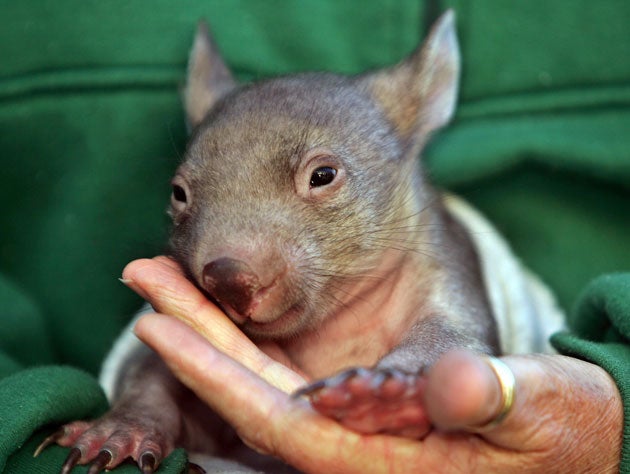
One of the world's most endangered mammals, the northern hairy-nosed wombat, has stepped back from the brink of extinction, with its numbers undergoing the biggest jump for more than two decades.
However, there are still only 138 wombats, living in one colony in a forest in central Queensland, and scientists fear they could be wiped out by drought, flood, bushfire or disease. So they are planning to found a second colony, and are also researching the feasibility of using southern hairy-nosed females – a more abundant species – as surrogate mothers.
Northern wombats once ranged in plentiful numbers across eastern Australia, but by 1983 the population had crashed to 35, thanks to land clearing, competition from introduced species, predators such as foxes and wild dogs, and drought.
The species has been slowly recovering, and the latest increase – from 115 two years ago – is partly attributed to a 12-mile-long predator-proof fence protecting its habitat in Epping Forest. Before the fence was built, as many as 10 wombats a year were being killed by dingoes.
The genetic pool remains narrow, though, and females make up barely one third of the population. So IVF experts are experimenting with assisted reproductive techniques, using southern wombats housed in a luxury research facility, dubbed the Wombat Hilton, at Queensland's Rockhampton Zoo.
Rangers, meanwhile, are preparing to trap 24 northern wombats and relocate them to a cattle property designated as the site of a second colony. The migrants will arrive to find ready-made burrows freshly dug for them. "It's effectively a kit home, to help them settle more quickly and give them shelter when they first get there," said Rebecca Williams, the state's director of threatened species.
The northern hairy-nosed species, which split off from other wombats more than six million years ago, spends most of its time underground. The latest census was conducted by means of DNA tests on hair samples trapped on sticky tape that had been placed in burrows. The wombats are also microchipped, and are tracked via radio collars.
Queensland's minister for climate change and sustainability, Kate Jones, welcomed the wombats population increase as "a dramatic turnaround for an extremely vulnerable species". She said rangers had provided food and water for the wombats in times of drought, carried out controlled burns to prevent wildfires, removed noxious weeds and pests, and slashed areas of land to stimulate new grass growth.
"We've created an environment where the wombat has thrived, which is a major milestone in our efforts to save this species from extinction," Ms Jones said.
Despite the rise in numbers, the shy, nocturnal mammals are still more endangered than the Sumatran tiger and the giant panda. Last year, the senior civil servant in charge of the Australian economy, Treasury Secretary Ken Henry, triggered a political row when he took five weeks' leave to help babysit the Epping colony.
The cattle property, near St George, in south-west Queensland, is in an area inhabited by wombats until a century or so ago. While the move is fraught with dangers, it is considered preferable to leaving the population in one place. Heavy flooding last year almost engulfed the wombats' forest home; they escaped only because most of their burrows were on elevated ground.
The move is expected to go ahead in the next two months. The manager of the relocation project, Tim Homes, told the Courier-Mail newspaper: "It's relatively risky, but it's what has to be done to save the species."
Join our commenting forum
Join thought-provoking conversations, follow other Independent readers and see their replies
Comments
Bookmark popover
Removed from bookmarks