Why water waste just won't wash
Hosepipe bans are a nightmare for the green-fingered. But with so much flooding last year, why are utility companies threatening drastic action?
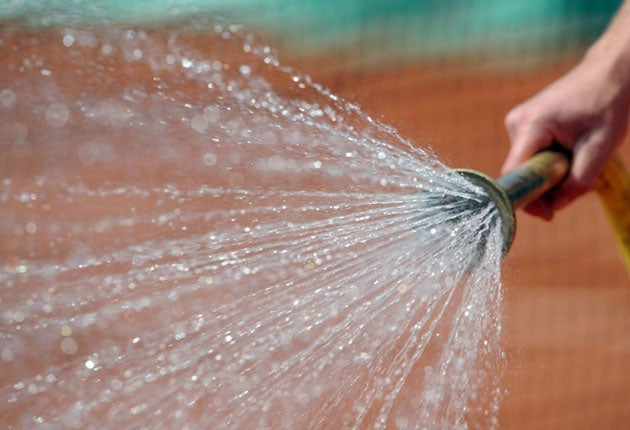
Water, water, everywhere and not a drop to drink, as Coleridge put it – and so it seems in modern Britain. We endure endless rainy winters and yet a flicker of sunshine seems to herald the imposition of hosepipe bans up and down the country, as petunias wither and wilt. United Utilities, the water supplier for the north west of England, last week called a ban "increasingly likely" and other suppliers are said to be considering the measure if the current sunny spell continues.
The driest January to May period since records began has led to increasingly low water-levels in reservoirs and rivers in the region. And with people using more water as the weather gets hotter, the environmental implications of overextraction and evaporation are brought into ever-sharper relief.
Even before the recent heatwave and the added pressure it brings, the Environment Agency classified a number of rivers as under "serious water-stress" with abstraction for domestic use a major factor behind this. The upshot of this is that the ecosystems these waterways sustain is under threat, as lower flow levels lead to decreased levels of oxygen in the water and increased incidence of Algae overproduction and the reduction in spawning grounds for fish. As a recent report by the WWF points out, only 15 per cent of rivers are in a condition to support a healthy, vibrant ecosystem and this figure now looks optimistic for the north west of England. But is a hosepipe ban really the best way to tackle this problem?
The media has certainly taken a view, and it isn't favourable to the water companies. Many point to the "biblical flooding" in the area last October and suggest the real reason ecosystems are under threat is the mismanagement of supplies. There is a widespread perception that the real problem is water companies failing to maintain service pipes, leading to massive losses through leaky pipes. However, not so, says Jacob Tompkins, managing director of Waterwise, a British NGO devoted to increasing water efficiency. "Despite what you may read," he says, "the utilities are pretty good at stopping leaks.
"Ten years ago this was not the case, but things have improved dramatically. We are now at the point where further repairs are uneconomical – the disruption and cost would be disproportionate. The real problem is simple: the British public use an awful lot of water."
While our continental neighbours use around 120 litres of water per person per day, we consume around 40 litres more. And in the summer months, no small part of this is used to keep our lawns green. The wastage involved is enormous. A sprinkler left on for an hour uses as much water as a family of four does in a day and a half.
But Waterwise is still not a supporter of an outright ban: "Bans are creatures of the 1950s," continues Tompkins. "They're old fashioned and unsophisticated. What we really need is a change in our attitude to water use – and the best way to do this is by retrofitting water meters." He has a point.
The environment agency points to research that shows water metering is the most effective method of reducing consumer usage, with metered properties using around 15 per cent less water. And by how much do hosepipe bans reduce usage? About 15 per cent, says Waterwise.
Hosepipe bans remain a blunt instrument that penalise both the wasteful and virtuous. They are a short term palliative that fails to tackle a long-term ecological problem. If we do value the biodiversity that our lakes and rivers sustain, we need to look further forward and change our relationship to water. And the best way to do this? By actually paying for what we as consumers use.
Large scale retrofitting of meters would herald a radical change in our relationship with water, meaning it would no longer be considered an endless resource. As a society, we respond better to carrots than sticks. So, in future, water utilities must put away the stick of hosepipe bans, and offer the consumer real incentives to conserve water. Then we can safeguard our precious waterways, as well as protect our petunias.
Join our commenting forum
Join thought-provoking conversations, follow other Independent readers and see their replies
Comments