
Stay ahead of the curve with our weekly guide to the latest trends, fashion, relationships and more
Stay ahead of the curve with our weekly guide to the latest trends, fashion, relationships and more
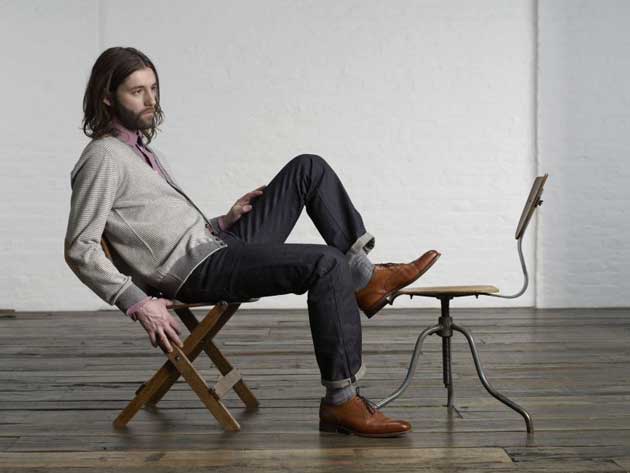
Only one thing was missing when the menswear line Albam Clothing launched last year: a logo. Instead, the collection stood or fell by its design, which is, as the firm's co-founder, Alastair Rae, suggests, just how its customers like it: "Logos smack of seeking approval for what you're wearing and many customers now have enough confidence not to need that. Branding generally seems to have dropped away over the past couple of seasons."
Indeed, other new clothing companies to have followed this lead include Cockpit, Edifice, Tim Hamilton and Adam Kimmel, all among a wave of hotly tipped fashion brands which shall be, as it were, nameless.
It's all a far cry from the days when the world and his WAG walked around as life-sized advertising boards for the likes of D&G, Armani Jeans, Timberland, Hackett, Ralph Lauren and Versace. Now, such brands represent the downside of globalisation; and in credit-crunched times, to flash them seems vulgar.
"The shouty branding of recent seasons now looks very out of date," agrees Eleanor Robinson, womenswear buying manager for Liberty. "Generally, there is a move towards understatement, but I think certain consumers want their spending to be more discreet anyway, given the state of the economy."
The high street's fast-fashion manufacturing techniques have been one of the driving forces of this shift: in liberating catwalk style from the catwalk, they have removed one reason to buy designer brands.
True to the minimalistic Japanese aesthetic, fashion from companies such as Uniqlo and Muji is thriving without any branding at all. "The appeal is precisely that nobody can tell where your clothing is from," suggests Amy Howarth, Uniqlo UK's head of marketing. "There's a backlash against label snobbery. People are tired of brands being prescriptive."
In theory, this might encourage designer labels to place more emphasis on their logos, to allow their customers to differentiate their purchases from those of the hoi polloi. However, designer brands are all too conscious that while pushing monograms, house checks and other identity devices may build demand in the short term, from more mainstream customers buying a few, statement items, in the long term it alienates the real luxury consumer, and big spender. After all, the wealthy don't want to buy the same brands as those lower down the financial food chain.
"Stealth luxury" – understatement, nodding quietly to those in the know – is the new buzz-phrase. "Our love of logos was a reflection of a need to prove that we'd spent a lot of money on our clothes," says Mark Tungate, author of Fashion Brands: Branding Style from Armani to Zara. "Sophisticated consumers just want the 'right people' to recognise their quality choice, which is encoded in the item itself."
For this reason, designer brands are working hard to create a logo without a logo, in the guise of a signature style – such as bag company Bottega Veneta's woven leather. Not that the global fashion brands are throwing out logos altogether. The death of the logo is a phenomenon of more sophisticated markets; in the boom markets of Russia and China, logoed clothing is still hot property, leading brands to develop two-tier collections, one with, one without – as Diesel has recently done with the launch of its Black Gold line.
So, where does all this leave those brands that have historically done so well by their logos that it is hard to let them go? British label Hackett, for example, may make refined traditional menswear, but its "Hackett" polo shirt remains a bestseller, presenting the company's founder, Jeremy Hackett, with a dilemma. "We're certainly moving away from overt branding now – it was just getting too widespread and doing us a disservice," he says. "Consumers are divided. Lots of our more sophisticated customers won't buy something with a logo any more, while many more won't buy without a logo. People are tribal, after all – they like to belong."
In this post-No Logo decade, could it be that the public are finally catching up with Naomi Klein's exhortation to resist the branded world?
The no-logo look
Muji
The name comes from the Japanese for "no branding" and true to its name, it stocks minimalist versions of everything fromcandles to clothes. It has recently extended its clothing collection, but its basics, such as this yarn T-shirt, still form the core. £15, www.muji.co.uk
Cos
"Is that Marni? Marc Jacobs?" A fashionista fave, Cos offers discreetly stylish pieces that will keep people guessing, such as this pared-down wool coat for autumn. £120, www.cosstores.com
American Apparel
Sporty, sexy separates for boys and girls that come in all the colours of the rainbow, and at prices that mean you can buy one of each. This bodysuit is a bestseller. £22, www.americanapparel.net
Uniqlo
Another Japanese import, offering a capsule wardrobe of staple design-led items to see you through the season. This coat has modern classic written all over it. £49.99, www.uniqlo.co.uk
Subscribe to Independent Premium to bookmark this article
Want to bookmark your favourite articles and stories to read or reference later? Start your Independent Premium subscription today.
Join our commenting forum
Join thought-provoking conversations, follow other Independent readers and see their replies