Sartorial correctness: Dress me up, dress me down
The venerable Garrick Club is relaxing its clothing rules. Meanwhile, Gordon Ramsay wants his diners to smarten up. John Walsh ponders the long history of sartorial correctness
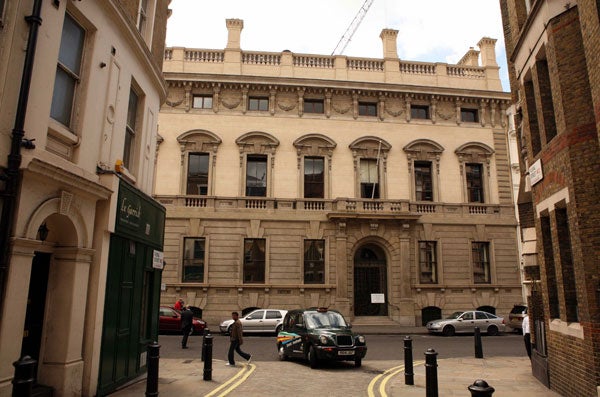
It's enough to make a chap sit down heavily on the horsehair sofa and fan himself vigorously with a copy of The Times. The Garrick Club, one of the last bastions of establishment formality, is relaxing its rules over members' clothing.
Please try to remain calm. It may only be a vile rumour, put about by subversive elements. But members of the 177-year-old Covent Garden club have been horrified to discover that, henceforth, they will be, technically, allowed to remove their jackets – and, more shockingly, will not be required to wear a tie (usually, the club's salmon-and-cucumber stripy number) between the hours of 4pm and 6pm every day.
It may seem like a storm in a bone-china teacup, but to connoisseurs of the British way of life, it's radical. "Some people even turned up tieless at luncheon last week," a red-faced club member thundered to the Daily Mail. "It's all tremendously disappointing. The words thin, end and wedge come to mind."
The humble tie is the last frontier in clubland protocol. Turn up at a Pall Mall club without one, and they won't let you in, no matter how glamorous the party you're attending or how distinguished the member with whom you were hoping to dine. If it's the Reform Club (where they ban jeans, trainers and "collarless shirts"), the doormen may offer you a tie they keep for such emergencies – invariably a sludgy monstrosity that no sane man would be seen dead in.
Perhaps sensing that change in the air, other clubs are canvassing members on the issue. The Athenaeum wrote to its members three months ago, asking how they felt about the strict dress code. The response was overwhelming: they didn't want to see it relaxed or changed in any way. But that they asked at all is striking.
If libertarianism is threatening to break out in clubland, what's happening in Gordon Ramsay land? The potty-mouthed, F-word-spraying super-chef, generally held to be a walking emblem of vulgar informality, has come over all Miss Prism about his patrons' mode of dress.
When Murano, the latest London restaurant under his umbrella, opens this month, excessively casual clothing will be banned – as it will be at his other restaurants in Chelsea and at Claridge's. No denims, trackie bottoms, trainers, flip-flops, T-shirts or sportswear. Jackets aren't mandatory, but are "preferred" for gentlemen diners. Preferred, eh? Preferred by Ramsay, the man who, when he took over the Savoy Grill in 2003, hurled the dress code into the refuse grinder.
Clothing has been an important social signifier since man learnt to stand up and dress himself. Neanderthal man probably wore a spray of berries over one ear to tell the world he dwelt in a superior cave than his fellows. But where there is social hierarchy, there are rules imposed from above. In ancient Rome, a man wasn't allowed to wear anything dyed in expensive Tyrian purple unless he was a senator, or a toga until he reached the age of political majority, and was forbidden to wear silk.
Throughout history, governments have used "sumptuary laws" to restrict people from excessive luxury or extravagance – an advanced form of the nanny state. In China, only the emperor was allowed to wear yellow. In Hawaii, only chiefs could wear feather cloaks or hang whale teeth round their necks. And in 18th- and 19th-century Japan, when merchants became richer than the samurai, laws were passed to stop the former embarrassing the latter by flaunting their swanky threads.
Back in Britain, as the catering industry expanded over the last 150 years, and hotels and restaurants saw strangers mingling and dining under the same roof, the purpose of a dress code changed. You were forbidden to wear, not inappropriately posh clothing, but oafishly downmarket clothing. Restaurateurs knew that the presence of a single wretch in the wrong jerkin and britches could ruin their reputation. Henceforth, people were expected to dress up to dine.
As the concept of eating out evolved from a fuelling-stop in a tavern to a fancy three-course ritual, the uniform became correspondingly grand. Gentlemen signalled their bona fides by wearing jacket and tie. It was a sign that you were part of the club, and understood the rules.
But since the 1980s, the rules have disappeared. As salaries and house values rose, public conviviality became democratised. Patrons in £300 designer jeans and £80 trainers could no longer be told that they were poorly dressed.
After about 1990, the only places that clung to a dress code were gentlemen's clubs, grand hotels, and events such as Royal Ascot.
Can it be the nosediving economy that's prompted Ramsay's initiative? Will dining out become a special occasion again, requiring us to smarten up? And might we all become more polite with each other when not dressed as if down the pub?
Hmmm. Mr Ramsay could be starting a revolution here. Or, of course, he could just be creating fresh opportunities to yell at people in a restaurant setting.
Join our commenting forum
Join thought-provoking conversations, follow other Independent readers and see their replies
Comments