Tweed all about it
It’s big on the grouse moor and hot on the catwalk, yet Scotland’s favourite fabric is having a rough time. John Walsh on an industry that’s falling apart at the seams
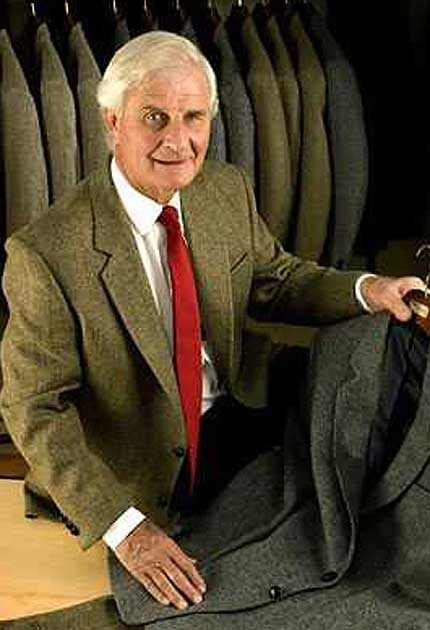
There's a chill in the air, a dwindling of the light at 7pm, a hint of wood-smoke in the suburbs ... Autumn is sliding over us like a tartan blanket over the knees of a convalescent, after too much sun and sangria. Soon it'll be dark when we leave work, we'll be crunching through leaves and wearing wool next to the skin. And the clothes-conscious gentleman's thoughts will turn to tweed.
Chaps love tweed. It's like a comfort blanket after you've worn jeans or a sharp suit for too long. Tweed jackets, tweed caps, tweed plus-fours and plus-twos, tweed suits for the extrovert, hairy tweeds for the show-off on the grouse-shoot – we love its oddly-calming flamboyance. It's the only part of most men's suits and jackets which carries any hint of actual colour, such as orange, red or green. And its hues are the essence of autumn in Scotland: rained-on fields, turning leaves, birch trees, heather, bracken. But its commercial fortunes are now in uproar.
Some Scottish mills have been making tweed for popular usage since 1830 (the name supposedly derives from tweel, the Scots word for twill, and has nothing to do with the river Tweed) but Harris Tweed, the most famous variety – indeed, probably the most famous single fabric in the world – has been going for just a century. Its weavers simply body-swerved the Industrial Revolution: the islanders of Harris, Lewis, Uist and Barra went on making cloth by hand and selling only to locals. But after 1903, they boldly added spinning machinery to the looms, and, reassured by the new Trade Marks Act, got themselves a certification mark (or patent) in 1909.
The look took off like a rocket. The new cycling, motoring and great-outdoors fans liked its warmth, as did moorland-based shooting parties. The bright young things of the 1920s loved its elegant browns, greens and yellows. Richard Hannay, the dashing, Canadian hero of The 39 Steps (written in 1915 and currently playing at London's Criterion Theatre) is always portrayed in tweeds. Charles Ryder and Sebastian Flyte, in the most recent screening of Brideshead Revisited, loll about homoerotically in tweedy checks.
Today, the industry is in a remarkably schizoid state. In the Outer Hebrides, the Harris Tweed marque has all but ceased since a Yorkshire textile baron called, amusingly, Brian Haggas, bought the KM Group, which makes 95 per cent of Harris Tweed material. He decided to stop flogging cloth and make jackets instead – just one jacket in four colours. According to the current Monocle magazine, he now has 70,000 tweed jackets sitting unsold at his temporarily closed plant, their price cut from £300 to a pathetic £70 each. And his workforce has been laid off. A BBC Four documentary on the Harris disaster, Trouble Looms, is being broadcast tonight.
Elsewhere, though, there are signs that Scottish, not-necessarily-Harris, tweed is acquiring a new trendiness. Vivienne Westwood has been a fan of the fabric since the 1980s (she was taken to court by Harris Tweed for appearing to steal their "Orb" hallmark) and has been joined by Paul Smith, whose autumn 2009 collection is full of tartans, checks and tweed jackets, trews and waistcoats. His bespoke department reported an "occasional" Harris customer, but receives far more commissions for Donegal tweed in Ireland or Teviot tweed from the Lovat Mill in Roxburghshire. It's a question of lightness. Classic Harris cloth tends towards the coarse and the heavy – 18 or 20oz compared to classic worsted 10 or 11oz. Other medium Scottish tweeds weigh in at 14oz, warm enough to keep you going on the windy moors, without making you perspire awkwardly in public on the train home.
If you're feeling autumnally tweedy, what will it cost you? A Paul Smith bespoke, two-piece Lovat tweed suit costs from £2,300. Huntsman, the grandest and most venerable of Savile Row tailors, specialise in beautiful, subtly colourful tweeds from Islay where they make the peatiest malt whisky. One of their exclusive tweed designs will cost you £4,200 bespoke, or £2,500 made-to-measure (ie made to a "block pattern" and adjusted to fit you.) Norton & Sons, a few doors away, has by far the largest range of tweeds (about 1,000, along with their Harris Tweed exclusives). Their dashing director, Patrick Grant, the star of the Trouble Looms documentary, is refreshingly unstuffy about his clientele: he told me about the man who demanded they make him "the loudest suit at Goodwood races" and how pleased he was with the resulting design (a riot of purple, yellow, blue and red) named "the Bounder." They will make you a beauty for £3,000.
Tweed fans with limited budgets and limited waiting time should head for the reliably brisk (and extremely cut-rate) Apsleys of Pall Mall, where you can choose from a few hundred patterns, from Johnstons of Elgin, Porter & Harding of Edinburgh and the Lovat Mills, to convert into jackets, suits, plus-fours and plus-twos. They'll do it for you in two weeks or so, and a totally bespoke two-piece suit is a snip – actually more of a miracle – at £900.
And let us raise a shot glass of Laphroaig and hope that Harris Tweed is – as its eccentric owner faithfully promises it will be – pulled back from the brink of fashion Hades by this time nest year.
Join our commenting forum
Join thought-provoking conversations, follow other Independent readers and see their replies
Comments