Luella Bartley is latest fashion victim of recession

Designer's eponymous label is forced to stop trading
On Facebook
Life & Style blogs

Online House Hunter: Rugby – a Dickens of a town

Charles Dickens didn't think much of the railway town of Rugby in Warwickshire, calling it Mugby. Bu...

Online House Hunter: Mortgage relief

Banks would appear to be finally relinquishing their stranglehold on mortgages. Our Online House Hun...

Online House Hunter: Hard sell

How much would you reduce the price of your house by to achieve a sale? Our Online House Hunter look...

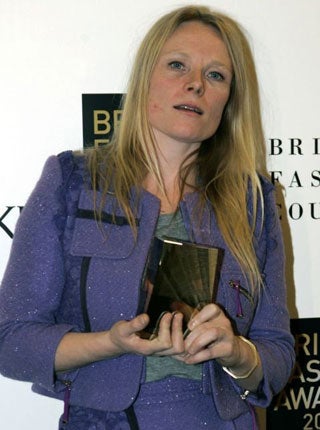
Luella Bartley, the Warwick-shire-born designer integral to the recent rejuvenation of British fashion, has become a surprise victim of the recession. Her eponymous label has been forced out of business after one of its main suppliers closed.

It is a shock to those who have followed the progress of Bartley, Designer of the Year at the British Fashion Awards in 2008. On Monday night, it was still business as usual: she hosted a party at the London store Liberty, where she has designed the Christmas grotto and window display.

"This is a very disappointing situation for everyone involved," she said yesterday. "I have had an incredible team around me... and it is upsetting not to be able to protect jobs in this difficult economic climate."

Known for its idiosyncratic and humorous mix of punk details and party dresses, Luella is the label of choice for the streetwise British girl-about-town and is regularly worn by London gossip-page royalty Alexa Chung, Lily Allen and the Geldof sisters. The designer once described her look as "the kind of clothes you can get drunk and fall over in".

The closure last month of Luella's Italian production company, Carla Carini, meant that orders for the label's spring/summer 2010 collection could not be fulfilled – and so the Singapore-based company in charge of distributing Bartley's clothing and accessories, VSQ, announced that it had "reluctantly" decided to withdraw its backing. Five people in her design studio and 13 in distribution face losing their jobs.

Bartley launched Luella in 1999. Her fusion of traditional British influences – Crombie coats and hunting jackets – with quirky modern details chimed with a nascent Cool Britannia 2.0 movement. She opened her flagship store on Mayfair's Brook Street in 2007.

She joins Christian Lacroix and Yohji Yamamoto on the list of fashion names hit by the downturn this year. Bartley's range is known for its accessibility, and it seems hopeful that investors will see the label's commercial potential.

She is a victim of knock-on effects of the credit crunch, rather than guilty of mismanagement or lack of vision. Luella handbags, hair accessories and leather goods sell well; the dresses – around £500 each – may not be cheap but they are popular in boutiques as well as up-market high street stockists; and her range of graphic T-shirts provides a "way in" to the brand at a lower price.

One of this season's designs depicts a distressed cartoon pyramid scheme holding tightly on to a bag of US dollars. She said she hoped to revive the label. "I love the Luella character," she added yesterday, "and hope that... the Luella girl can have an exciting future."

Bartley, who worked as a journalist at the Evening Standard and Vogue before becoming a designer, lives in Cornwall with her three children and her partner, the fashion photographer David Sims.

Independent Comment
blog comments powered by Disqus

Day In a Page

Picture preview: Lucian Freud drawings

Lucian Freud drawings

Picture preview
Silent revolution at the Baftas as the French take top awards

Silent revolution at the Baftas

The Artist wins in seven categories, with Meryl Streep the other big success story
Whitney Houston: The diva who had – and lost – it all

The diva who had – and lost – it all

Nick Hasted charts the highs and lows of Whitney Houston's life
How Picasso won over (some of) the British

How Picasso won over (some of) the British

Winston Churchill and Evelyn Waugh hated his work, but Picasso provided inspiration for a whole generation of UK artists
Topshop: A Decade Of Design

Topshop: A Decade Of Design

When London Fashion Week starts on Friday, Topshop will celebrate 10 years backing its brightest young stars
John Prescott: 'My wife thought I'd just retire, but I'm not a slippers man'

'My wife thought I'd just retire, but I'm not a slippers man'

At 73, John Prescott isn't mellowing. In fact he's taking a shot at becoming a police commissioner
Jim Gamble: We are losing the race to protect our young

Jim Gamble: We are losing the race to protect our young

Technology and the children who use it won't wait for slow-moving child-protection services and police to catch up
Sarah Sands: A friend is not the one you turn to, but the person who turns to you

Sarah Sands on friendship

A friend is not the one you turn to, but the person who turns to you
Andy Burnham: 'It's a genie out of the bottle moment'

Andy Burnham interview

'It's a genie out of the bottle moment'
Leveson: What we've learnt so far

Leveson: What we've learnt so far

Ingenious hacks, shifty editors and attacks of Sudden Memory Loss Syndrome – Matthew Bell assesses the state of play at the Royal Courts of Justice
Modern lovers: The 'sexual body warriors' and pioneers transforming 21st-century relationships

Modern lovers: The 'sexual body warriors'

Sarah Morrison meets the people redefining love in the 21st century.
'I was angry, so angry': How heartbreak, betrayal and Su Pollard helped Estelle find pop success

Estelle: 'I was angry, so angry'

The singer talks about heartache, betrayal and bouncing back.
Choc tactics: Bill Granger's Valentine's recipes for chocoholics

Bill Granger's Valentine's recipes for chocoholics

Should it be white, milk or plain? Can you make a melt-in-the-mouth pudding without using any?
Male, pale & stale: Could more women on the board help Mothercare – and other ailing firms?

Male, pale & stale

Could more women on the board help Mothercare – and other ailing firms?
Upstairs, downstairs, 2012-style

Upstairs, downstairs, 2012-style

There are now more domestic workers in Britain than in Edwardian times