Supersized: Why our portion sizes are ballooning
From buckets of cinema popcorn to 'meal deals' and multi-buys...
The second episode of the new BBC2 series The Men Who Made Us Fat, which looks at how the concept of super-sizing changed our eating habits, begins with the investigative journalist Jacques Peretti going into a Great Yarmouth diner for breakfast. The affable owner offers him a choice: The Big Boy, The Fat Boy, or The Kid's Breakfast, so-called because "it weighs the same as a small child".
He goes for the latter, a nine-and-a-half pound meal which includes an eight-egg omelette, 12 rashers of bacon, 12 sausages, sautéed potatoes, mushrooms, hash browns, black pudding, four fried bread, four pieces of toast and four slices of bread and butter. It costs £15 and if a single person can eat it in an hour, they get their money back. Dwarfed by the dish, Peretti fails to make a dent.
It is a shocking scene but a valuable visual for asking the question: when did our portion sizes become so out of control? While such meals are not exactly the norm, even the idea of them was unthinkable 40 years ago. How did a nation of once moderate eaters (less than two per cent of adults were obese in the Seventies) develop an appetite for monster portions that has contributed to one in four British adults today being classified as obese?
It was a cinema in Chicago that first came up with the concept of super-sizing. In 1967 David Wallerstein, an area manager for the Balaban movie theatre chain, was given the task of boosting sales of popcorn and soda. Realising that consumers wouldn't buy multiple cartons of popcorn, Wallerstein decided to introduce a large size, alongside the standard, for which they could then charge more; considerably more than the cost of the extra popcorn. An immediate success, Wallerstein was soon headhunted by McDonald's, where he applied the concept to the burger chain.
Initially the founder, Ray Kroc, was opposed to the idea, believing that if customers wanted more food then they would simply buy more. Wallerstein convinced him that people were unlikely to buy a second helping so as not to appear gluttonous. However, if they were given the option of ordering a larger size, they would often take it.
In 1972 McDonald's introduced large fries. Going large was seen as good value for consumers (it did , after all, cost less than buying two portions) yet the cost to the company for the extra food was minimal, considerably less than it would charge the customer. Profits soared and, naturally, other fast-food outlets soon followed.
In the episode, Peretti examines the rise of super-sizing with the growing concerns about the way we eat. In 1974 Professor Anthony Sclafani at the City University of New York was attempting to get rats to overeat as part of his research into studying appetite and behaviour, but they weren't putting on weight fast enough. He gave them chocolate and biscuits and they over ate, becoming obese. Rats share the same biological drive as humans, so we are likely to reflect their behaviour. By the late Seventies, the food industry knew the foods we found hardest to resist were rich in sugar and fat.
Peretti notes that in the Eighties the fast-food market had begun to stagnate and so Taco Bell, the American Mexican fast-food chain, introduced the value meal. That way companies could bundle together a number of starters, sides, drinks and desserts that the customer would order on the assumption that they were getting great value for money. Again, other fast food outlets quickly copied. "Value meals" also meant that customers took less time choosing at the counter than when they were just offered individual items.
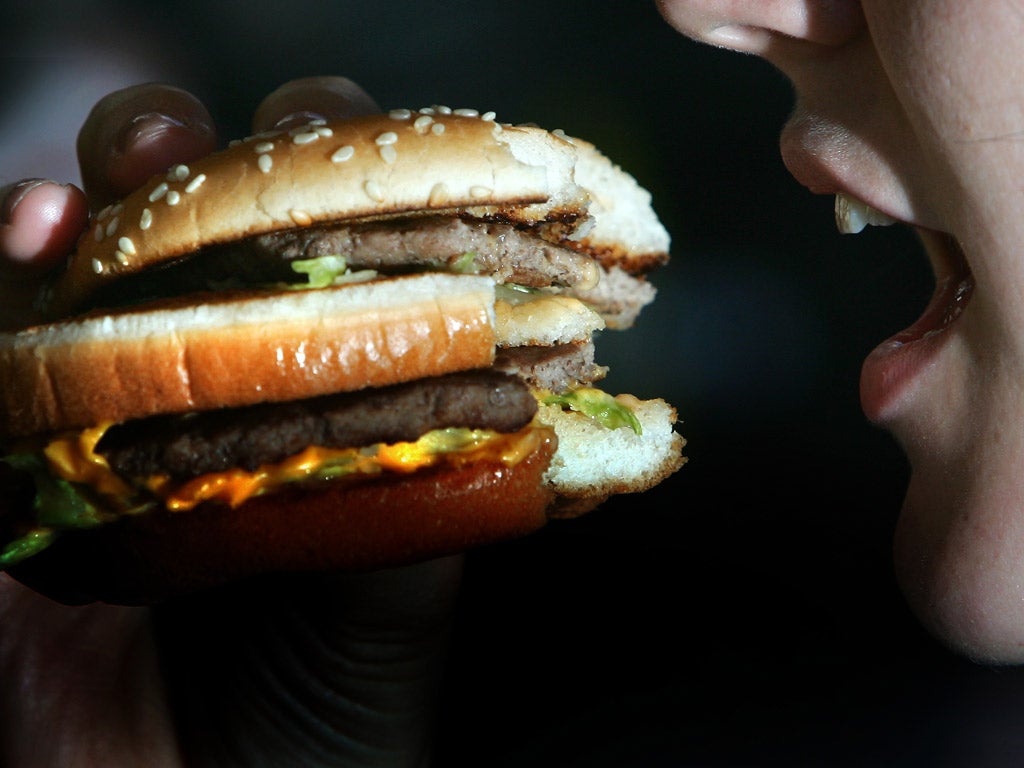
The much maligned "super-size" value meal at McDonald's was rolled out in 1993, after it co-marketed the film Jurassic Park, offering a "Dino-size". It was so successful, it became a fixture on the menu. In one arresting scene we see the only size of soda that was available at McDonald's in the Fifties: seven ounces (207ml). A super-size soda at McDonald's was 42oz (1.19l). McDonald's began to phase out the size in 2004, though many other outlets persisted. Perreti observes it was corporate America and the constant push for increased profits that was making food sizes bigger but, dangerously, science would dictate that humans had a propensity to overeat foods high in fat and sugar.
In the late 1990s, Dr Barbara Rolls of Penn State University researched how portion size contributed to obesity. Before, it was believed if someone overate at one meal, they compensated by undereating later. What she found was that people would continue to overeat if they were given bigger portion sizes. The programme also looks at the size of chocolate bars in the UK, which have grown considerably over time and been marketed as a family snack.
When health experts persuaded manufacturers to withdraw king-size bars in 2004, they came up with the idea of "duo" or "twin" bars, which are essentially two bars in one but are marketed as being for sharing. Peretti notes that these bars are rarely shared.
Sharing is the latest buzz word for the food industry, but research shows that larger bags lead us to eat more. Dr Rolls discusses another study that demonstrated that the larger the portion of crisps, the more people eat. What the participants ate for dinner was then looked at, to see if they compensated for the bigger portion of crisps they had eaten by eating less, but they didn't. "The bag is a certain cue that it is appropriate to eat that amount and people just keep going," notes Rolls.
The final culprits in our ever expanding portions sizes are supermarkets, which encourage multi-buy promotions on what they call "expandable" foods: snacks, sweets and crisps, as the capacity to consume them is greater. Last year the number of multi-buy promotions offered on crisps, sweets and chocolate rose by 138 per cent, the supermarkets safe in the knowledge that it will get people through the door.
It is this relentless pursuit of profit that has led to upsizing on such a huge scale, which in turn has contributed to an obesity epidemic. A bucket of popcorn sure has a lot to answer for.
The Men Who Made Us Fat, 21 June, 9pm, BBC2
Join our commenting forum
Join thought-provoking conversations, follow other Independent readers and see their replies
Comments
Bookmark popover
Removed from bookmarks