The Independent's journalism is supported by our readers. When you purchase through links on our site, we may earn commission.
The growth industry: Veg boxes have gone from a niche product for worthies to a foodies' essential
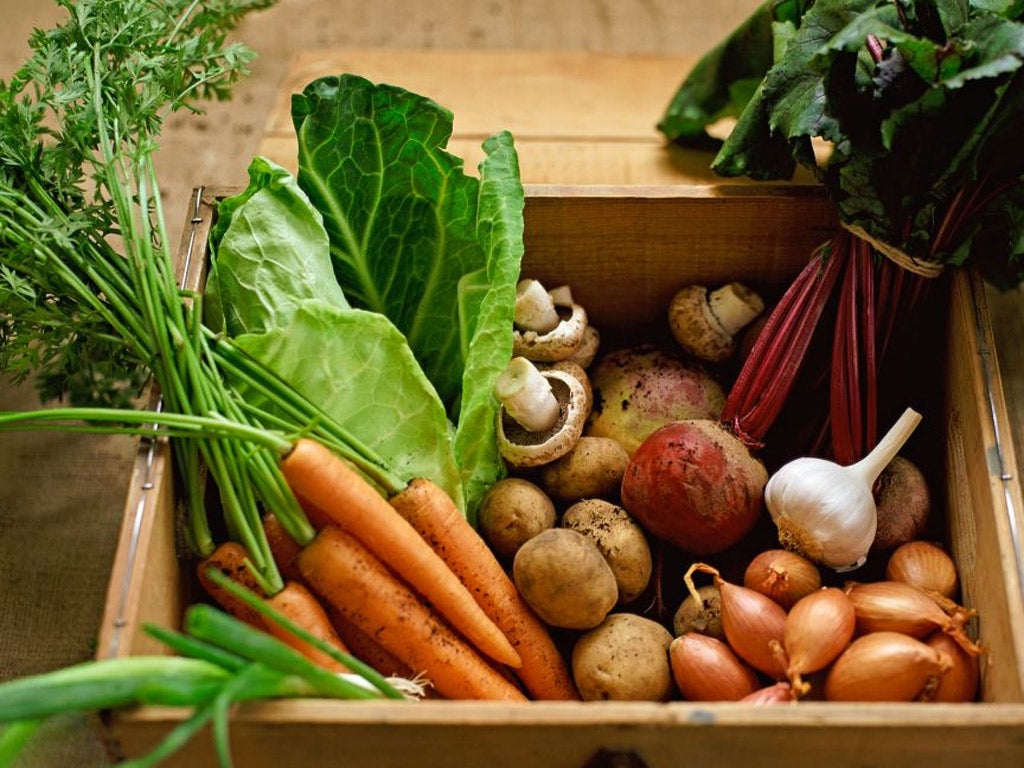
What is it about veg boxes that they are positively prospering in the recession while supermarket sales of organic greengroceries have plunged? Is it loyalty to an ethical supplier, a determination to maintain green credentials as the planet heats relentlessly, or merely the surprise of not knowing whether a stick of black salsify or a handsome pale blue squash will turn up among the carrots, swedes and spuds to help brighten a winter supper?
One man who has a good idea why the humble box is here to stay is Guy Watson, whose Riverford organic farm built its name on box schemes, becoming one of the main players in the business.
Foodies have become the core customer base, he says, replacing the worthies with less fussy palates who kick-started the surge towards organic 25 years ago.
And the box men have considerably smartened up their act in response.
"It was all started in the 1980s by a bunch of belligerent, value-driven farmers, whose attitude was: 'This is what we produce – like it or lump it'," explains Watson, who has grown organic for 25 years, but only joined the home delivery set in 1993.
"They were selling to customers who didn't care that those first boxes contained a load of muddy swedes, woody parsnips and pigeon-pecked cabbages, so long as they were organic."
Then Abel and Cole and Riverford came along, offering something a little slicker and more appealing to the average food-loving household. "We always believed our customers would expect carrots free of flies and we had to accept they wanted salads even in winter and more exotic vegetables like peppers and tomatoes, even if that meant supplementing their box with the odd import. It's these foodies who are driving the business – and we've had to develop an eye for what they want to eat."
So today's box men are harnessing tunnels to grow rocket in the depths of winter and forming partnerships with farms in other areas so they can offer the added attribute of supplying local – a factor that now carries as much cred as organic certification from the Soil Association.
In the case of innovative growers like Riverford, they are also buying farms abroad to keep control of the imports they supply and adding organic meat, milk, eggs, bread, muesli and more to their list in a direct challenge to online grocers such as Waitrose and Ocado, who boast a strong organic offering.
Abel and Cole, the biggest players in the veg box business, offer even more categories, including baby food, dry goods, wine and washing-up liquid.
Even so, the 30 per cent annual growth Abel and Cole is currently enjoying seems staggering in a recession.
Founder Keith Abel seems slightly stunned: "In 1988 we were delivering five boxes a week. We struggled for years to get to our first thousand," he admits.
"Yet the past two years have been amazing.This year we will deliver nearly 60,000 boxes a week and see turnover climb to £43m."
They are not alone. Box scheme and other mail order sales of organics are showing a strong gain at £155m, while the supermarkets, which still represent 72 per cent of organic sales, have seen that side of their business drop by a quarter since 2008.
Abel thinks this is down to the supermarkets reducing their selection of organic produce and failing to understand the prime attractions of the box: "Our customers want to eat better in every way, which means fresher food from a shorter supply chain, which has not been air-freighted or smothered in polythene," he says.
And the box has the benefit of educating palates in a far more direct way than the supermarket can dream of, he believes: "We will slip in a romanesque cauliflower or some black salsify often enough to excite – and we pack recipe cards into every box."
They also allow customers to exclude beetroots, sprouts, or any other disliked species.
While recipe cards and cookbooks are now de rigeur, the big players are vying with each other to make use of newer technologies. Abel & Cole teaches how to use the more unusual veg on its website, while Riverford aims to go one better with its novel phone app, which employs a fruit machine-style design to call up hundreds of recipes for whatever customers find lurking in their veg bin.
Both companies are constantly expanding their offering. Abel & Cole, which buys in from farmers rather than growing its own, has evolved into a full-scale online ethical general store, while Riverford, more cautious after failing with bread on its first attempt, now also supplies chilled soups, cooked meats and cheeses, eggs, oatcakes and cereals, mayonnaise, pesto and olive oil. Next month they are going to launch a mixed meat and veg box as a standard option.
The success of the box may still come down to cost-consciousness if you clock the fact that veg boxes are a 26 per cent saving over supermarket prices, according to the Soil Association, but even in a recession, Abel thinks box buyers are not motivated by saving money.
"It's like cycling – you may decide to take it up to save money on driving, but you're likely to go out and buy the best bike you can afford.
"Vegetables can so easily be the boring old uncle at the party. What the best have done with boxes is to make them as exciting as a Michelin-starred restaurant arriving at the door."
What else is in the box?
Fruit and veg may have kicked it off, but now the box habit has been hijacked by alll manner of edibles. Some of the newer entrepreneurs in the game include the following:
Meat
Field and Flower delivers boxes containing meat sourced within 15 miles of its Somerset farm. Prices start at £55 for a small monthly box and you can easily put together your own combination of meats and cuts online. fieldandflower.co.uk
Specialist coffee
Kopi will send you 250g grams of a different rare, single-origin coffee each month, together with notes on its provenence and tips for brewing it up. This week, they're offering Independent readers a free sample of a 100g bag of coffee and a booklet explaining its origins. Just go to kopi.co.uk/indpt and enter the code INDPT and say whether you'd prefer ground or beans. kopi.co.uk
Loose-leaf tea
Tea Horse delivers four different loose-leaf teas every month, with detailed tasting notes and paper filters to minimise any brewing mess. From £10 at teahorse.co.uk
Luxuries
The Larder Box contains five gourmet products monthly, from a bottle of fruit vinegar to a pouch of salted caramel popcorn. It comes with meal suggestions and a rundown on the producers. From £16.50, thelarderbox.com
Healthy snacks
Graze targets workers with four punnets of healthy snacks to keep beside the computer – think nuts, seeds, olives, crackers, dried fruit and more at £3.79 per box. graze.com
Join our commenting forum
Join thought-provoking conversations, follow other Independent readers and see their replies
Comments