Supermarkets shun seasonal British food
Supermarkets are shunning seasonal British food in favour of fruit and vegetables air-freighted from thousands of miles away, according to research for the Independent.
A snapshot survey of 10 foods grown in the UK found seven leading supermarket groups selling ‘fresh produce’ from as far away as South America.
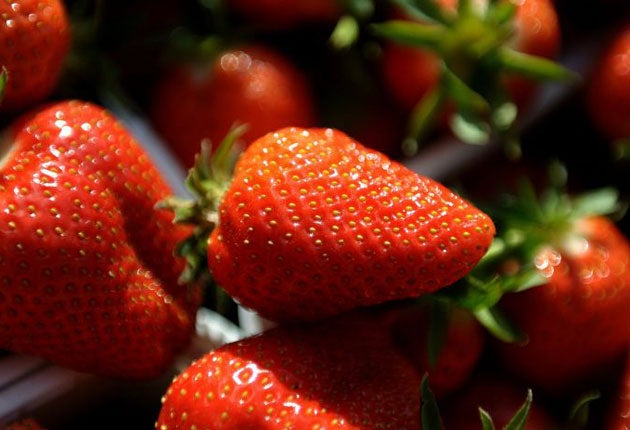
Asda had the most foreign items, five, including aspargus from Peru, strawberries from Spain and cauliflower from France. Marks & Spencer had the fewest - two, broad beans from Guatemala and broccoli from Spain.
Among the other examples, Morrisons (the second best performer) was selling Dutch radishes, Tesco Dutch strawberries and Sainsbury’s spring onions from Kenya and Mexico.
All the plants can be grown in Britain at this time of year.
The findings comes amid a controversy about the transportation of food long distances. The issue of ‘food miles’ returned to the fore last month when British asparagus growers discovered their local branch of Tesco in Evesham, Worcestershire, stocking asparagus from Peru.
The discovery caused particular consternation because the Vale of Evesham is one of Britain’s biggest areas for market gardening, yet local shoppers were being offered a product from the other side of the world. “It's such a shame it had to come all the way from Peru. I could understand if asparagus was out of season,” said one resident Paula Gordon.
Another, Terrance Anderson, 48, said: “It's an insult to our heritage. My grandfather grew asparagus and he would be up in arms about this.”
Why Tesco would be selling aspargus from 6,000 miles away when it was being harvested yards away?
Tesco said: 'We're very supportive of locally sourced produce and we're stocking the foreign asparagus to keep up with demand for the seasonal vegetable." Britain's biggest grocer added that it sold more British asparagus than any other retailer.
Generally stores say foreign crops provide an all-year round supply of fruit and vegetables, but it is the case that they are often cheaper than seasonal domestic produce - usually because labour rates in developing countries are lower.
As the Peruvian asparagus showed, some shoppers are uneasy about the sale of air-freighted food and wonder whether they should avoid buying green beans from Kenya
Experts in food sustainability say that, while complex, the food miles debate has important implications for the environment, health and the economy.
Tim Lang, professor of food policy at City University in London and a Government adviser on food sustainability, first coined the term ‘food miles’ five years ago.
He wanted people to think about where their food came from - its “hidden ecological, social and economic consequences” - following a sharp rise in the distance travelled by food before reaching the plate.
While we have been eating foreign food for more than a century, our hankering for oranges, bananas, tomatoes, tea, coffee, and, increasingly lychees, guavas and other exotic fresh produce, has damaged the environment.
Statistics are patchy, and often out of date, but the trucking of food rose by 50 per cent and air-freighting more than doubled between 1978 and 2002.
Air food kilometres rose by 11 per cent, and car shopping by 8.8 per cent in 2006. One in four lorries on the road now carries food, and food miles account for 1.8 per cent of the UK’s carbon dioxide emissions.
Annually, food transportation is estimated to cost the country £9bn in congestion, greenhouse gas emissions, accidents, air pollution, noise and other problems.
Such a stark statistic suggests we should always avoid food transported from far away, yet food miles are only one indicator of sustainability: other issues to be considered are seasonality and development.
In terms of development, one million farmers and their dependents in Africa rely on food income from the West. These farmers have as little as one-fiftieth of the carbon emissions of westerners, 200 kilos per year, and often live on less than 50p a day. Aid charities such as Oxfam argue it is wrong for them to be forced to atone for the energy-profligate lifestyles of flying, car-driving westerners.
Three years ago the Soil Association announced it was considering vetoeing organic status for air-freighted produce. To many people’s surprise, the UK’s biggest certifier of organic food decided against a ban, after listening to the arguments of the aid charities.
The seasons strongly influence sustainability because, in some cases, growing produce out of season in the UK can be more polluting than buying food transported from thousands of miles away.
The University of Exeter found that UK tomatoes grown out of season using heated glass in the UK emitted 2.5kg of carbon dioxide per kg of fruit, compared to about 0.24kg for tomatoes trucked from Spain where heat is not needed.
For peppers it was even worse (4.5 kg CO2 / kg fruit) suggesting a factor of twenty in favour of importing.
A University of Surrey study found the same with apples kept in cold storage in the UK. The lead academic, Dr Llorenç Milà I Canals, said: "By May, apples harvested in Britain have been kept in refrigerated storage for more than six months, which uses a lot of energy. At that point, it becomes better to import from New Zealand."
While much of the food miles debate centres on the role of the relatively recent trend of air-freighting, flying accounts for only 1 per cent of UK food miles, although this small amount generates 10 per cent of food transport Co2 emissions.
Many shoppers are unaware that the biggest source of food miles are, in fact, shoppers to the shops. Those who tootle between farm shops, fishmongers, butchers and greengrocers may be clocking up more than a family shopping once a fortnight shop in a supermarket.
Food miles could be substantially reduced if Britons went back to eating with the seasons in Britain. Local, seasonal food is healthy, cheap and environmentally-friendly.
Yet it is not always stocked as widely as it might, even at the height of the UK growing season.
In a survey of nine seasonal items last year Consumer Focus, a publicly-funded watchdog, found that Waitrose stocked the most UK produce, 92 per cent, followed by Sainsbury’s on 83 per cent and Morrisons on 71 per cent. Asda was the worst performer, on 59 per cent. Asda described the report as "inaccurate and misleading" and said it had cut carbon emissions in existing stores by 20 per cent since 2005 through a series of initiatives such as reducing packaging.
Dr Tom MacMillan, executive director of the Food Ethics Council, said: “Food that’s in season here should cost less, support local farmers and be better for the planet. The supermarkets know this. They’ll be importing fruit and veg because it happens to be cheaper right now or they can’t find enough of local stuff. But the same happens year after year, and their customers trust them to do better.”
Professor Lang, Britain’s top food academic, believes that the complexity of the different aspects of food production should be expressed on labels through “onmi-standards” showing such things as food miles, water use, fat content and nutritional benefits.
He takes a long historical perspective when looking at food systems and believes the current system is unsustainable.
Two hundred years ago we ate locally: now we import food from thousands of miles away, yet we are entering a “post oil world.”
Professor Lang said: “We are going to have to develop a new cultural view of what constitutes a good diet.
“In the middle of the British asparagus season to have aspargus coming from the other side of the world because land and labour are cheap is folly. Peruvian land ought to be feeding South Americans who are under-consuming. This is a new form of colonialism.”
According to Professor Lang, the sale of Peruvian asparagus is a sign of the “folly of an oil economy.”
Join our commenting forum
Join thought-provoking conversations, follow other Independent readers and see their replies
Comments