The rise and rise of the vegetarian
Sausage, bacon and roast dinners, staples of the British diet, are on the wane as 'flexitarians' forgo meat
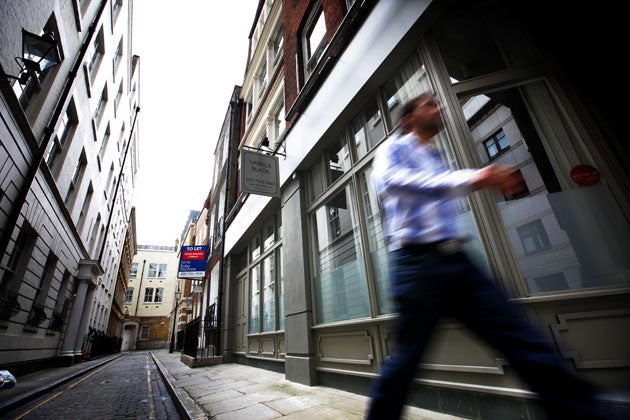
jason alden
The top vegetarian restaurant Vanilla Black tries to appeal to carnivores as well as their more discriminating friends
Forget lentils and tofu. Vegetarian cooking is enjoying a makeover, prompting meat-eaters to put down their steak knives. New green cuisine is tapping into the rise of the "flexitarian", the occasional vegetarian who is helping their waistline and the planet by eating less meat.
A new crop of vegetarian restaurants is springing up, catering to rising demand for meat-free dining options. Even established restaurateurs, such as Aldo Zilli, are jumping on the bandwagon: Zilli is considering axing meat from one of his London eateries to cash in on the new trend. He is even mulling rechristening one of them Zilli Green. And other chefs, including Oliver Peyton, are increasing the number of meat-free choices on their existing menus.
From Sir Paul McCartney, who wants us all to eschew meat on Mondays, to Lydia Guevara – granddaughter of the revolutionary Che – who is starring in a new anti-meat campaign for Peta, there is no shortage of high-profile figures banging the vegetarian drum. This is boosting sales of meat-free foods in supermarkets as shoppers swap minced meat for substitutes such as Quorn. The meat-free market was worth £739m last year, up by a fifth in the last five years and is forecast to enjoy similar growth until at least 2013, according to research by Mintel.
Vegetarian food is no longer the crunchy preserve of a small minority but is hitting the mainstream. A recent poll for the Food Development Association showed that 86 per cent of Brits eat non-meat meals once or twice a week, forcing restaurants to follow suit.
"Historically, chefs haven't liked vegetarians but that is changing. Younger chefs particularly understand the need for vegetarian food," said Peyton, who owns several restaurants in London. "So many more people want vegetarian food these days and it's my job to cater for them." His restaurants, which include Inn the Park, in St James's Park, now offer up to three meat-free alternatives per course, he said. He is one of a band of chefs, including the IoS's Skye Gyngell, who is backing Sir Paul's "Meat Free Monday" drive, which wants people to cut out meat to help slow climate change since livestock production pumps more greenhouse gas emissions into the atmosphere than transportation.
Andrew Dargue, who owns Vanilla Black, a vegetarian restaurant that relocated to London from York last year, said that his customers are increasingly meat-eaters looking for something different. "People can have a block on vegetarian food and say they don't like it but they don't stop to think that even tomato soup or scrambled eggs on toast is vegetarian," he said. His food, dubbed "haute vegetarian" by the critics, is certainly finding favour: Vanilla Black even gets a mention in the Michelin Guide.
Other newly opened meat-free restaurants in London include two branches of the Swiss chain Tibits and the vegan diner Saf, which also has outposts in Turkey and Germany. They join the capital's vegetarian stalwarts such as Manna in Primrose Hill and Soho's Mildred's. Outside London, Heather Mills opened a vegan cafe in Brighton, V-Bites, earlier this month.
Richard Harden, who owns the Harden's restaurant guide, said specialist vegetarian eateries are "growing in popularity". He said more people, himself included, were happy to forgo meat for at least one meal. Ben McCormack, editor of the Square Meal guide, said: "Vegetarians are better served than they used to be. With the rise of the 'flexitarian', restaurants are improving their vegetarian offerings."
The doyen of crossover cooking is the French triple Michelin-starred chef Alain Passard, who took meat off the menu at his vaunted Parisian restaurant L'Arpège at the height of the BSE scare in 2001.He has since reverted to serving steaks but he remains the acknowledged father of the new green cuisine. British chefs who cater well for non-meat-eaters include Simon Rimmer, who owns Greens, near Manchester, and Yotam Ottolenghi, who writes a weekly vegetarian cooking column.
Top vegetarian chef: Simon Rimmer
TV chef Simon Rimmer calls himself an 'Accidental Vegetarian' in one of his cookbooks, but that doesn't lessen his impact on the new green cuisine scene. His Greens restaurant, near Manchester, has done much to fly the vegetarian flag outside London.
Top vegetarian cookbook: Café Paradiso Seasons
Silence any vegetarian doubters out there with a meal whipped up from Irish chef Denis Cotter's Café Paradiso Seasons, a gem of a cookbook that will have even meat-eaters salivating. A guaranteed nut-roast-free zone.
Top non-vegetarian restaurant for veggies: Morgan M
It may sound contradictory, but Morgan M, in north London, is a French restaurant that is as admired for its vegetarian cooking as for its meat and fish dishes. Chef Morgan Meunier first offered a seven-course 'garden menu' in 2003 and hasn't looked back since.
Top vegetarian restaurant: Vanilla Black
Vegetarian restaurants and Michelin guides may sound like unlikely bedfellows but Vanilla Black, one of London's newcomers to the non-meat scene, scores itself a mention for the quality of its cooking, which owner Andrew Dargue hopes appeals as much to carnivores as their more discriminating friends.
Top meat-free ingredient: Mushroom ketchup
The humble mushroom is no Quorn, the fungus-based meat substitute, but it is the vegetarian chef's secret ingredient when it comes to whisking up something satisfying that didn't used to fly, run or swim. Add a few drops of mushroom ketchup to just about anything you're cooking to see what we mean.
'We wanted to help the planet, so we had to go veggie'
Debbie Howard, 44, persuaded her partner, Ryan Morley, 35, that it would be a good idea for their family – her children, Jasmine and Sonny, and his daughter, Ella – to become vegetarian:
'I was a vegetarian for 10 years until I got pregnant and suddenly had cravings for meat. I struggled for a couple for years after that, so we did eat a bit of meat for a while. When the twins were old enough, I explained to them that meat is a dead animal, and they've never wanted to touch it since. But I found it hard to keep off meat, much to their complete disapproval. When they were five, I ordered meat at a restaurant and they both got up to sit at another table. I had to change my order! Nowadays though, we're all committed veggies.
For me, not eating meat is mainly about animal cruelty. But for Ryan it was because of environmental issues such as intensive farming and greenhouse gas emissions. It's hard because he really loves meat. But we couldn't keep talking about wanting to help the planet, while destroying it by eating in a way that is badly harming it.'
View all comments that have been posted about this article.
Offensive or abusive comments will be removed and your IP logged and may be used to prevent further submission. In submitting a comment to the site, you agree to be bound by the Independent Minds Terms of Service.
- Print Article
- Email Article
-
Click here for copyright permissions
Copyright 2009 Independent News and Media Limited


Comments
The problem is I like meat. I won't be forced into foregoing it just because the supermarkets serve virtually nothing but meat raised in ways that lack respect for the animal or the laws of nature. The challenge therefore is to find sources of animal welfare friendly meat with clear traceability. Thankfully there are still some butchers who are able to do this.
The niche marketing opportunity though is for resturants not to go the veggie route but to go the ethically raised animal route. Trumphet it out loud. Happy pigs and chickens make tastier meat and meals. Eat it here!
All you need to do now is come up with an economic model to pay for it.
Because right now no farmer can afford to breed and keep stock unless he or she can sell it. No meat, no cash, no cows.
So the choice isn't about how and why animals die. It's about whether they get to live in the first place.
Whatever you do mate, don't go to a restaurtant, especially in Hackney, or Camden, or Islington, or Southwark, or Kingston, or Westminster, or Tower Hamlets (especially Tower Hamlets) or any other borough of London.....or any other Great(!)er Britain areas (not that there is any other significant area of great Briatin apart from London of course.
http://www.happycow.net/famous_vegetari
And before we get into it - Hitler was NEVER a vegetarian! http://en.wikipedia.org/wiki/Adolf_Hitl
i need info on how to take in the small amounts of non-meat protein (apart from dairy products which are a bit uaargh when you think about them) i need to adequately replace my body proteins as they wear out - suggestions welcomed, especially if they don't involve having to add all sorts of suspect expensive smelly putrified stuff to give some flavour;
for the incurable carnivores i offer a thought on sustainable animal protein : turn to blood letting as well as milking your domestic cow, sheep or goat
Vegetarianism is discussed at length by Gandhi is his autobiography 'The story of my experiments with truth'. Gandhi describes how there was a movement to encourage Indians to eat meat, to become more aggressive, so they could overthrow the British. Gandhi tried it and hated it.
Good food can be meat-free - as any Indian knows.
There is a big thing about vegetarianism in China - again, associated with Buddhism.
Indian and Chinese food - what more could you want?
The hillside is also home to thousands of Rabbits, which despite all our efforts with fencing do find their way into the garden. When they do they can decimate our veg crop overnight. I shoot them whenever I can and then I eat them.
When the hens no longer lay eggs I hope I will have the courage to kill and eat them too.
Have I got this wrong?
I believe you have it wrong. One of my inspirations for going vegan was hiking in Nepal when I stopped into a farmers house in the Himalaya. While I was there, the daughter walked in with a rooster, whose neck had just been wrung, and began plucking it. Another rooster walked into the hut with a look of shock and disbelief on his face (I never knew animals could have emotions, but in this moment I really saw it) and it was as if he was saying "how could you do this? you raised us as chicks, fed us and played with us, and now you've just killed my mate?" A few weeks earlier I had been scuba diving off the coast of Bali when a beautiful fish kind of became our ambassador to the underwater world -hanging with us the whole way, coming back to us if he went too far ahead. That night I sat eating fish as there were not many other choices, and resolved to be a vegetarian when I returned home and had more choices. Tthese animals have souls and feelings.
As for the rabbits, have you ever heard of Findhorn in Scotland? I read a book years ago called "To hear angels sing" about how they were able to communicate with the spirit of the animals to get the animals to leave their crops alone. there is also a place in Virginia, USA called Perelandra Ltd, where the woman decided -- after fighting unsuccessfully to keep the deer etc away from her garden -- to build a fountain with fresh water for the local wildlife and to "offer" 10% of all that was in her garden to the wild animals. After that, she never had any problems.
They say that animals communicate with images. So maybe set aside 10 % for them (like tithing to widows and orphans) and communicate to them in images that this is theirs by showing them eating it, then send a picture in your mind of you consuming the other 90%. Who knows? It might work, and its more pleasant than shooting them. I've tried it a little in communicating with dogs I dog sit for. Hard to tell if they really get it, but I sense something is going on based upon their reactions.
And as for eggs, they are used to draw negative energies in folk medicine. For example if you had an illness, the egg is used to draw some of the negative energy out of you. So if you eat eggs, you draw negative energies to you. I have no idea if this is accurate or works or not. But I just figure its best to leave all animals and animal products alone and go with Genesis 1:29, which says all the herbs of the field and seed bearing fruit shall be as food for us.
God bless!
Avoid ready meals and all processed foods at all costs. Read the ingreadients and reject anything you do not know.
Real food is out these but you have to look.
We all eat more food then is good for us anyway.
Incidently,
Is there food value or anything satisfying in the quorn substitutes so many people bang on about - The varieties I've tried seem little more then flavourless rubber.
What about fruitarians? - this must be a very attractive alternative - unless it means you have to run too the loo every hour or so - I wonder how they get around that?
As for saving the planet, we all accept that bio-ethanol cuts emissions, because the CO2 it produces was extracted from the atmosphere by the crops used to make it. So why is it so hard for people to understand that meat production is an identical circular process. We grow crops which extract CO2 from the atmosphere. We then feed that crop to the cows, and they turn it into animal tissue, excrement, methane and CO2. As methane levels are not increasing, one must assume that much of it breaks down into CO2 and water. That CO2 is then re-absorbed by the new crop to feed the animals. It should be noted that most of the CO2 is permanently removed from the atmosphere, as the carbon in it is turned into animal tissue and never returns to the atmosphere. I am always amazed that although this is simple to understand, many university educated people, such as politicians, and many scientists, just don't get it.
"It is the position of the American Dietetic Association that appropriately planned vegetarian diets, including total vegetarian or vegan diets, are healthful, nutritionally adequate and may provide health benefits in the prevention and treatment of certain diseases. Well-planned vegetarian diets are appropriate for individuals during all stages of the life-cycle including pregnancy, lactation, infancy, childhood and adolescence and for athletes."
.... http://www.sciencedaily.com/releases/20
-Meat (and later, cooking meat) was the evolutionary "push" that allowed us to develop larger-than-average brains which in turn gave us dominance (and the guilt of dominance, I suppose).
-We are now using these larger-than-average brains to reason away our advantage.
Talk about seeds of destruction--literally!
Physically, we are NOT meant to be herbivores. And ironically, it's only now, in this society of easy-access, selectively-grown and modified (sure, that organic apple's not GM, but people took years to cultivate a fruit that sugary--still call that natural?) produce, that humans can survive as being vegetarian at all.
I mean, nothing against veg-heads, but for people considering vegetarianism: It's. Not. Natural. Neither is less meat and less fat, necessarily, but that's an entire other argument.
..
Theories of hominid evolution have postulated that switching to meat eating permitted an increase in brain size and hence the emergence of modern man. However, comparative studies of primate intestinal tracts do not support this hypothesis and it is likely that, while meat assumed a more important role in hominid diet, it was not responsible for any major evolutionary shift.
..'
http://www.publicaciones.cucsh.udg.mx/p
'Multiple lines of evidence now indicate that the ability to digest large quantities of starch may have been a crucial adaptation in human evolution -- providing the calories needed to grow large, cognitively-sophisticated brains capable of complex language and social cooperation. This idea is a serious departure from the leading hypothesis that carnivory (via hunting) was the dietary shift needed to support large brains in early humans.
..'
http://thexvials.blogspot.com/
'When we kill animals to eat them, they end up killing us because their flesh, which contains cholesterol and saturated fat, was never intended for human beings, who are natural herbivores.* - Roberts, William C. , Editor, American Journal of Cardiology. Volume 66, P. 896. 1 Oct, 1990.
Resveratrol ultra
Beside why do we want to turn our stomach into a grave yard? don't let the bad habits ruin your lives, try vegetarian 3 days a week and turn back the clock on your face. Don't believe me -- just try it. vege chicken , vege burger from garden burger which are sold every where in publix, whole food market taste great and help the planet, save some lives and you benefit. WIN WIN WIN.
Resveratrol | Teeth whitening | Colon Cleanse