Mobile devices: a constant craving that may be changing our personalities
Our love affair with the devices is more than just a distraction
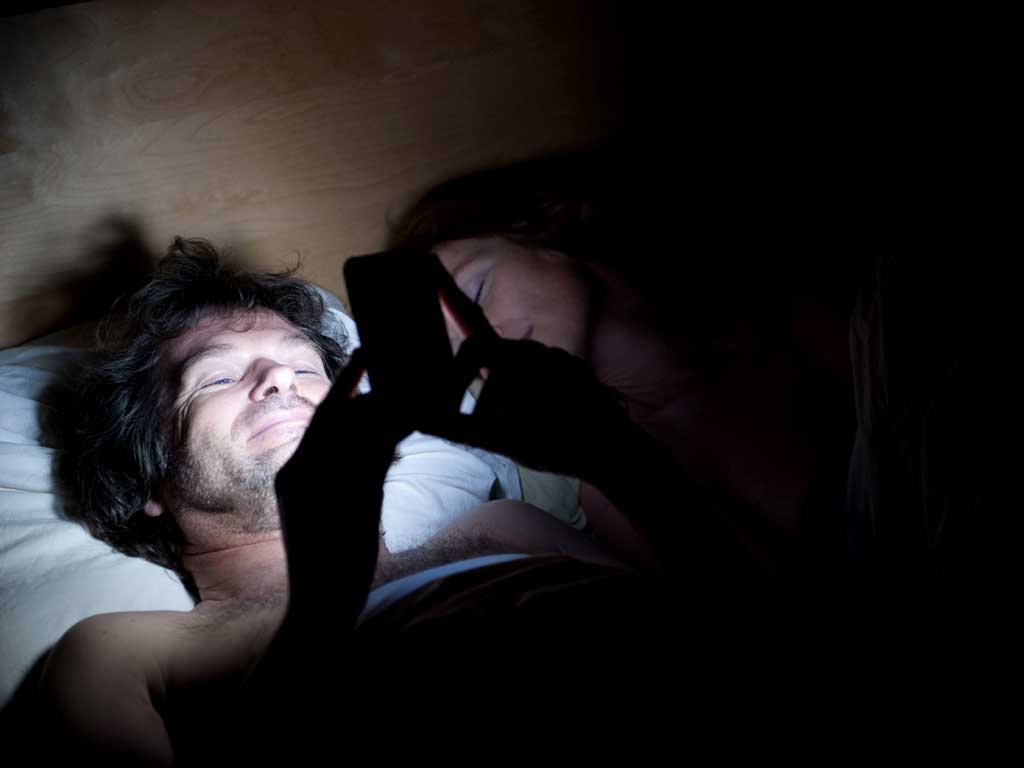
When you wake up, do you check your emails on your phone in the time it takes your laptop to start up? Do you sometimes feel a buzz in your pocket when there is nothing there? Do you keep your Blackberry on the table at a restaurant, like a digital side plate? Do you struggle to finish a page of a book before your hand twitches and your brain starts imagining the status updates you're almost certainly not missing out on?
No? Then carry on, you're fine. But if you do any of these things and wonder what the technology in your hand might be doing to your head, read on (after you've checked your inbox).
The idea that the internet is diminishing our brains despite linking us to vast reservoirs of knowledge is almost as old as the web, and continues to divide psychologists and neurologists. "Is Google Making Us Stoopid?" asked The Atlantic magazine in 2008, triggering a great debate about digital literacy among those who had the attention span to read the 4,000-word article.
Now we consume technology by ever more mobile means, it sometimes feels as though technology is consuming us. An estimated 65 per cent of people in the developed world have a smartphone, tablet or laptop. By 2015, eight in 10 of all people are predicted to be connected this way – all the time.
Dr Larry Rosen, professor of psychology at California State University, calls these gadgets wireless mobile devices, or WMDs, and explores their potentially explosive effects in his new book, iDisorder: Understanding Our Obsession With Technology and Overcoming Its Hold on Us.
"We're in the middle of a grand experiment here," says Rosen. "We're at the early stages of understanding a society that carries the world in its pocket. It's good – you can always connect with someone – but it also means you're there, 24 hours a day... Our brains have not developed to be constantly engaged like this."
A self-confessed geek whose desk is equipped with four screens, Rosen is no Luddite, but he's concerned. In his book, he uses his own and other academics' research to show how the users of WMDs appear to display the symptoms of an array of personality disorders.
One example is narcissism, named after the hunter in Greek mythology who fell in love with his own image reflected in a pond. Are our touch screens the water? To a narcissist, who would display traits including grandiosity, a need for admiration and a lack of empathy, social networks, Rosen writes, "provide a virtual playground for self-expression".
A study of 3,000 Twitter users by Rutgers University in the US identified two types of tweeters: Meformers and Informers. Participants were representative but 80 per cent of all of their tweets were about "me". Rosen says: "Even people who would not behave like this in the real world feel comfortable presenting themselves that way online. Because they're able to do it behind a glass screen, it somehow changes the way they relate to the world." To reduce self-regard, Rosen suggests hesitating before firing off a tweet or update and asking yourself, "is this really the message I want to portray to the world?"
'iDisorder: Understanding Our Obsession with Technology and Overcoming Its Hold on Us' by Larry R Rosen (Palgrave Macmillan, £15.99).
MOBILE MALADIES
Social phobia
Jan, a mother of teenagers, talked to Rosen about her husband who, she says, used to go regularly with her to the cinema and to dinner with friends.
Now "he's always on the computer updating his status and commenting on articles... In a short time he has gone from Mr Social to Mr Online".
Rosen says the mobility of new devices that bring us within ever closer reach to networks of friends has added to a "digital cocooning" effect, causing many people to become socially withdrawn from the real world.
There is better news for the shy, who find, unsurprisingly, they are more able to communicate online than off, and, tend to have more friends on social networking sites than their more socially confident "friends".
Distraction
Rosen remembers a time when he would "sit with a good book and curl up on a couch with a coffee and read for two hours straight". He adds: "I find that impossible now." You, too, may find that unread books pile up on your shelves, that magazine articles have become more difficult to finish, or that you cycle between tabs on your web browser when you should be working.
The researcher surveyed more than 1,300 people of different ages and found the younger participants were much more willing and able multitaskers. But, he writes, "the more tasks we take on... the more our brain gets stressed and overloaded, and the worse we do at all of the tasks." There is no multi-tasking, Rosen says, only "task-switching", and it isn't productive.
Anxiety
Rosen admits he shows signs of obsessive behaviour around Words with Friends, the Scrabble-inspired smartphone game. "I've conditioned myself to turn it off at night but I'm still up at midnight refreshing it in case anybody's played a move when I know they haven't."
Whether it's repeatedly checking your inbox or Facebook, Rosen blames this sort of behaviour on the "undercurrent of anxiety that if we don't check in we may be missing out on something". "Disconnectivity anxiety" leads to worry and even physical distress. To combat anxiety, Rosen suggests using your WMDs less. "Train your brain to stop thinking about your technology. Take a 10-minute break every two hours and do something neuroscientists know will 'reset' your brain. Go stare at a tree, listen to music, laugh."
Read More: Compare providers and find the best deals with our Mobile Phone Deals page
Join our commenting forum
Join thought-provoking conversations, follow other Independent readers and see their replies
Comments
Bookmark popover
Removed from bookmarks