Birmingham Children's Hospital: Millie's life in their hands
Doctors told Millie Healey's parents to prepare to let her go. But she owes her life to the world-beating skills of surgeons at one children's hospital. Sally Jones reports

Sign up to our free Living Well email for advice on living a happier, healthier and longer life
Live your life healthier and happier with our free weekly Living Well newsletter
When Millie Healey was born with a heart condition, her parents received the agonising news that there was nothing more doctors could do for her. It was only when her notes were transferred to experts at the Birmingham Children's Hospital for a second opinion that they were offered a ray of hope. Now baby Millie is at home with her parents and three older brothers, despite being born with a condition so complex that doctors in London and Bristol said they were unable to save her.
Millie's case is the latest in a string of "miracle saves" by the hospital's cardiac unit. Birmingham's heart surgeons, cardiologists and intensive-care consultants have developed or improved several of the state-of-the-art procedures that are helping to save the lives of children who even a few years ago would have had no chance of survival.
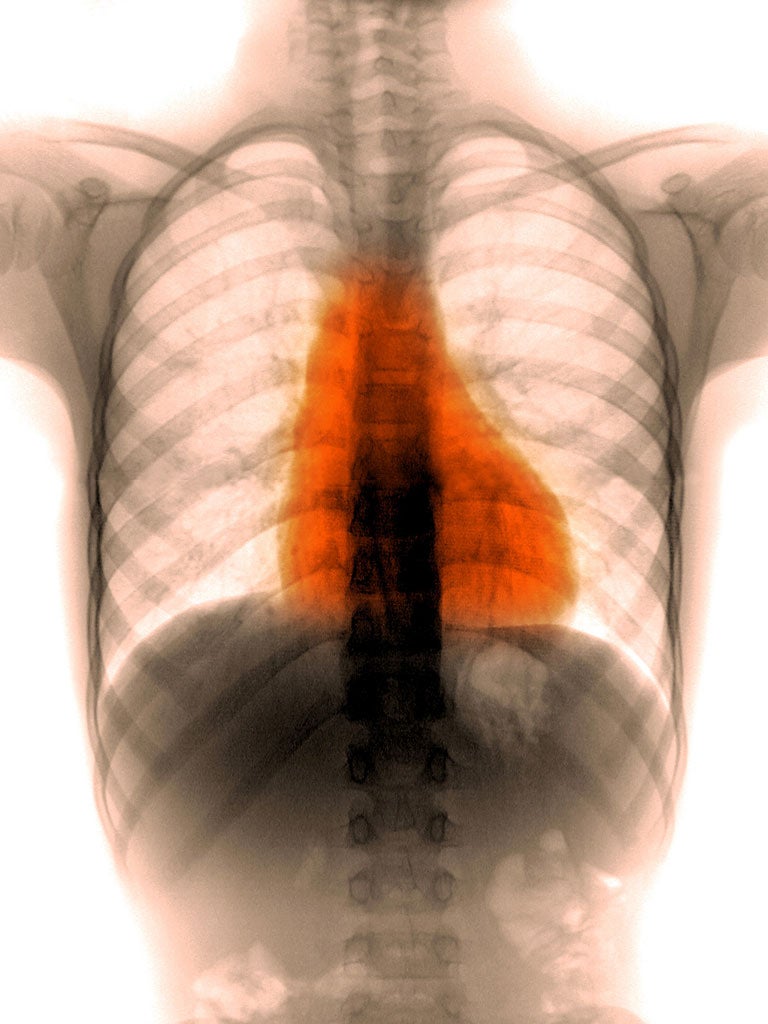
The Healeys' problems started when a 20-week scan last February suggested that the baby had hypoplastic left heart syndrome, a severe condition sometimes known as "half a heart", in which the left ventricle and pumping chamber are dangerously underdeveloped. But the full extent of Millie's problems only became clear when she was born.
After the first scan, Kerry, 38, and Graeme Healey, 41, had begun a whirlwind of appointments at hospitals in Gloucester and Bristol, to monitor the baby and her growth, hoping that she would reach 6lb or more, the preferred weight for a newborn. When Kerry reached her 36th week, scans showed that the baby appeared to have reached the right weight, so she was induced in Bristol's St Michaels Hospital on 20 June, before being transferred to Bristol Children's Hospital the next day. But Millie was smaller than expected, weighing 4lbs 15oz – too small to withstand an operation, the Bristol surgeons said. She was transferred to Evelina Children's Hospital in London.
In London, a scan revealed that Millie did not have hypoplastic left heart syndrome after all but a far more complex cyanotic univentricular heart. The ultra-rare and life-threatening cluster of abnormalities included: hypoplastic right ventricle (an underdeveloped right side of the heart) and a dangerously narrowed valve and aorta.
The rare combination meant that it was a miracle Millie had even survived the birth. But the news from the consultant at Evelina's was grave. Kerry, who works full-time for Tesco, and Graeme, a former RAF gunner and security officer, were told that there was little that they could do for Millie apart from make her comfortable and offer palliative care. "When we heard that news, we felt like we had been punched in the stomach," Graeme says. "We both completely lost it. We went away and sobbed. We knew the news wasn't good as we were taken aside into a private room, but we had no idea of the extent of Millie's heart problems until that moment. The following day we were told we were entitled to a second opinion.
"By this time we were unsure whether or not to allow Millie to go peacefully, but after a day we realised we had to give her a fighting chance. Her notes were all couriered to Birmingham Children's Hospital, which we were told was a world-class centre for baby heart surgery and possibly her only chance. Consultants in Birmingham believed there was a small window of opportunity to help Millie and offered to do what they could to help. I literally jumped for joy when I had that call. Although it was a small chance, it was the first glimmer of hope we'd had since Millie was born."
Millie, who has three older brothers, Max, 5, Sam, 4, and Ben, 1, was transferred to Birmingham Children's Hospital and the next day she had her first two operations, including a four-hour procedure that stabilised her condition, giving her the chance to grow. Five weeks later she had her next operation, the first stage of fixing her hypoplastic (small, underdeveloped) right ventricle, in which a team of medics rebuilt her aortic arch using her own tiny aorta and pulmonary artery sewn together and made larger with her own pericardium, which normally covers the heart.
Millie spent several days on a cardiac ward after four weeks in the paediatric intensive-care unit (PICU) recovering from her surgery and in August her parents could finally take her home, still amazed that their daughter had survived despite the initial desperate prognosis.
Millie will need more surgery when she is about six months old and another operation before she starts school. "The consultants and staff at Birmingham Children's Hospital were willing to try to make Millie better, something no one else had been able to do," Kerry says. "We will always be grateful for that and that's why we want to support the hospital's heart appeal."
Birmingham Children's Hospital is now within striking distance of its £2m target, which will help build a state-of-the-art "hybrid" cardiac operating theatre, where children like Millie can undergo different procedures at the same time. This will save them from multiple operations and the risks from repeated anaesthetic and surgical recovery. And it will put the hospital at the forefront of child heart surgery. The hard-pressed PICU will also be expanded from 20 to 31 beds, allowing it to treat more than 500 more critically ill youngsters each year. "There's growing pressure on the intensive care beds," Fiona Reynolds, a paediatric intensive care consultant, says. "The child population in general is rising, particularly in the West Midlands, and more and more children with increasingly complex diseases are surviving and living longer because of medical breakthroughs and innovative surgery, much of it pioneered here at Birmingham Children's Hospital. One of our most distinguished surgeons, Bill Brawn, has modified the first stage of the three-stage procedure which is used to improve the condition known as hypoplastic left heart, which was universally fatal within a few days of birth until around 18 years ago."
Reynolds says more than 80 per cent of children treated in the top centres like this now survive hypoplastic left heart; some may have to have a heart transplant in their teens, but they have good quality of life and many will go on to live well into adulthood. "With so many more children surviving, it's vital for us to expand the number of beds so that we can keep them alive and treat more diseases. Many of the conditions, such as these complex heart problems, which we can now treat successfully, would have been certain killers just a few years ago. In the 1970s, for example, only 50 per cent of all the children admitted to our intensive-care unit survived – now it's around 95 per cent."
Kerry Healey says: "When Millie had her first two operations, they had to be carried out in two theatres. A hybrid theatre will make all the difference and give many more children like her the chance of life."
To support 'Please Don't Stop', the final stage of Birmingham Children's Hospital Heart Appeal, contact bch.org.uk or 0121 333 8506
Subscribe to Independent Premium to bookmark this article
Want to bookmark your favourite articles and stories to read or reference later? Start your Independent Premium subscription today.
Join our commenting forum
Join thought-provoking conversations, follow other Independent readers and see their replies