Crunch time for peanut allergies
The number of cases are soaring and doctors don't know why. But could a cure finally be in sight? Jeremy Laurance reports
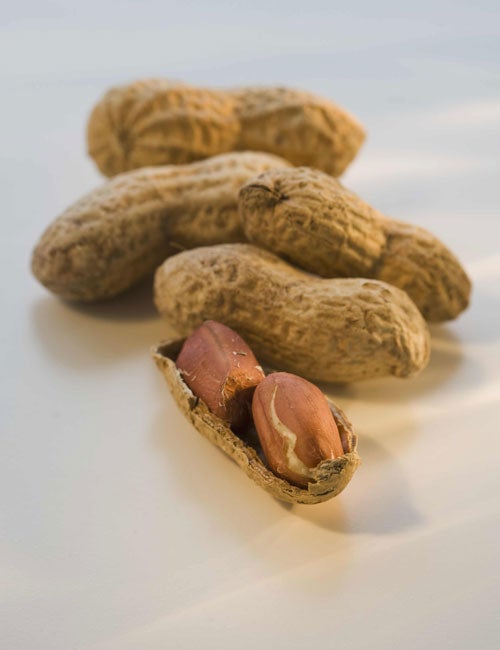
Why the peanut? That is the mystery. What is it about this humble legume that causes humans to react so powerfully? The distressing answer is that no one knows.
Sensitivity to peanuts is one of the fastest-growing food allergies worldwide and has become a major health concern. In England, cases more than doubled between 2001 and 2005. Today, an estimated 440,000 children and adults under 45 suffer anything from a mild stomach upset or rash to a life-threatening collapse when they eat a peanut.
In those worst affected, exposure to even a tiny amount of nut can trigger an anaphylactic reaction involving sudden swelling, breathlessness and low blood pressure requiring emergency medical treatment. About 30,000 people a year suffer potentially life-threatening anaphylactic attacks from all causes, the most common triggers of which are insect stings and peanuts.
There is no cure for peanut allergy and doctors remain baffled by the rise. The most severely affected sufferers have to carry syringes of adrenaline with them for injection in the event of an anaphylactic attack. But specialists say there is hope of a treatment that would prevent people suffering life-threatening reactions.
The best prospect is preventive immunotherapy, a technique already used in other allergies, aimed at curbing the immune response or inducing tolerance to the allergic trigger. The technique is based on challenging the patient with gradually increasing doses of peanut to train the immune system to cope with them. For hay fever and similar allergies, this has traditionally been done by injection, but it is not possible for peanuts because of the risk of a life-threatening reaction.
Instead, researchers have attempted oral tolerance tests in which increasing doses of peanut are given over a period of weeks. Others have used novel drugs to suppress the immune system or engineered peanut proteins to produce an immune response without triggering dangerous side effects.
Professor Wesley Burks of Duke University Medical Centre in North Carolina is confident that one of these approaches will be made to work. "It is likely that in the next five years there will be some type of immunotherapy available for peanut allergenic individuals," he wrote in The Lancet.
Pamela Ewan, a consultant allergist at Addenbrooke's Hospital, Cambridge, who, with consultant paediatrician Andrew Clark, is running the only peanut oral tolerance trial in Britain, says it is not yet possible to tell whether the technique would work. Two groups of patients are given peanut or placebo disguised in a chocolate or yogurt food, and their reactions are monitored
She says: "Some of those in the trial react to a miniscule amount of peanut, while for others it is several milligrams. There is up to a hundredfold difference in the initial tolerance. We give them the same amount every day for two weeks and then bring them into hospital to step them up to the next level. We have got a few going up [in dose], but it is a small number and it is too early to say what the outcomes will be."
Some patients had suffered reactions. "You are treading a very narrow path between getting tolerance and triggering a severe reaction. But if we could find some cure or even raise the threshold at which they reacted that would be a big step forward," Ewan says.
One theory for the rise in peanut allergy is the hygiene hypothesis, put forward to explain the general increase in allergies, which states that the lack of exposure to bacteria and viruses in early childhood may leave the immune system underdeveloped and prone to overreact to allergic triggers such as pollen, cat hair or peanuts.
To counter the threat, scientists have tried to grow genetically modified plants, designed to produce non-allergenic peanuts. Last year, researchers at North Carolina Agricultural University claimed they had succeeded. However, as several proteins are involved in the allergic response, the process is thought unlikely to produce anything recognisable as a peanut.
Fears about the growth in peanut allergy have led to guidance for pregnant women and young children to avoid them. But experts say this may be exacerbating the problem. In parts of Africa, where peanuts are made into a soup for weaning, the problem of peanut allergy does not exist. Depriving children of exposure to peanuts early in life may increase the risk of an allergic reaction later.
Children who develop the allergy should be tested every two years to check whether they have outgrown it. Research suggests it may last for only a few years, although this remains controversial. Doctors at Johns Hopkins Children's Centre, Baltimore, and Arkansas Children's Hospital, who studied 80 youngsters aged from four to 14 with peanut allergy, found more than half lost their sensitivity and were able to eat the nuts without provoking a reaction. The finding suggests parents could be suffering unnecessary anxiety as they try to protect their children from contact with peanuts.
Robert Wood, a consultant paediatric allergist, says: "Although we once thought peanut allergy was a lifelong problem, we now believe certain children may outgrow it. I recommend that children with peanut allergy be tested on a regular basis every one or two years."
No one knows why peanut allergy is increasing. Allergy is an area of medicine more full of puzzles than most. Some specialists have suggested that each age has its defining disease and just as in the late 19th century people claimed to be a "a little bit consumptive", in the late 20th/early 21st century people regard themselves as a little bit allergic. It signifies someone who not only has a medical condition but is sensitive, civilised and responsive to ecological imbalances.
But allergy to foods in general is less widespread than believed. Surveys show one in five adults believe they are intolerant to certain foods, but blind testing has confirmed it in only one in 20 cases.
Join our commenting forum
Join thought-provoking conversations, follow other Independent readers and see their replies
Comments
Bookmark popover
Removed from bookmarks