Get dancing for a happier (and longer) life
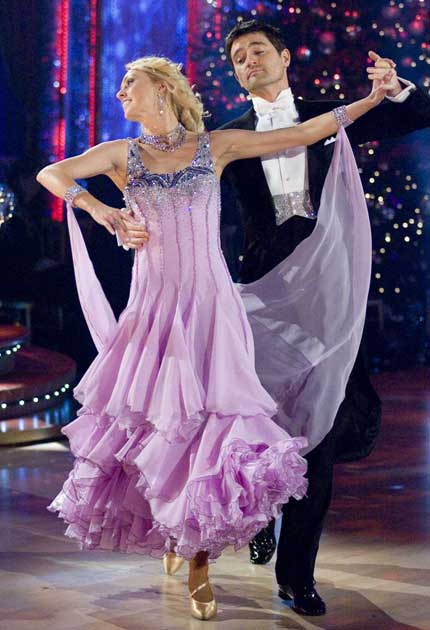
Get jiggy. It might seem an unlikely message to come from the Government, but boosted by the appeal of shows such as Strictly Come Dancing, dance is being increasingly promoted as a way to sashay to good health.
It seems more people are discovering their inner Billy Elliots as well. According to the Arts Council, participation in dance has increased a staggering 83 per cent over the last four years, with more schoolchildren strutting their stuff as well. One report shows that the number of pupils taking GCSE dance increased by 125 per cent from 7,003 in 2001 to 15,750 in 2005, with dancing second only to football as teenagers' most popular activity.
"Dancing is becoming increasingly popular as a great alternative to sport or the gym," says Emma Redding, a dance scientist from the contemporary dance college Laban. "Not only does it enhance many aspects of physical fitness but it also improves our wellbeing and triggers the same post-exercise high."
So what does this mean for the nation's burgeoning waistline? According to the British Heart Foundation (BFH), dancing counts as a moderate intensity exercise which, if done for 30 minutes five days a week, can halve your risk of having a heart attack. Italian researchers found that dancing three times a week was as good as spending the same amount of time on a treadmill or exercise bike. "Moderate means any exercise where you feel warm and sweaty but can still talk to someone," says Ellen Mason, cardiac nurse with the BHF. "This could involve dancing at home to your radio, joining a local salsa group or even clubbing with friends."
Dancing comes with other health benefits. "Regular dancing can help reduce the risk of cardiovascular disease, high blood pressure, type 2 diabetes and perhaps some cancers," says Dr Peter Mace, assistant medical director of Bupa Wellness. "Dancing as an impact exercise may also help to reduce the risk of osteoporosis. The dips, turns and side-to-side movements make good use of muscles and joints, and help flexibility and balance, making falls less likely."
Small wonder that the Government is targeting dance as an important weapon to tackle, obesity, recently awarding £100,000 to Youth Dance England to forge stronger links between schools and dance schools. Similarly, the Scottish government has announced a three-year initiative to encourage girls to dance, as an alternative to PE. Meanwhile, there are initiatives to explore how dancing can help bullying, school attendance, and even handwriting. Here's our guide to tripping the light fantastic in 2009.
Club or 'freestyle' dancing
It's hard to believe that shaking your booty in a nightclub can meet your weekly exercise requirements but, according to Gareth Walker, fitness instructor and choreographer to Take That, "club dancing is safe, effective and works similarly to an aerobic workout. It's great for relieving stress and gives an all-over body workout. The music motivates you so you don't feel as if you're working hard."
Walker, whose Ministry of Sound DVD Pump It Up Aeroburn, a high-intensity, low impact workout, combines aerobics and dance moves, says you also tend to use muscles in club dancing you wouldn't at the gym. "At the gym, you might focus on the legs and arms separately and work them for too long, which could eventually cause injury. With freestyle dance, you use both muscle groups together. This gives quicker results because it's more intense and has all-over body impact."
Calories burned: "Between 200-500, for one hour, 200-600 for the 'Pump It Up Aeroburn' DVD, depending on level"
Ballet
For great posture, flexibility, balance and coordination, plump for ballet. "Ballet is great for the core [the abdominal and back muscles] and addressing any alignment problems, like slouching in front of the computer," says Redding.
Louisa Halliday, a former teacher with the Royal Ballet School, says ballet is good for strength, muscle tone and control, as it requires precision. "Dancers develop very strong calf muscles – one of the hardest muscles to tone – as well as strong feet, thighs, back, stomach and arms. The men have very strong upper bodies in order to lift the ballerinas."
Ballet also develops imagination and concentration, says Redding, thanks to the skill of memorising positions and using imagery to enhance performance. "It is very uplifting as it's all about defying gravity." Ballet also develops proprioception, the sense of where your body is in relation to the space it occupies. "This makes us more body-aware, which helps us correct any postural bad habits and reduces the risk of injury from everyday activities," says Redding.
To find out more, contact The Royal Academy of Dance ( www.rad.org.uk) or the English National Ballet, which runs Adult Ballet classes ( www.ballet.org.uk).
Calories burned: Not great for fat-burning, as it is not very aerobic (with frequent stops and starts). Around 300 per 90-minute class
Creative Dance
A throwback to the "music and movement" classes of the Seventies, one recent Arts Council funded study found that a 10-week "creative dance" programme, where the 11- to 14-year-old pupils made up their own movements and shapes, improved lung capacity, flexibility and aerobic capacity, particularly among the girls.
"Previous studies have shown that creative dance is good for team-building, creativity, imagination and problem-solving," says Redding, who was involved in the study with Hampshire Dance and Laban. "But we have shown that it is good for physical fitness as well."
Calories burned: 100-400 per 90-minute class, depending on the activity
Tap-dancing
"Tap-dancing is great cardiovascular exercise and one of the best dance forms for getting aerobically fit," says Redding. "It's dynamic, rhythmic, and there's less 'stop and start' than other dance forms."
Tap-dancing's reputation for being a great calorie-burner comes from the fact that you take very small steps at great speed, while pointing and flexing your feet and bending your knees. "This really works the lower body, legs and calf-muscles," says Redding. In addition to getting a pair of nicely toned pins, the heart rate goes up and your lungs get a good workout. Generally you need to be at a good level of fitness: as you progress, more stress is placed on knees and ankles. Visit www.tapdance.org for more information.
Calories burned: around 350-400 per hour-long class
Breakdance
Not just for hoodies, this acrobatic form of street dancing, which emerged from the Bronx in the 1970s, offers a very high energy workout. "Breakdancing takes dedication and practice," says Yvonne Young, company dance development officer for YDance. "It builds muscular strength, muscle tone and stamina." It is also extremely physically demanding, a reason why classes aren't offered to children under eight years old. "Most movements are weight-bearing so dancers need to have a strong upper body and central core to be able to support themselves – especially when they're trying to balance on one hand."
Breakdance is divided into "floor work", which develops muscle strength in the arms, upper body and central core, and "uprock" (routine-based moves that take dancers to the floor), which involve the whole body and give an all-over work-out. "Breakdancers frequently have a feeling of empowerment from creating their own innovative moves." Not surprisingly, as it features in many music videos (think Rihanna, Justin Timberlake, Beyoncé and Pussycat Dolls), breakdance mostly pulls the teenagers. "The great thing is that they don't see it as exercise," says Young. For classes, try Dance Base in Edinburgh ( www.dancebase.co.uk).
Calories burned: Not great for fat-burning as it is not aerobic. Around 250 per hour class
Ballroom & Latin
Ignore the glitter and sequins, ballroom not only gets your body fit, but keeps your mind sharp. "You have to think about the steps and listen to the music at the same time," says life vice-president of the British Dance Council, Keith Jones. One major study of senior citizens (aged 75 plus), by the Albert Einstein College of Medicine and funded by the National Institute of Ageing, compared different activities to see if they influenced mental acuity and found that frequent dancing was the only physical activity to offer protection against dementia (with a 76 per cent reduced risk). Ballroom is deemed to be good for the elderly, as moves are frequently based around walking at various paces, including walking backwards, which uses the backs of the thighs and buttock muscles differently than other types of exercise. "The partner work is also good for spatial awareness and there's often a great sense of community," adds Redding.
Ballroom is also good for posture, balance, flexibility and endurance. "It's good for the lungs, as it gets you out of breath," says Philip Wylie, a ballroom teacher from the British Dance Council. One study from the University of Southern Denmark measuring the performance of 16 elite amateur dancers showed that the heart rate during Modern and Latin American dance were 92 and 94 per cent, respectively, of its maximum potential, which "can only be reached during hard work involving both the aerobic and anaerobic energy systems." Blood lactate concentrations were also 6.5 and 9.7mmol, close to those measured after all-out treadmill running (10.5 mmol).
To up the calorie-burn ante, try salsa, which really moves the hips and bottom. One study, from the University of Derby, suggested that salsa could also help tackle depression, increasing serotonin levels, the "happiness hormone", in the brain.
Calories burned: 265 per hour for ballroom; 420-plus per hour for salsa
Join our commenting forum
Join thought-provoking conversations, follow other Independent readers and see their replies
Comments