Health & Families

Rain (AM and PM) 3° London Hi 10°C / Lo 3°C

How we're fighting our child’s autism

Geoff Sewell and Simone Lanham were devastated when doctors told them their daughter’s condition was incurable. But after three years of research and treatments costing £100,000, they are seeing surprising results. Rob Sharp reports
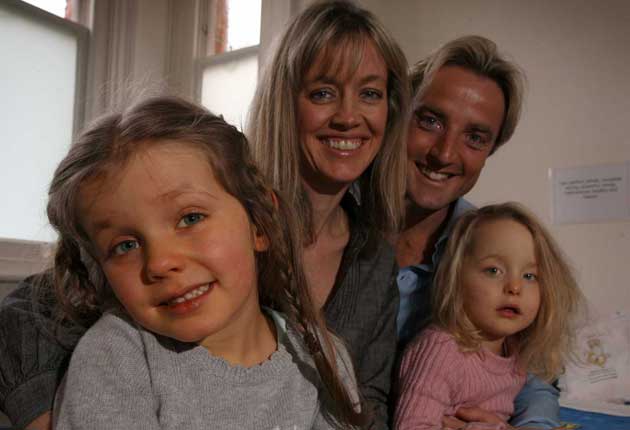

Simone now sees, in retrospect, that Sienna displayed many of the characteristic signs of autism in her early life

Susannah Ireland

Simone now sees, in retrospect, that Sienna displayed many of the characteristic signs of autism in her early life

It’s hard to be a parent at the best of times – but when one of your children is struggling to cope with autism, every day is a challenge. Most parents of autistic children set about learning to adapt their lives and their thinking to the condition of their child, but Geoff Sewell and Simone Lanham are not content simply to learn to cope with their daughter Sienna’s autism.

Since Sienna, five, was diagnosed, they have fought her condition, using a combination of behavioural therapy and changes in diet. And the couple – who both work in the entertainment business – feel that they are winning, although they are paying a financial as well as an emotional price; the treatment has so far cost them in excess of £100,000.

“When we got the diagnosis, we were not given any advice on how to treat autism at all,” Simone says. “We were just told that it was a lifelong condition and was not treatable. Since then, we have been trying to send out the opposite message – that autism is treatable, and some children improve so markedly that they lose their diagnosis altogether.”

The couple were told about Sienna’s condition in 2005 by a team that included a paediatrician, a speech and language therapist and a psychologist. “We were completely devastated by the news,” Geoff says. “And we were very shocked by the diagnosis. It took a team of experts around two months after being seen through the NHS, and then we sat there and tried to take it all in. I think Simone broke down after they said they did not advise that our daughter should get married when she was older. And then I asked the question of whether she would be teased in the playground. They didn’t really answer that. That’s when I broke down. After that we went to Regent’s Park and just bawled for four hours.”

The changes Geoff and Simone saw in Sienna’s behaviour came gradually. “We were travelling the world with Geoff, who is a musician, and we were not really in an environment to compare Sienna with other kids,” Simone says. “So maybe we had our heads in the sand for longer than we should have. And when the health visitor advised how many functional words Sienna should have, I realised that she didn’t really say ‘hello’ or ‘bye bye’. We went through a process of assessment that lasted several months. When I explained to the doctors about Sienna’s behaviour, they just nodded their heads. I realised that, OK, this must be bad.”

Simone now sees, in retrospect, that Sienna displayed many of the characteristic signs of autism in her early life. Her daughter rocked back and forth, showed poor evidence of eye contact – except with her parents – and had erratic sleep-patterns. She screamed frequently and banged her head, beyond the expected tantrums of the “terrible twos”. “Her behaviour deteriorated as she got older,” Simone says. “Eventually, she would be awake for seven hours a night. There were a lot of indicators when we looked back. She was very much in her own world, really. She wasn’t interested in other children or other adults. That’s what we had to deal with.”

After the pair returned home from tour, they began researching autism on the internet. Simone discovered the Defeat Autism Now (DAN) network, an organisation for those dealing with autism on a day-to-day basis. DAN advocates a biomedical approach.

Feeling that this was a better approach than that offered by her doctors, Simone began testing Sienna for dietary deficiencies: if certain vitamins or minerals were lacking in her diet, for example, they would be increased. “The first thing we did was to take dairy and gluten out of her diet. And as soon as we took her off her bottle of milk, she said her first functional word, which was ‘water’,” Geoff says.

This approach is complemented by the work of a behavioural therapist. “Sienna doesn’t develop lots of normal life skills to fill in the picture,” Simone says. “She goes to mainstream school and she went to mainstream nursery, but she has a ‘shadow’ – someone who’s a bridge between her and the outside world, giving her the skills to fill in those gaps that don’t develop normally.” This “shadow” is employed by the family, at some expense, but they feel it is worth it.

The pair are confident that their approach to dealing with Sienna’s condition is yielding results, and that she will “graduate” from the programme she’s being treated with. Then, it is hoped, she will be able lead a much more normal life than would otherwise have been possible. In order to help other families, they have set up The Sewell Foundation, a charity, with the controversial slogan “Autism is treatable. Recovery is possible”.

Last month, it was announced that it may soon be possible to screen unborn children for autism using amniocentesis (although parents would not know how severely their child might be affected). “The earlier you know that your child has autism, the more you can do about it,” Simone says. “However, the important thing to remember is that more help needs to come from government, and funding so that families can deal powerfully and positively with autism now. Would it have made a difference to us if we had screened? I can’t answer that. I don’t look back, I look forward. I do know that both my children are amazing – and how could I live without them?”

The couple are keen to stress that autism should be addressed early, whatever course of action is taken (although they were adamant that they did not want their daughter treated using conventional medicines or drugs). In any case, parents should not give up hope. “We are positive people anyway,” Geoff says. “We were pretty depressed at the start. So [what is it like for] people who are not that way inclined? They will listen to the doctors, and think they have no hope.

“It is also a revelation having our other daughter, Olivia, around, because we can see how she develops normally,” he says. “If I am mowing the lawn, Olivia will come and copy me. Or if I say something, she will parrot it. Sienna will not do that. She has to be taught everything through incidental learning. There are a lot of cynics out there who will criticise behavioural therapy, but there are lots of different kinds. From our experience of talking to other mothers, you need to find the best approach for your child. Sienna does learn now. She does copy her peers. If we hadn’t acted, she wouldn’t have done.”

However, the medical profession is sceptical about the couple’s approach. “In a diagnosis of autism, there is very little evidence of interventions being curative,” says Richard Mills, research director for the charities Research Autism and the National Autistic Society. “A number of parents have recorded improvements with dietary interventions, especially those that remove dairy products or wheat. But they don’t seem to impact on the autism, more on the behaviour. Similarly, the behavioural interventions are well researched in terms of reducing the symptoms of autism and, importantly, the child’s level of functioning? [but] even then, not across the board.” Mills says such treatments suit some parents better than others.

So far, the medical profession has been unable to secure funding for a major study of the link between diet and autism, and remains adamant that research is the only way to tell whether such methods are of any use. “Lots of people are doing the dietary intervention,” Mills continues. “I would never advise anyone against doing anything that might be helpful. While there are parents who record improvement, there is very little scientific support. That’s not the same as saying it doesn’t work. We need to do the study.

“There are strong feelings on both sides of the divide. Supporters argue passionately that [such intervention] is helpful. In equal measure, people oppose them as being a waste of time or money, or say that autism is not an illness and therefore isn’t something that is curable anyway. It does attract polarised views.”

But Sienna’s parents’ views are unchanged. “We are grateful it has happened to us; even we are healthier as a result,” says Simone, who, like her daughter, has adjusted her diet to reduce its gluten content. “You appreciate going to one of Sienna’s friends’ birthday parties with more enthusiasm because Sienna now gets excited and wants to go. She doesn’t freak out when she sits on a swing, and those milestones are things to appreciate. Now, you can ask her what she did at school – and she can answer.”

National Autistic Society; www.nas.org.uk : www.incognitoartists.com/sewellfoundation

Post a Comment

View all comments that have been posted about this article.

Offensive or abusive comments will be removed and your IP logged and may be used to prevent further submission. In submitting a comment to the site, you agree to be bound by the Independent Minds Terms of Service.

Comments

[info]redsnowdeep wrote:
Tuesday, 24 February 2009 at 08:49 am (UTC)
These positive improvements are great, but not necessarily a sign of having fought or cured autism. Surely they are indications of effective behavioural therapy and dietry changes, together with Siennas increasing maturity and consistent support from a caring family.
Autism recovery - about time!
[info]mind_ful wrote:
Tuesday, 24 February 2009 at 09:50 am (UTC)
Its about time the Independent realised that many, many parents are struggling to help recover their autistic children with only the help of the few marginalised and defamed specialists (such as Bernard Rimland of DAN! - considered a quack even though he set the bench mark for autism as a biological rather than a psychological problem - Paul Shatock and Andrew Wakefield, whose ground breaking work on the effects of diet on the brain is responsible for many children being helped/ While others do nothing these individuals continue reseraching and collating data on what actualy helps children with autism, for those parents who want to help their own children. I hope your paper will now stop deifying the 'medical experts' on this subhect and on those connected with autism, and start thinking more openly. At this moment Andrew Wakefield is being witch-hunted simply for noticing the gut damage occuring in many children with autism, and tryng to alert the 'experts' to it. Your paper has allowed this to happen unchallenged. This sort of information above on diet has been actively kept from parents by those who don't want there to be a way of recovering an autistic child. But because most modern autisim is caused by environmental factors - of course it is also possible to help many children recover - even fully. Why not accept this fact and start being really Independent (instead of mainstream and predictable) by suporting those who have been battling with the 'expert' negative view for years. You could start with giving Andrrew Wakefield a fair voice in the press.
I have seen the difference in my own children.
[info]cazinuk wrote:
Tuesday, 24 February 2009 at 12:51 pm (UTC)
I am overjoyed to see such a positive article and I hope it will give other parents the hope they so desparately need. I can identify with the feelings of despair but there is so much that can be done for your child. My son is 9 years old and within a week of him going dairy free his eye contact improved immensely and he is now toilet trained on the gluten and casein free diet. I had further proof of the value of the diet last friday when my son was given some maltesers and within minutes began to show erractive behaviour screaming confusion and wetting himself. No matter how much it costs finanically and emotionally (you rarely get help or support from official sources) I am determined to get my son well. There is no doubt in my mind that food additives/sensitivities with the toxins from the environment are causing a myriad of problems in todays children not to mention adults. Children appear to regress into autism because their brains are still developing. Autistic children are the proverbial "canary in the goldmine" they are the first indication that something is very wrong with our modern lifestyle. If mainstream medicine were to accept what thousands of parents worldwide are telling them the cost to the taxpayer would be greatly reduced and these "healed" children would go on to live productive lives. The longer we ignore what common sense is telling us the more it will cost us all in the long run. I have two children on the autistic spectrum and both are making vast improvements with biomedical intervention.
Rosalind
[info]natasabsl wrote:
Tuesday, 24 February 2009 at 01:14 pm (UTC)
Thank you Independent for this article. It is hard to let parents and affected individuals know how much can be done to improve autism symptoms as those facts are constantly blocked by mainstream professionals shouting about lack of evidence and blocking helpful information. There is no single 'cure' for autism and no single treatment that will reverse the symptoms, but there are countless treatments that will in many cases address the underlying core issues and bring about visible improvements.

There is now a growing number of children who improve to such degree that they lose their diagnosis of autism altogether!! It would be fantastic if Independent did an article on those children.

A note to Richard Mills: there is nothing else to autism other than behaviours and outside symptoms. Autism is defined and diagnosed by the set of outside behaviours. Therefore losing behaviours and outside symptoms equals losing autism.

Re: Rosalind
[info]cronyblatcher wrote:
Tuesday, 24 February 2009 at 01:46 pm (UTC)
With due respect I suggest that in fact, to varying degrees

[the number of variables and parameters is large, it reminds me of the analogue computer than flew the TSR2 bomber, but the complexity and concurrency requirements are far greater]

there is masking of symptoms and self-remediating adaptation attributable to neuroplasticity, in some instances probably aided by avoidance of environmental triggers - on the other hand, if by "autism" you mean therapeutically untreated or residual symptoms only, then I agree.
Re: Rosalind
[info]paulwady wrote:
Monday, 2 March 2009 at 11:56 am (UTC)
Rosalind wrote: ""There is nothing else to autism other than behaviours and outside symptoms. Autism is defined and diagnosed by the set of outside behaviours. Therefore losing behaviours and outside symptoms equals losing autism.""

Uh oh, this is not true.

Great that the kids are able to relate and function and achieve, but one of these days they may have a big surprise for you.
spectrum syndrome
[info]cronyblatcher wrote:
Tuesday, 24 February 2009 at 01:32 pm (UTC)
One of the problems is that "autism" like "dyslexia" is not and cannot be accurately defined because it covers a "spectrum" of phenomena - but has become a 'hook' on which too many people and institutions depend for their livelihood.

My own experience and research indicates that both "Autism" and "Dyslexia" are themselves also sectors of a broader spectrum of neurodevelopmental dys/malfunction and as such are treatable by intelligently enlisting / exploiting neuroplasticity.

Physiological factors (including diet and diminished resilience in relation to some toxins) will inevitably also be pertinent, but the ability of the young developing humen brain to adapt and reconfigure is very great and should be the primary focus of available resources
Fighting our child's autism
[info]maurine_meleck wrote:
Tuesday, 24 February 2009 at 01:49 pm (UTC)
A wonderful story and the same that so many others tell. How children improve with dietary measures. mainstream medicaine does not understand this nor do they want to. That being said, looking for autism at birth or before is a bit crazy. The majority of cases of autism develped after perfectly normal developing children received their vaccinations-thus, it's called regressive autism. WE NEED in the US an independent study of vaccinated vs vaccinated chilren to settle this issue once and for all. Our government is afraid of such a study and so is Big Pharma.
Maurine meleck
USA
autism and alternative therapies
[info]maurine_meleck wrote:
Tuesday, 24 February 2009 at 01:56 pm (UTC)
This is a very heart-warming story. Those of us with children on the spectrum know how important dietary therapies are. Unfortunately, mainstream doctors know nothing about autism and most don't wish to learn. They just stick to their archaic schoolbook past.
Also, looking for autism in utero and at birth is a bit crazy since the majority of cases are now what is called regressive autism. These are chidlren who were developing normally and then lost all skills following vaccinations. The other might be helpful if mothers were vaccinated during pregnancy. The autism community in the US has been screaming for an independent vax vs unvax child study. Our government and the drug companies are afraid to do it and have been fighting this for years. Afraid what it will show. Good luck to this family.
Maurine Meleck
South carolina, USA
Re: autism and alternative therapies
[info]cronyblatcher wrote:
Tuesday, 24 February 2009 at 02:46 pm (UTC)
With due respect I would just intervene to point out that neurodevelopmental therapy is not "alternative" (other than as an 'alternative' to outmoded quackery and extortion).
We're treating autism
[info]jeg66 wrote:
Tuesday, 24 February 2009 at 03:17 pm (UTC)
Richard pointed out that some say "autism is not an illness and therefore isn?t something that is curable anyway."
My 4 year old son has autism (and was diagnosed the week after his 2nd birthday)
My husband and I haven't been using biomedical interventions to CURE my sons autism, but look what happened when we TREATED his MEDICAL conditions.
We removed gluten and casein and my sons eye contact went up 70%. My son has allergies (when offending food items were removed he potty trained himself within 4 days) chronic constipation (after clearing his bowels he said 15 words in one day - from a previously non verbal child) extreme sensitivities (when we cleared artificial colours/flavours/sweeteners/msg from his diet he started sleeping through the night) gut dysbiosis (after eliminating sugar and giving probiotics he stopped toe walking and hand flapping).
I'm not sure I understand Richards comments ?A number of parents have recorded improvements with dietary interventions, especially those that remove dairy products or wheat. But they don?t seem to impact on the autism, more on the behaviour." As a previous poster noted, autism is diagnosed from observable behaviours.....
Re: We're treating autism
[info]cronyblatcher wrote:
Tuesday, 24 February 2009 at 05:08 pm (UTC)
With respect , well done you. The tragedy is that the medical establishment doesn't recognise your action research.
well done
[info]karenzacassidy wrote:
Tuesday, 24 February 2009 at 04:23 pm (UTC)
thanks to this proactive couple for informing people that there are indeed opportunities out there for children and adults with a diagnosis of autism to improve their lives greatly. i have been treating my son biomedically following the same DAN approach and am enjoying fantastic results too!! we have a way to go, but the difference is ENORMOUS from only 4 years of work. i would strongly suggest that people check out treating autism's website in the uk. karenza cassidy
autism spectrum sham
[info]wormery wrote:
Tuesday, 24 February 2009 at 05:02 pm (UTC)
Sorry, but 'on the autism spectrum' is one of those awful phrases that parents just love. MOST kids diagnosed as such as not autistic, just normal kids - usually boys - who do not fulfill their parents ambition to have girly talkative children. It is largely cultural - a quiet boy would be an ideal son in Japan, for example - and also lets parents abdicate their responsibilities, because I have NO doubt that parents dumping young children in childcare or with foreign au pairs, and/or putting them through a bad divorce, has a very bad effect on kids - interesting too that autism seems a middle class condition... There is a small numbre of kids who are really autistic and in the own little worlds - but most are not. The 'autistic spectrum' claim in a sham - and most boys would fit on it in their youth!
"autism spectrum sham"
[info]cronyblatcher wrote:
Tuesday, 24 February 2009 at 05:20 pm (UTC)
Dear Sir, it ain't a "autism spectrum sham" it's a neurodevelopmental sham /scam , as is "dyslexia"
'Ere
[info]cronyblatcher wrote:
Tuesday, 24 February 2009 at 05:26 pm (UTC)
It happens that I have a beautiful child on the autism / dyslexia neurodevelopment spectrum
Re: autism spectrum sham
[info]jeg66 wrote:
Tuesday, 24 February 2009 at 05:38 pm (UTC)
Gawd!
We've had refrigerator mothers, too much rain, mums that drink, older dads and now...."interesting too that autism seems a middle class condition"!
I'm sure a quiet boy would be an ideal son in Japan, but I suspect a self injurious, nappy wearing, non verbal 10 year old wouldn't. I personally know loads of kids with autism who need medical help and treatment and most are not getting the help they deserve on the NHS. Parents are fobbed off with 'it's just his autism mrs Smith'
This is my experience.
(btw my dad was a docker, mum a cleaner, i grew up in a council estate and left school at 16)
Re: autism spectrum sham
[info]cronyblatcher wrote:
Tuesday, 24 February 2009 at 05:44 pm (UTC)
I feel that I have inadequately responded to your published opinion.
Sir, the human neurodevelopmental "spectrum" is not a matter of opinion (down there in 'W' 'Murkan Taixes) , it is instead a matter of scientifically established fact
Re: autism spectrum sham to Wormery
[info]cazinuk wrote:
Tuesday, 24 February 2009 at 08:29 pm (UTC)
You must have gone to the same school as Dennis Leary author of the book "Why We Suck: A Feel-Good Guide to Staying Fat, Lazy, and Stupid" in this book, Leary writes

"There is a huge boom in autism right now because inattentive mothers and competitive dads want an explanation for why their dumb-ass kids can't compete academically, so they throw money into the happy laps of shrinks?to get back diagnoses that help explain away the deficiencies of their junior morons. I don't give a s--- what these crackerjack whack jobs tell you?yer kid is not autistic. He's just stupid. Or lazy. Or both."

Sir, you have absolutely no idea what you are talking about your statement is offensive and downright cruel, these children often have severe constipation with ulcerated inflamed intensinal tracts which cause them to suffer unimaginable pain, being unable to communicate their pain except to scream with many resorting to hitting themselves and banging their heads against hard surfaces, in an attempt to distract themselves from the pain in their gut. Its not unknown for a child to dislodge a retina, self injury in autism is very common. Meanwhile the medical professionals say "its just autism!" so they are deliberately left untreated. Shame on you for your ignorant comment!
Autism and dylexia
[info]jos2813 wrote:
Tuesday, 24 February 2009 at 09:47 pm (UTC)
Many human health conditions are defined by a set of symptoms. 'Symptoms' aren't definitive but they help you to identify and get a grip of what's going on that's all.

Dyslexia and Autism fit on a continuum of symptoms.

In 1975 when my son was 3, he was diagnosed as autistic and was placed in a hospital wing for his schooling since his behaviour was considered by the professionals to be unmanageable. He was completely rigid behaviourly and a 'classic' austistic. We had lots of specialists who we saw and who diagnosed him.

I didn't question the diagnosis becasue I could see how bad things had become - how locked in he was - but I had some knowledge about brain biology and behaviour and experimented with diet - mostly this meant removing wheat and milk. This made him immediately - if not 'normal' then 'in contact' with things outside of himself. He made eye contact - called mummy for the first time ever.

He never returned to that locked in state after that point - though he was ill quite often - physically and the first few years were tough at school since he'd had a 'lost' 3 - 4 years developmentally.
However we learned that he was very bright - gifted artistically the school said - and he went on to train as a criminal lawyer - being by university age naturally verbally retentive and flexible.
Communication seems to be a natural strength and this was so by Primary school age.

It's all down to the early diet intervention - you need to make the changes before the child is age 7 years I understand, or it is said to be too late neurologically.

Re: Autism and dylexia
[info]cronyblatcher wrote:
Wednesday, 25 February 2009 at 05:53 am (UTC)
With respect I disagree with the age 7 implied limit for treatment. I have seen prophylactic and remedial neurodevelopmental treatment (denied before 7) of neurodysfunction including 'autistic' / 'dyslexic' symptoms, be quite effective (if less quickly effective in some areas than had it been delivered before 7) at later ages, in fact into the late teens in some instances of dysfunction / underdevelopment, including speech / language development which continues in the average human to the age of about 25.

I pick you up on this point, not to be argumentative, but because there is a very real school of quackery that relies on unsubstantiated and unsupportable 'it's too late' claims as an excuse for medical negligence and local government unwillingness to spend on law-abiding assessment of extraordinary needs in-school.

This in turn is reflected by local officialdom or is exploited as a means of saving money, in various ways such as stopping treatment or refusing to law-abidingly assess SENs after 16, on the false ground (I proved it so before a Tribunal) that at 16, local government responsibility ends.

If on the other hand you refer to physiological effects of toxins then not having done the physiological research I'm unable to comment.
Re: Autism and dylexia to cronyblatcher
[info]cazinuk wrote:
Wednesday, 25 February 2009 at 10:23 am (UTC)
"If on the other hand you refer to physiological effects of toxins then not having done the physiological research I'm unable to comment."

If this helps, I have two lovely autistic children aged 12 (high functioner) and 9 (non-verbal) years I started them both on the GF/CF together with nutritional supplements (four months ago) and they both have made amazing progress and are much happier, calmer. Incidentally I too have many Asperger type traits (my brothers are on the spectrum). I am on the diet too as I cant have banned food in the house and I have felt better for it. I have heard much about a "window of opportunity" for dietary intervention, and it can make people think they may be too late, indeed I too thought this at one stage as though i had "missed the boat". Logically though if someone has a food intolerance/nutritional defiency and toxicology issues, if these problems are addressed it would make a difference at any age, again logic would suggest that the younger the intervention is started the faster and better the outcome. All I know is that its certainly helping my children. I have had very positive results.

I certainly agree about the official sources looking at ways of saving money by writing off older children and teens when it comes to educational/support resources, constantly browbeating parents with the word "budget". Congratulations at your Tribunal success.

There are many who are making a fortune out of taxpayers under the umbrella of autism, its a booming business - yet families are often struggling to cope with the demands of caring for autistic children. I struggle to understand the logic of Richard Mill's statement

"So far, the medical profession has been unable to secure funding for a major study of the link between diet and autism"

it is nothing short of a disgraceful cop out! Surely common sense demands that the money be found to conduct a proper study on the effects of biomedical/dietary intervention, parents like myself are funding the diet and treatment oursleves. I am beginning to conclude that there seems to be a concerted effort in suppressing this information. I wonder if its because the medical profession and food companies are putting their fear of reprisals and profits above the interests of these children's welfare and ultimately the taxpayer and the whole of society.
Re: Autism and dylexia to cronyblatcher
[info]cronyblatcher wrote:
Wednesday, 25 February 2009 at 11:45 am (UTC)
I really do, with good reason link the attoitude of pubkic offices of all kinds ranging from NHS medical people through town hall denizens to judges and bio-corporations, to two things:
a) need to conceal past negligence, by all concerned including misfeasant judges;
b) refusal by Harperson et al to implement fraudulently ratified UNCRC and Article 13 of ECHR.

This leaves children almost without any rights at all in law, since there is no such thing in law as a right to health
Re: Autism and dylexia to cronyblatcher
[info]cronyblatcher wrote:
Thursday, 26 February 2009 at 06:59 am (UTC)
A Quiet Boy In Japan ?
[info]jos2813 wrote:
Tuesday, 24 February 2009 at 11:51 pm (UTC)

Re: Wormery's 'largely cultural'

Would Japanese parents still prefer their 'quiet boy' if he fixated on every air brick on every wall of every house that he passed, or spent most of every indoors day facing the wall spinning a wheel?
I do see though that these ARE very quiet, as activities go.

But the nights? Once (IF) sleep comes it might soon be followed by low groaning wounded animal type sounds, which get louder and louder and can go on for hours (and nights and weeks of nights). And this is NOT at all quiet.

So, culture is culture - but still, all in all I just can't see the wormery 'quiet boy' theory going down that well in Tokyo. do the Japanese know that they have these preferences for their offspring I wonder?


biomedical treatment for autism
[info]jeanmuscroft wrote:
Wednesday, 25 February 2009 at 08:46 pm (UTC)
My daughter is aged 17 and was diagnosed with autism years ago. She has been treated biomedically for the last 8 yrs and now attends a 6th form college where they are unaware of her diagnosis. She is indistinguishable from her peers. All the NHS ever offered was Ritalin.

JM mother
sharing experience : autistic spectrum
[info]jos2813 wrote:
Thursday, 26 February 2009 at 12:20 pm (UTC)
Is there a 'blog' type thing where worried parents can ask questions?

Those of us who have been through this and are 'out the other end' so to say, could share some experience. Not everyone has access to the biological guidance from the medical profession. Things are not that straightforward and English doctors (used to be the case at least) get little training in this kind of thing as undergraduates I think. Though perhaps funding is the problem. there is never enough to go round so prioities are made. We are in a 'drug' culture here in the UK aren't we - which works well for lots of things but not for others. When I lived in Holland, things were better understood - more widely that is to say.

I would have loved to have had some first hand support in the 70's since I felt very much on my own when I was trying to sort this out for my son. The only orthomolecular information at that time which was relevant, I sourced from U.S.

Sometimes things do not go so well with food withdrawal - body chemistry being what it is, and reactions can be severe. Certainly it is hard to stay on a 'benned foods' regime 100% of the time. Practical and moral support is needed.

It's the same with dyslexia - there's a huge spectrum of difference there between individuals / actual day to day impact on someone's life. And how to help in a practical / realistic way. There is so much misunderstanding with dyslexia. None everyone who is 'labelled' dyslexic, should be, and others who should be, aren't. People like a name for something - a diagnosis. I do myself.

One thing I would say that despite 'Wormery' sounding off about 'middle class' labels - I do agree there are far too many labels and what we need is less labels and more practical (and realistic) advice about what actions to take. How to make the child/person function / feel better is the most important. The 'label', less so.

It can be done.


Our experience with Bio-med
[info]websterce wrote:
Thursday, 26 February 2009 at 02:51 pm (UTC)
My son (ADHD) has been significantly helped by some simple Bio-med interventions (Enzymes, epsom salt baths, pro-biotics). Like many others he had digestive problems and nutritional deficiencies and is very sensitive to glutamate and other artificals.
I have the likes of Sally Bunday (MBE) at the Hyperactive Childrens Support Group as well as the many other parents who are treating Autism and Developmental diorders to thank for all their support and advice and I hope that this article will help parents realise there are other ways of actually treating ADHD/ASD and similar disorders.

Thanks Independent - I think you might just be the paper that starts to publish the real success stories and open people's eyes. More please
There is something funny going on here.
[info]paulwady wrote:
Monday, 2 March 2009 at 11:47 am (UTC)
I find all these pro cure posts strange because they are all people, apparently all parents, speaking for others who are not themselves speaking. Their children. They don't seem to be writing about themselves. Presumably they are too young to be able to evaluate themselves yet.

So, we don't actually know how much of these 'interventions' have cured their Autistic natures, just that they seem to have gained abilities to relate/behave/achieve like Neurotypical, 'normal' people of their ages. This gets labelled as proof of recovery.

Being able to relate does not mean that you are 'cured' of anything.

My wife and I are both diagnosed Autistics. I went to a drama school, got a degree and work for the Nas, and she's pursuing a Phd after a career in A level science teaching. This does not mean we are 'normal' or 'recovered ' people at all.

We know a lot of men and women of all ages who are equally functional and on the spectrum. If parents are making a difference - good for them. But don't go thinking that all this is changing anyones brains. Be prepared to accept whatever natures your children were born with when they are older.

I would recommend parents be cautious about believing their own hype, and very cautious how you relate to your children. They won't be children forever. This has all happened before with Gay people.

We simply don't have any culture of High Functioning Autistics in Britain so we cannot widely comprehend the intimacy, relating and maturity issues that such people have. No novels of our lives, no role models of mature, working, sexually active, outgoing people with a nature that is Autistic. Believe me, virtually all representations are of flawed people.

Functionality does not equal cure.


Free gym pass

Get fit for summer with Fitness First gyms in London

Download a free gym pass from Fitness First today

Article Archive

Day In a Page

Sun | Mon | Tue | Wed | Thu | Fri | Sat

Select date