Is this woman a bad mother, or just honest?
When Ayelet Waldman wrote about her attitudes to sex and parenting, she unleashed a storm of indignation. Her new book is even more incendiary. She talks to Sarah Hughes
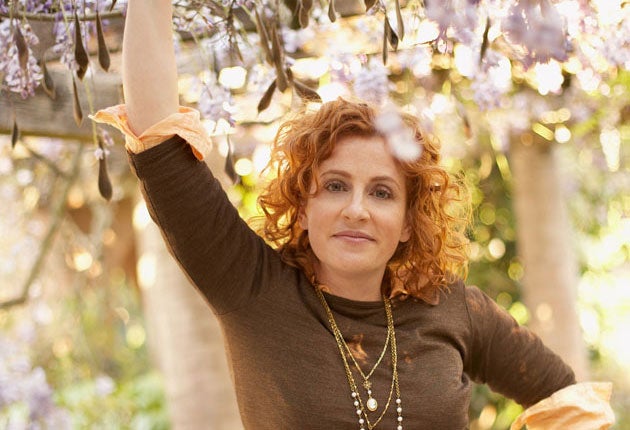
What makes a good mother in this day and age? Is it the ability to raise exceptional children while juggling a high-powered career, churning out immaculately frosted cupcakes while looking both thin and perfectly turned out?
If you are novelist Ayelet Waldman, whose book of essays, Bad Mother: A Chronicle of Maternal Crimes, Minor Calamities, and Occasional Moments of Grace has just been published in the US, the answer is simpler: "I don't think I'd get called a good mother unless I was performing an emergency tracheotomy with one hand and calmly changing my child's diaper with the other," she says, laughing.
Waldman, the wife of Pulitzer Prize-winning novelist Michael Chabon, can joke about it now, but back in 2005 she was considered, if not America's worst mother, then certainly among its most infamous. She was attacked on the popular daytime TV show The View, booed at on Oprah and called everything from "a freak" to a "self-obsessed bitch" on fashionable websites such as urbanbaby and Salon.
Her crime? An essay about sex and motherhood that was adapted for the New York Times' "Modern Love" column. In it, Waldman not only wrote frankly about her "torrid" sex life with Chabon but also claimed: "I do love [my children] but I am not in love with any of them. I am in love with my husband," adding: "If I were to lose one of my children, God forbid, even if I lost all my children, I would still have him, my husband."
In an era that has placed children at the forefront of our society, it was an incendiary thing to think, let alone write, but Waldman claims now, four years later, that she had no idea of the storm her article would unleash. "The first I really knew about it was on the Monday when a friend of mine called me and started whispering down the phone, saying 'Ayelet, I'm in Starbucks and the two women at the table next to me are just tearing you to shreds....' Then I got another call, and they said 'have you seen The View? You're the main story and [presenter] Star Jones is trashing you.'"
Not everyone was so outraged. "[Rock critic] Greil Marcus called for my husband and said, 'can I speak to the sex god?'," Waldman says with a laugh. "And a lot of the things posted were favourable. Most of the comments in the New York Times were positive, my email inbox was filled with mail, again most of it positive. There was only one really crazy, negative post on SF Gate [the website of the San Francisco Chronicle] where someone wrote: 'I know where you live and you should have your children taken away from you.' That was horrible, but the rest wasn't so bad, not even the booing on Oprah."
Most people, faced with such public opprobrium, might have been tempted to retreat from the spotlight, but Waldman, who studied at Harvard law school and worked as a federal public defender before becoming a writer, appears to have relished the fight. Instead of retreating, she admitted that while she had given up her job because she was jealous that her husband spent more time with her daughter, she had found full-time parenting frustrating.
"I spent so much time standing in playgrounds pushing my daughter in her swing and I'd find myself turning to the mother next to me and saying 'don't you find this dull, isn't this the worst thing you've ever done?' And inevitably I'd get the mother who looked at me as though I was crazy, and then told me about how they'd perfected their playdoh recipe. If they'd just invented the iPod back then I would have been fine..."
This tendency to undercut her most serious points with humour is Waldman's most disarming trait. She might be self-aware to the point of neuroticism but she is also down-to-earth and possessed of a very dry wit. Adept at turning any anecdote on herself, she readily reels off the impressive list of presents with which Chabon showered her on Mother's Day this year (including framed self-portraits of the children, a Kindle and a diamond necklace) before adding: "I sound smug don't I? To be honest, I am a little smug – I do know that." Similarly the admission that her husband has also written a soon-to-be published parenting memoir, Manhood for Amateurs, brings the wry admission: "We honestly didn't intend to corner the market in this way."
Yet behind the humour, Waldman has serious points to make about the different ways in which we treat mothers and fathers. "Men pretty much only have to turn up at a school event or hold their child and they get called a good father," she says. "My husband and I both tell the story of how he was standing in line getting a coffee while carrying our baby and he was tapped on the shoulder and told what a great dad he was. That's literally all anyone has to do to be seen as a good father because we've set the bar so low."
By contrast, Waldman believes that women have worked themselves into a frenzy over what constitutes a good mother; in other words, that the bar is set impossibly high.
"I think that we are in such in state about motherhood," she says. "It's so, so sad that we find ourselves condemning each other rather than letting everyone just get on and live their lives. The best way I can describe it is as this almost toxic self-loathing, this desire for self-flagellation about whether or not you are a good mother. I used to think it was just an American problem, but judging by the emails I get and talking to other people, it seems to be spreading across the globe."
Those emails, letters and conversations were enough to convince Waldman to write Bad Mother, even though she concedes that having done so will lead to further condemnation. "I do think that there are intimacy and privacy issues with any memoir or personal essay or blog post, and I know that people can accuse me of oversharing," she admits.
Yet that tendency to overshare is what makes Bad Mother a powerful, if not entirely comfortable read. Waldman is unflinchingly honest about her flaws. She documents her frustration at realising that her children would not be "exceptional", admits to lecturing people about what she believes to be right and wrong, and, in the book's most heart-wrenching chapter, discusses why she had a second trimester abortion after learning that her unborn child had genetic abnormalities.
"I can't pretend that it wasn't hard to write about Rocketship [the jokey name Waldman and Chabon had given their baby in the womb], but at the same time, I also think we have to speak about this subject openly, because too often people try and pretend that what they did was not really an abortion, that their justification takes it outside of that definition. But a genetic termination is still an abortion, and I think it's very important say that."
This desire to tell the truth at all costs comes with its own price. While Waldman stresses that she writes "with the thought that no one will read what I am writing, [to] avoid being circumspect about the subject matter or end up taking things out," she admits that there are subjects she regrets having tackled.
"That was terrible, there was nothing good about that," she says of a brutally frank piece she wrote about her bipolar disorder, suicidal feelings and their impact on her son. "That was the product of much ugliness, and I regret it strongly and feel it showed bad judgment."
Similarly she questions her decision to write about her 11-year-old's diagnosis with ADHD in Bad Mother. "It's difficult. I told the kids beforehand that they had veto power over anything in the book. They gave me the go-ahead, but there's a huge age gap between say 11 and 14 [the age of her eldest child]. For my son, in particular, I think it's been hard. He was always very open about his ADHD, but lately he's been less open, and kids that age can be so casually mean. I worry that he now regrets allowing me to write about it, and I have conflicting feelings about it too."
It is this ambiguity, this conflict between baring her soul and protecting her family, which lies at the heart of Waldman's work. In Bad Mother she writes: "As a parent I am certain of only one thing: my own fallibility." And there are those who will criticise her for her decision to put that fallibility on display and to use her family in her writing, just as there are also those who will praise her for her honesty in doing so. Yet ultimately the truth about Ayelet Waldman is that she is neither the bad mother of internet legend, nor the good mother of popular myth, but rather a likeable, flawed and intelligent woman who has dared to be honest about both her failures, and, worse, her success.
Bad Mother: A Chronicle of Maternal Crimes, Minor Calamities, and Occasional Moments of Grace is published by Doubleday.
Join our commenting forum
Join thought-provoking conversations, follow other Independent readers and see their replies
Comments