Miscarriage: The loneliest grief of all
Kate Evans has had six miscarriages. To her, each felt like a bereavement – yet she mourned in silence. So how do you deal with the loss of someone who never lived?
John Lawrence
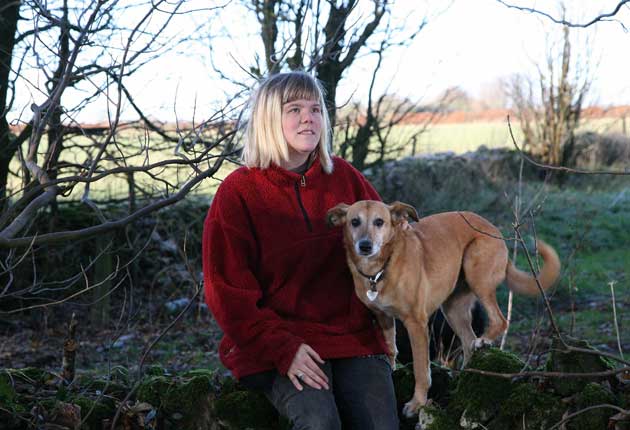
Kate Evans: "Not telling leaves women stranded with their grief. It makes it a whole lot worse"
The doctor's silence tells me everything I need to know. Eventually, he clears his throat, and says in a voice deliberately gentled, "I'm very sorry". And so am I. There on the screen before us, I can make out the form of a tiny curled foetus and, where a few weeks earlier, its heart was thumping with life, it now lies still in the cavernous vacancy of my womb. This is no longer a baby. It is a miscarriage.
It surprises me how surprised I am. This is the sixth baby we will have lost; you would think that I would be used to it by now. But maybe it's not surprising that I had to believe in this baby, as though by investing in it some hope, and some love, I could will it into being.
They have run all the tests. Like the majority of women with recurrent miscarriage, they have found nothing wrong with me. They don't know why this is happening.
In my mother's generation, there were no early pregnancy tests, and you weren't officially pregnant until you had missed three periods. These days, it's different. The very first day of absent menstruation can find you racing to the chemist, and then fumbling with instructions and collection pots and testing sticks until that tell-tale blue line makes its announcement.
The next step is a visit to your GP, where you are told the day your baby is due. You are handed a free book on pregnancy containing photographs and descriptions of your developing baby. It confidently states that, by 12 weeks, the foetus is fully formed. (It doesn't warn you here that only five out of six pregnancies make it this far). The book suggests that you make an early appointment with your midwife and begin thinking about where you want your baby to be born. So you do.
And you discover the unmistakable differences that pregnancy brings – the signs that women have never needed testing kits to tell them. A visit from the tit-fairy brings you newly enlarged and extra-sensitive bosoms. You have a vastly increased need for food and for sleep. You feel more squeamish, more nauseous, more emotional and more hygienic. The hormone rushes make you feel like you're stoned. Lack of food makes you violent. You feel the glow of life inside you. You begin to plan and to dream. You probably chat to your baby. You consider its sex and its name.
And then you begin to bleed.
So you've lost your baby. And it's such a massive thing to lose. You, me, everyone reading this, we all started out as a little smudge of amniotic cells. My children would be 18 months old, or four months old, or I would be five months pregnant. I've lost a good friend because her baby was born on the day that mine was due and I have never been to see him. It hurts too much.
I have never known depression like the cloud that descends every time I lose a baby. I can compare it with the death of a close friend and I can honestly say that it's worse. When a friend of mine died suddenly, we viewed the body, we buried him and we were able to say goodbye. I had the company of others who were as grief-stricken as I was. My mind replayed moments with him – a ceaseless video stream of memories, which was part of the way that my brain processed the loss.
With a miscarriage, I'm left battling through the layers of euphemism to even recognise that I have been bereaved. What is this that has happened? "Pregnancy loss"? The word "baby" was never mentioned by the staff in the Early Pregnancy Advisory Unit. When the scan revealed that my baby was no longer viable, I was referred for an operation with the horrendous name of "Evacuation of Retained Products of Conception". My child, described as clinical waste.
If there's no body, how can I grieve? I feel as though I must be kidding myself, wallowing in a morass of grief over a person who never even lived. Every time my mind trips back to this death, this loss, it strikes on empty, because there's nothing there to miss. This jellybean, lying forlornly on some toilet tissue – how can that sum up all my hopes and dreams for this child? How can it contain all my love?
I almost welcome the pain and blood that happens when I miscarry. It seems more real to me than opting for an operation under general anaesthetic. There is pain involved. I want to feel it.
When a friend dies, you can seek solace in the company of other mourners. Miscarriage, by contrast is an entirely private grief. There's me and my partner, and he's generally so intent on protecting and comforting me that it's hard for him to make space for his emotions. "How are you?" a friend will ask, in a conversational tone, and I wonder, do they really want to know the blackness of my mood? Every time it happens, I find it harder to struggle through, and yet I fear that, for my friends, this drama has become repetitive and boring. With each miscarriage I need help more, yet I feel I can ask for it less.
I am a mother. I have a child, conceived after my third miscarriage. In an earnest attempt at consolation, I am repeatedly told "Well, at least you have got him". And it's true, and I love my son dearly: he is perfect, wonderful and amazing. I am aware that the pain of other women who never carry a child must be greater than mine. But that doesn't mean that I'm not hurting. Having had a baby, I know exactly what it is I've lost. I know what it feels like to give birth, to breast-feed and to raise a child. The stack of baby clothes that I have in the attic is slowly diminishing, pragmatically distributed to women who are actually having babies, not ghosts.
And alongside the helplessness and hopelessness there is another, even darker emotion. It could be politely described as bitterness. How it actually feels to me is hatred. I hate pregnant women. This is nuts. I have been heavily pregnant myself and I know it's no fun. What I should feel is sympathy. Envy would be understandable, but hatred? What's going on here?
There's generally no point trying to bury your emotions. It's only by feeling them and naming them that you can get through them. And if you try to run away from them, they have a habit of catching up with you. Jealousy and hatred are impolite, socially unacceptable emotions, but they could serve a purpose. Throughout the animal kingdom, there are examples of bereaved mothers attempting to steal babies. Maybe I'm just part of a bigger picture here. The survival of the species is best achieved if there is a mechanism for matching up thwarted parents with unwanted babies. And I have reached the point where I've thought, "She's got my baby. That's my baby that she's growing." Insanity, I know, but possibly evolutionarily useful insanity.
So where does this leave me now?
The stakes keep rising but we have to keep playing the game. Maybe another baby will arrive to heal the hole in my heart. Or maybe my life will continue, trapped into this loop, like a needle that lands on a record but hits a scratch and lifts off again before the song even starts playing.
On a practical level, we don't seem to have much problem conceiving, which isn't entirely a blessing. I am sincerely grateful that we haven't spent thousands of pounds on IVF to walk this difficult road. But it does mean that any time we want to step off the roller-coaster, to gather our energies for the next ride, we have to avoid trying to conceive a baby that we desperately want. Which makes our lovemaking very poignant. The only fixed point that I can see ahead is the eventual end of my child-bearing years. Either we will have had another baby, or we will have tried. I won't be so sentimental as to say that these unborn babies will stay with me, because they never really lived, but these scars will have made me part of who I am. And I am proud of that.
Our society conspires to render miscarriage invisible. There is an unwritten rule that a woman should never announce her pregnancy until she reaches three months "just in case". Just who is this helping? The first trimester is when a woman does the work of creating the baby. Every organ in the baby's body is formed, and the mother experiences worse fatigue and nausea than at any other point of gestation. Women need to be supported through this vulnerable period and, with no outward sign that they are pregnant, how are they going to access that help if they can't ask for it?
And if they miscarry, as one in six early babies will, women need even more support through their trauma. "Not telling" leaves women stranded with their grief. How can they begin to explain that they are mourning the loss of something whose existence was kept secret in the first place?
Pregnancy is a superstitious time and I can see why women don't want to tempt fate by announcing their news too soon. But fate has dealt me that blow, the one people don't talk about, and I can tell you that the fact that people don't talk about it makes it a whole lot worse.
So talk. Tell. We can be proud of our pregnancies, no matter how "successful" they are. A hurting heart is a sign of a loving heart. The only thing that has really helped me through this is knowing other women who have been through the same thing. Miscarriage is such a common trauma – there is no reason for us to be alone in our grief.
Kate Evans's book on breast-feeding, 'The Food of Love', is published by Myriad Editions (£12.99). Her email is kate@cartoonkate.co.uk
When it all goes wrong: The facts about pregancy loss
* Miscarriage is common. Between one in five and one in eight pregnancies ends in miscarriage. Most miscarriages occur during the first 12 weeks of pregnancy.
* About half of miscarriages are thought to be due to the fact that the foetus is not developing normally because of chromosomal, genetic or other problems. The causes of the other half are not known.
* The risk of miscarriage increases with age, rising to about one in four pregnancies in women over 40.
* Following one miscarriage, a woman has the same chance of a subsequent pregnancy being successful as a woman who has not miscarried. Even after three miscarriages, there is a 70 per cent chance that the next pregnancy will be successful if no cause for the miscarriage has been identified.
* If a woman has three consecutive miscarriages, this is known as recurrent spontaneous miscarriage and doctors will want to investigate any possible causes. But often no cause can be found.
View all comments that have been posted about this article.
Offensive or abusive comments will be removed and your IP logged and may be used to prevent further submission. In submitting a comment to the site, you agree to be bound by the Independent Minds Terms of Service.
- Print Article
- Email Article
-
Click here for copyright permissions
Copyright 2009 Independent News and Media Limited


Comments
"With a miscarriage, I'm left battling through the layers of euphemism to even recognise that I have been bereaved. What is this that has happened? "Pregnancy loss"? The word "baby" was never mentioned by the staff in the Early Pregnancy Advisory Unit. When the scan revealed that my baby was no longer viable, I was referred for an operation with the horrendous name of "Evacuation of Retained Products of Conception". My child, described as clinical waste." Truer words were never written. The institutionalized denial derived from a societal wish to make it all go away, to make a baby something less than it is, is heartless. It relieves onlookers of any responsibility to offer love, a pair of hands, a shoulder to cry on. This abandonment in time of need is dreadful. It is a colossal failure to offer love and consolation when it is most needed. It should not happen, ever. But it does.
My body still feels happily pregnant, my mind wants to forget the pain and the loss.
Thank you.
I can understand so well what you said about your feelings about other women being pregnant. Collegues sending photos oftheir babies via email, a diary of their newborns. I didn't want to see these photos but I didn't have the courage to say: leave me alone.
I decided to not "wanting" a child anymore when over the age of 40, and so it was. Only then I got more tranquil and was the happiest person, when my sister finaly had her first child.
But I will never forget those nights when I lay in the hospital talking to the baby, talking it into wandering into the uterus - and all the tears I cried. Still, as long as I was there sorrounded by other women with the same or similar problems helping each other, it was ok. The nightmare started, when I went out in the world where people - and mostly women - out of ignorance condemned me for having "killed" the baby.
I also think that it is a loss of proportion to equate a miscarriage with the loss of a child - of course, if I lost either of my children, I would be devastated and I would not expect that grief to ease even with time. But I look back on my miscarriages, which took place in the same year nearly a decade ago, and feel some regret. My little 'jelly-beans' were not people that I loved, they were potential people that I would come to love. The depression that Kate Evans has experienced is explicable, but extreme, and although I admire her honesty in admitting to jealousy and hatred, I do think it is a response which requires professional help because it seems unbalanced, over-investing in the pregnancy despite the uncertainties of biological processes. Having lost one of my dearest, oldest friends last year, for me, the pain of that bereavement is far greater than the loss of the children I might have had. Perhaps a further explanation are the extreme mood swings of pregnancy generated by the hormones associated with the state.
Miscarriage is upsetting, certainly, and multiple recurrent miscarriage even more so. It is an issue that could be handled with greater sensitivity by medical professionals (I'll never forget the ultrasound technician bluntly telling me 'You're not pregnant any more' at what was meant to be the 20th week scan). But it is a common occurrence that we should not allow to blight our lives and more importantly, the lives of our growing children.
I went on to have two children, the elder of whom is thriving. My younger girl died--so I have one on earth and two in heaven. My elder daughter is bright, funny, thriving at university, and wants to be a pediatric cardiologist. She isn't driven, just thoughtful and committed. Her poetry about her sister is staggeringly beautiful. So yes, after a period of severe bereavement, we do carry on. We even do it well. We love our children; we do pretty well in the funny old business called life--and so do our kids. But lingering sorrow is real. We don't feed it. We don't trade on it. We don't all wear it on our sleeves. It's just there.
At the time of both my miscarriage and my younger daughter's death, I would have dearly loved to let the tears fall without feeling that I had to justify my sorrow (how stupid--OF COURSE I was destroyed!) or hurry to get it done inside that ridiculous one year mark (at day 365 it's OK to mourn, but at day 366 it isn't?) and to have a loving heart near mine.
David--take your time. All thoughts and best wishes to your girlfriend. Don't try too hard to be courageous. No, one does not want to be the object of pity. And privacy is extremely important. But a little warmth and true understanding are a great blessing, so if they come your way, let them be, and draw strength. ...And to cri_berlin and slv 165, Godspeed.
So, I kept having fertility treatments (whithout thinking too much about it, because I knew there could be other ways of being a Mother) and I was also on a waiting list for adoption. Finally, our little ANGEL came from adoption. A very loving biological mother (from Colombia, we are from Canada) decided she had to give her baby away. We where gifted this child. She is sincerily the best little angel we could have ever get. And we now have a wonderful extended family in Colombia as well!
Now, I understand that our second child HAD to come from another family. She is bringing us SOOOO much. She is teaching us a lot. We couldn't have made better ourselves.
So, to conclude, my miscarriage was telling me that LIFE had to come differently. Just, keep hoping. And, most of all, open your mind and your heart to your future child, wherever he/ she is from.
Great luck
Liette
Thank you so, so much. Everything you've said is right and kind and compassionate and true. I hope so much you'll be a Mum again because I just know that you'll be the best Mum in the world. I've been pregnant six times and only have one son who is alive. A stillbirth, three miscarriages, IVF and then a natural pregnancy which failed a month ago. As I'm 42 we're at the end of the road.
There is so much I could say but I feel too tired and drained to write anything much. I just want to send you all my love and say that I know what hell it is and I'm holding you in my heart. I'm also having to deal right now with a lot of anger about some of the insensitive comments that have been posted up here.
It isn't appropriate for people who have suffered two miscarriages to tell you anything. If you have two miscarriages it is very sad but it is not statistically abnormal. And people who have two miscarriages still have a very good chance of going on to have other children. So those people don't know what they are talking about. You are suffering from recurrent miscarriages. It is very rare, and very nasty and there is nothing at all the medical profession can do.
Talk of 'disproportionate' and 'professional help' make my blood boil. You don't need 'professional help.' You need some people around you to give you some love and care - but, if my experience is anything to go by - you won't get that.
You are devastated and you've got an absolute right to be. And it won't go away. Not every story has a happy end (although I hope yours will). Not everything heals. But in our society nobody is allowed to say that. And so people who are grieving deeply are driven out and ignored. In the warped world in which we are living there is no greater crime than refusing to join in with the 'isn't everything lovely' myth.
But there are people out there who know. We are very few, but we're with you, and we're listening, and we're not going to tell you a lot of lies about how it doesn't really matter, and how you'll feel fine soon.
I remember your lost babies with love and thank you again for your courage.
Alice
When you mention 'dealing with a lot of anger' due to reading other peoples comments i.e those who have had two miscarriages, I assume you are referring to myself and my girlfriend.
I find it strange that my comments would make you angry for I have the right to an opinion and I don't feel I was being in the slightest bit insensitive, I was merely sharing how we were dealing with our own personal heartache and pain.
Now you mention statistics, I have read about the statistics but this doesn't make it any easier. Statistically we all die but this knowledge doesn't make it any easier to cope when someone close to us dies. How did you feel after your second miscarriage? Did you say to yourself 'well I have no right to feel upset, after all statistically its normal'.
What you have to remember is pain is not objective it is subjective, so you cannot compare how someone feels after losing one child to somebody else who has lost four.
I just wanted to let you know how incredibly, stupendously, outrageously proud of you I am. To open your heart and write so eloquently, about such personal things, so that others can know that they are not alone - is a brave, difficult, and wonderful thing. Ultimately, people don't have to tell others when they lose a baby, but we all need to know that it's OK to talk about it if we want to. That it isn't our fault and that we don't bring these things on ourselves. Having only lost one baby I know that I don't have any idea of what you go through with these blooming awful deaths, over and over again. You are opening to door to so many people by writing this beautiful article. Be proud.
All my love, your Big little sis A x x x
I'm at the stage of feeling sad not just about the loss of the 'jelly bean' but more so the emptiness of not being or about to become a parent. It breaks my heart because it's how my husband feels too and I want to give him the gift of fatherhood. We don't want a cute baby to dress up and coo over, we want to be parents, to be a family unit. We want to share our love with a little person, nuture them and share the world with them. It's the loss of that which hurts so much for me. And it all just seems so unfair when everyone else seems to be having babies without any trouble, or moan about the ties of having children. If only we could have the chance!
I also feel the bitterness verging on hatred you mention. I know it's not really a 'hatred' of the person or their baby, it's a frustration and hatred of the situation you are in and the lack of power to change it. It's the unaswerable 'why them and not us?' and a stark, visible reminder of what you haven't got and the gut wrenching feelings it stirs up inside. And I'm not too proud to admit that leaves me feeling jealous, angry, frustrated and hateful. To me, that's a perfectly normal human reaction. We all experience thoughts and emotions our moral compass tells us is 'wrong' and we don't like to admit it. It's how you deal with it that matters. I'm trying to let these uncomfortable feelings surface and let them be.
I feel hurt, a little broken-hearted if you will. Not just for me but for my husband and he for I. The space in our life to be filled by children now seems a great chasm after having our dream given to us and then snatched away. Still, I take comfort in the memory of seeing the tiny life we created on the screen, there in all reality. Made by both of us, joining us together and it is this gift from our tiny life that I cherish so much.
Your so right, you do hate any pregnant woman you see and looking into any passing buggy just hurts so much.
And your so right again when you say family and friends start treating it as repetative and boring, they forget sooner and sooner each time and appear to start getting back to normal straight away. They talk about and buy things for other peoples babys whilst in your presence only 5 days after you've lost your last baby, whilst your still wearing a pad to collect the bleeding that just goes on and on for days/weeks.
The whole thing is really shit and so black you don't even like sunshine, you just want cold, rainy, grey days because you can take some comfort from the connection with the mood of the weather.
You also feel angry that you've wasted the last couple of months carrying and caring for something that isn't viable when you could have had another few chances at ovulating a decent and healthy egg whilst my fertile years are still here.
And the only end to all of this is to keep trying until nature stops the torture by either letting us carry and bear a child or by giving me the menapause.
And through all of this I have a truely lovely husband, I just wish I didn't feel the need to set him free to find someone who can carry his child. Thankfully he's not letting me have my way and just keeps pulling me back to him for loads of love and support.
We'll keep trying.
I wish you lots of luck and hope that your next attempt is successful.