Nervous breakdown: Happy survivors
Anyone can have a nervous breakdown – high-flyers included. But it doesn't have to mean the end of a contented life, says Sophie Morris

Sign up to our free Living Well email for advice on living a happier, healthier and longer life
Live your life healthier and happier with our free weekly Living Well newsletter
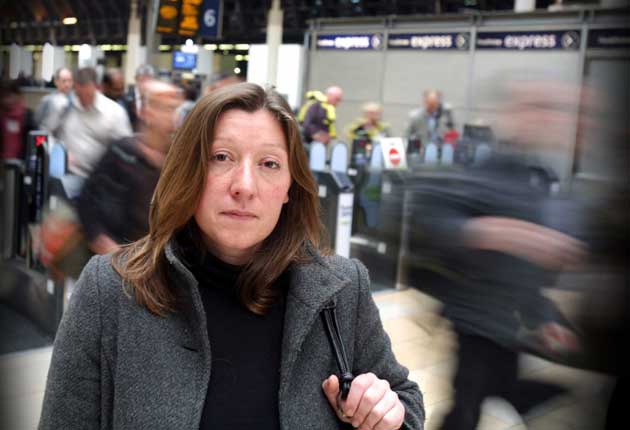
At 25, Emma Mansfield was a poster girl for successful young women. She lived in Bristol and loved her job as a producer of natural history programmes, which allowed her to travel all over the world. She had also met and fallen for a wonderful new boyfriend. She was in the pink, you might say, so the last thing she was expecting was to be dragged down into the deep blue storm of a nervous breakdown. "It was like somebody had pulled a rug out from under me," she remembers, eight years, another nervous breakdown and spells of clinical depression, psychosis and time in hospital later. "I didn't know what the hell was happening to me. I'd feel like I was being sucked down in this vortex, like in Harry Potter where the death-eaters suck out your soul."
The term "nervous breakdown" is neither medical nor scientific, but a shorthand for someone who can no longer cope in their normal life, explains Phillip Hodson, of the British Association for Counselling and Psychotherapy (BACP). "It describes someone who has gone through the tipping point. They have gone from stress and distress, to an over-stressed situation. It's the difference between, 'I'm very uncomfortable but I'm managing' to 'I'm so unhappy and fraught that I'm not functioning.'" Not functioning might manifest itself in strange behaviour such as stepping out in front of buses, flaring up at other people, having suicidal thoughts or going into states such as a trance, catatonia or gibbering."
Mansfield's breakdown unravelled over a few days. "I looked around me," she says, now 33, "and thought, I'm living in a city I don't know. I don't know many people. I don't go walking or riding any more. I don't have mates I can go for a cup of tea with or down to the pub with. This isn't very balanced. I had a dream I was being asphyxiated and made a decision that I had to deal with it."
A diagnosis of clinical depression followed and she suffered suicidal thoughts for a week. After undergoing a lot of therapy and a year on antidepressants, Mansfield realised her tale fitted the notorious pattern of too much, too soon, too quickly. "I was an extremely high flyer at a young age," she admits. "I think it all caught up with me. I came out of education and thought, well, life should be easy now. Actually, it's not. Life becomes even more challenging and complex."
Although Mansfield sought help early on, many sufferers of nervous breakdowns feel too ashamed to admit they are experiencing difficulties. Mental illness has a stigma, and admitting to one can be tantamount to scoring one's reputation with an indelible black mark. When well known personalities admit to struggling, the subject is demystified. More useful than clarifying a confusing topic, though, is the message that it is OK to have a breakdown, and that you can recover. It is not a life sentence.
Stephen Fry has spoken openly about his breakdown, a painfully public collapse when he walked out of a play in 1995 and disappeared for weeks. In Stephen Fry: The Secret Life of the Manic Depressive, he interviewed other sufferers including Carrie Fisher, Richard Dreyfuss, Robbie Williams and Jo Brand.
More recently, Alastair Campbell revisited his own breakdown of 1986, in the BBC programme Cracking Up. One interviewee was Ruby Wax, another of the few brave enough to speak out about depression and anxiety.
Why did Fry tip over when he was in a successful play? Mansfield was similarly flying high when crisis struck. She now believes the comfort of a loving relationship provided her with the space to confront issues she hadn't worked through, which presented themselves as depression. She comes from a supportive family and had suffered none of the physical, emotional or sexual abuse that often leads to mental illness, though she had sought counselling at university. "I always knew there were things I needed to work out," she explains, "such as taking everything very much to heart. I was open, but also quite vulnerable."
"Experiencing a nervous breakdown was terrifying – especially because I didn't know what had caused it. My breakdown was physical, emotional and psychological, it was as though my mind went into an enormous spin while my body, particularly my nervous system, was coping to process the incredible sensory and physical assault which accompanied the experience. I felt extremely anxious and fearful. I couldn't eat. I couldn't think. I was confused, disoriented and hyperventilating. I lost a lot of weight."
Mansfield confronted her deteriorating situation head on, switching her job and busy lifestyle for the countryside and a new job. First, though, she went to recuperate at her family home in Essex.
Eight long months there made her even more determined to move on with her life. "I knew I had to get to grips with my mental state and focus on what I wanted next."
She chose Cornwall as the place she could best "get to grips" with her state of mind. It was familiar from childhood family holidays. "The sea and the fresh air were what I needed more than anything."
Cornwall suited her. She had found Bristol isolating and overwhelming and she missed the sense of community and belonging of living in a small town or village. She found a job as an arts administrator at the Eden Project, and threw herself into the role. She discovered she was far more creative than a television career had allowed her to realise, but her dedication proved too much, leading to a second breakdown in the spring of 2006, much more serious than the first.
"It was a complete and utter nervous collapse," she recalls. "I couldn't eat or sleep for four or five days." She was admitted to hospital for five days and sedated, giving her space to calm down. "It is terrifying when you lose your mind. You think you know who you are and what you're doing, and all of a sudden your mind goes into spin drive. I experienced paranoia and psychosis."
"Psychosis," explains Phillip Hodson, "is where you may not be responsible for your actions. The obvious psychoses are things such as schizophrenia, mania and bipolar disorder."
In May, 32-year-old barrister Mark Saunders was shot dead by police after firing his shotgun from his Chelsea home. Last June, a Spanish insurance executive, Alberto Izaga, plunged into such a psychotic meltdown that he battered his two-year-old daughter to death. It is possible that both men were experiencing episodes of psychosis as part of a nervous breakdown.
Campbell entered a psychosis after a period of heavy drinking, where he thought he was being tested on his actions, and saw everything as part of this test. He was arrested and admitted to hospital, where he was heavily medicated. The episode left him depressed, but he rebuilt his life. He is proof that a nervous breakdown is a heavy burden, but not a life sentence.
Despite her experience of mental illness and knowledge of counselling and therapy, both as a patient and student, Mansfield had not seen her own burn-out coming. "I think I'd had enough," she says, as if she did nothing more but collapse on the sofa. It is her bipolar condition that makes her prone to frenetic activity – mania – followed by depressive slumps. "I'm very driven and self-disciplined," she observes, "so sometimes I don't realise how much energy I put into things until I need to go and lie down for two weeks."
One such exhausting undertaking is Mansfield's new book, The Little Book of the Mind, a touching and informative encyclopaedia of mental illness, which attacks the stigma around diseases of the mind. It follows The Little Book of Cornwall, about her adopted county.
Mansfield advises anyone who thinks they might be experiencing some sort of mental illness to visit their GP and get the six free therapy sessions on offer, though she admits that most problems take much, much longer to resolve.
Mansfield thinks herself lucky, because she found the resilience to fight her illnesses. She has left the Eden Project and works with young people, coaching them to write for the local newspaper, runs several choirs and arranges music. She can walk her dog in the fresh air whenever the mood takes her. "It all depends," she says, "on whether you think you can change your life."
'The Little Book of the Mind' is published by Lovely Little Books, £6.99. Available in Waterstone's
Subscribe to Independent Premium to bookmark this article
Want to bookmark your favourite articles and stories to read or reference later? Start your Independent Premium subscription today.
Join our commenting forum
Join thought-provoking conversations, follow other Independent readers and see their replies