Relax your way to perfect health
Cutting-edge scientific research now proves what the yogis have always known: deep relaxation can have a profound effect on a wide range of medical conditions. Anastasia Stephens reports
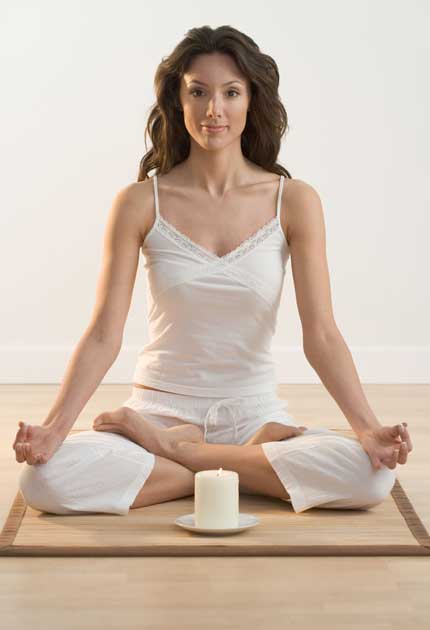
It's a piece of advice that yogis have given for thousands of years: take a deep breath and relax. Watch the tension melt from your muscles and all your niggling worries vanish. Somehow we all know that relaxation is good for us. Now the hard science has caught up – for a comprehensive scientific study showing that deep relaxation changes our bodies on a genetic level has just been published.
What researchers at Harvard Medical School discovered is that, in long-term practitioners of relaxation methods such as yoga and meditation, far more "disease-fighting genes" were active, compared to those who practised no form of relaxation.
In particular, they found genes that protect from disorders such as pain, infertility, high blood pressure and even rheumatoid arthritis were switched on. The changes, say the researchers, were induced by what they call "the relaxation effect", a phenomenon that could be just as powerful as any medical drug but without the side-effects.
"We found that a range of disease-fighting genes were active in the relaxation practitioners that were not active in the control group," explains Dr Herbert Benson, associate professor of medicine at Harvard Medical School, who led the research.
The good news for the control group with the less-healthy genes is that the research didn't stop there. The experiment, which showed just how responsive genes are to behaviour, mood and environment, revealed that genes can switch on, just as easily as they switch off.
"Harvard researchers asked the control group to start practising relaxation methods every day," explains Jake Toby, hypnotherapist at London's BodyMind Medicine Centre, who teaches clients how to induce the relaxation effect. "After two months, their bodies began to change – the genes that help fight inflammation, kill diseased cells and protect the body from cancer, all began to switch on."
More encouraging still, the benefits of the relaxation effect were found to increase with regular practice – the more people practised relaxation methods such as meditation or deep breathing, the greater their chances of remaining free of arthritis and joint pain with stronger immunity, healthier hormone levels and lower blood pressure.
Benson believes the research is pivotal because it shows how a person's state of mind affects the body on a physical and genetic level. It might also explain why relaxation induced by meditation or repetitive mantras is considered to be a powerful remedy in traditions such as Ayurveda in India or Tibetan medicine.
But just how can relaxation have such wide-ranging and powerful effects? Research around the world has described the negative effects of stress on the body. Linked to the release of the stress-hormones adrenalin and cortisol, stress raises the heart rate and blood pressure, weakens immunity and lowers fertility.
By contrast, the state of relaxation is linked to higher levels of feel-good chemicals such as serotonin and to the growth hormone which repairs cells and tissue. Indeed, studies show that relaxation has virtually the opposite effect, lowering heart rate, boosting immunity and enabling the body to thrive.
"On a biological level, stress is linked to fight-flight and danger," explains Dr Jane Flemming, a London-based GP. "In survival mode, heart rate rises and blood pressure shoots up. Meanwhile muscles, preparing for danger, contract and tighten. And non-essential functions such as immunity and digestion go by the wayside."
Relaxation, on the other hand, is a state of rest, enjoyment and physical renewal. Free of danger, muscles can relax and food can be digested. The heart can slow and blood circulation flows freely to the body's tissues, feeding it with nutrients and oxygen. This restful state is good for fertility, as the body is able to conserve the resources it needs to generate new life.
While relaxation techniques can be very different, their biological effects are essentially similar. "When you relax, the parasympathetic nervous system switches on and that is linked to better digestion, memory and immunity, among other things," explains Jake Toby. "So as long as you relax deeply, you'll reap a variety of rewards."
But, he warns, deep relaxation isn't the sort of switching off you do relaxing with a cup of tea or lounging on the sofa. "What you're looking for is a state of deep relaxation where tension is released from the body on a physical level and your mind completely switches off," he says. "The effect won't be achieved by lounging round in an everyday way, nor can you force yourself to relax. You can only really achieve it by learning a specific technique such as self-hypnosis, guided imagery or meditation."
The relaxation effect, however, may not be as pronounced on everyone. "Some people are more susceptible to relaxation methods than others," cautions Joan Borysenko, director of a relaxation programme for outpatients at Beth Israel Deaconess Medical Center, Boston, US. "Through relaxation, we find that some people experience a little improvement, others a lot. And there are a few whose lives turn around totally."
The health benefits of deep relaxation
The next time you tune out, switch off and let yourself melt, remind yourself of all the good work the relaxation effect is doing on your body. These are just some of the scientifically proven benefits...
Immunity
Relaxation appears to boost immunity in recovering cancer patients. One study at Ohio State University, in the US, found that progressive muscular relaxation, when practised daily, reduced the risk of breast cancer recurrence. In another study at Ohio State, a month of relaxation exercises boosted natural killer cells in elderly people, giving them more resistance to tumours and viruses.
Fertility
A study at the University of Western Australia found that women are more likely to conceive at periods when they're relaxed rather than stressed. Another study at Trakya University, Turkey, found that stress reduces sperm count and motility, a finding that implies that relaxation may boost fertility in men, too.
Irritable bowel syndrome
When patients suffering from irritable bowel syndrome practised a relaxation meditation twice daily, symptoms such as bloating, belching, diarrhoea and constipation improved significantly. The method was so effective that the researchers at the State University of New York at Albany, recommended it as an effective IBS treatment.
Blood pressure
A study at Harvard Medical School found meditation lowered blood pressure by making the body less responsive to stress hormones, in a similar way to blood pressure-lowering medication. Meanwhile, a report in the British Medical Journal found that patients trained to relax had significantly lower blood pressure.
Inflammation
Stress leads to inflammation, a state linked to heart disease, arthritis, asthma as well as skin conditions such as psoriasis, say researchers at Emory University in the US. Relaxation can play a role in preventing and treating such symptoms by switching off the stress response. In this way, one study at McGill University in Canada found meditation clinically improved symptoms of psoriasis.
The BodyMind Medicine Centre, W1, teaches deep relaxation techniques that enable people to access the relaxation effect at home. For information go to relaxationeffect.com
Take a deep breath... How to relax deeply
So how can you access relaxation's healing powers? Harvard researchers found that yoga, meditation and even repetitive prayer and mantras all induced the relaxation effect. "The more regularly these techniques are practised, the more deeply-rooted the benefits will be," says Jake Toby. Have a go at one or more of the following for 15 minutes once or twice a day.
Body scan
Starting with your head and working down to your arms and feet, notice how you feel in your body. Taking in your head and neck, simply notice if you feel tense, relaxed, calm or anxious. See how much you can spread any sensations of softness and relaxation to areas of your body that feel tense. Once your reach your feet, work back up your body.
Breath focus
Sitting comfortably, become aware of your breath, following the sensation of inhaling from your nose down to your abdomen and out again. As you follow your breath, notice your whole body and let tension go with each exhalation. Whenever you notice your mind wandering, come back to your breath.
Mantra repetition
The relaxation response can be evoked by sitting quietly with eyes closed for 15 minutes twice a day, and mentally repeating a simple word or sound such as 'Om'.
Guided imagery
Imagine the most wonderfully relaxing light, or a soothing waterfall washing away any tension or worries from your body and mind. Make your image as vivid as possible, imagining the texture, colour and any fragrance as the image washes over or through you.
Join our commenting forum
Join thought-provoking conversations, follow other Independent readers and see their replies
Comments