Health & Families

7° London Hi 13°C / Lo 6°C

'Thalidomiders': still fighting for justice

Fifty years after the Thalidomide scandal, its victims' compensation funds are dwindling. Jeremy Laurance meets Nick Dobrik, whose extraordinary campaign aims to give them dignity and independence in old age
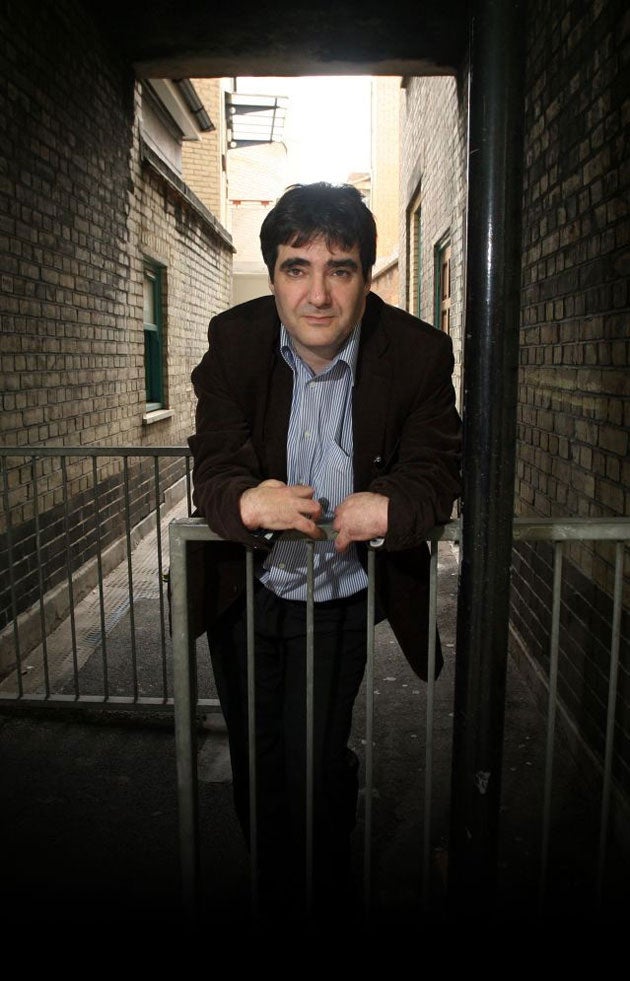
Blighted generation: Nick Dobrik is determined to get a better deal for Thalidomiders

Susannah Ireland

Blighted generation: Nick Dobrik is determined to get a better deal for Thalidomiders

If you have ever taken a headache remedy, swallowed an antibiotic, sucked on an asthma inhaler, been injected with a cancer medicine or taken any drug developed in the last half century, you owe a debt to Nick Dobrik and the thousands like him who paid, in some cases with their lives, for your safety.

Mr Dobrik is an ebullient 49-year-old with an open face, black hair flecked with grey, thick eyebrows gone awry, and a lot to say. He talks fast and urgently, anxious to impart as much information as possible, knowing he must soon move on to the next receptive ear to spread his message.

He wears a thick black coat and open-necked blue shirt on this shivery May morning, sitting with a coffee outside Starbucks in Hampstead, north London. You have to look closely to see his distinguishing feature – foreshortened arms with twisted hands that turn dramatically inwards. During our two-hour conversation, surrounded by gossiping students and mums with pushchairs, he repeatedly pushes the over-long arms of his coat back, to keep his hands free. But you do not get a sense of his disability until he struggles to retrieve an envelope from the inside pocket of his coat. Then he stands and executes a strange bowing and twisting movement, like a mechanical digger delving for the document deep inside his clothing.

He is a "Thalidomider" – a survivor of the world's worst drug disaster, caused by a medicine prescribed to pregnant women as a treatment for morning sickness in the late 1950s and early 1960s. Some 10,000 babies worldwide were born with deformities as a result, before the drug was withdrawn in 1961.

Unlike medicines today, Thalidomide was not subjected to rigorous testing before it was launched. There were few laws governing drugs in the 1950s and its maker, the German company Grunenthal, marketed it as an over-the-counter treatment, available without a prescription, for morning sickness and stress, respiratory infections, and as a sedative for children.

It was its use by pregnant women that proved catastrophic. Even a single dose of the drug, taken at a crucial moment in pregnancy, was enough to interfere with the development of the foetus, causing appalling disabilities. It had never been tested for its teratogenic effects – disturbance to the growth of the embryo – a situation that would be unthinkable for a drug launched today.

Fifty years on, the huge edifice of drug regulation, which requires new medicines to undergo elaborate safety testing in randomised clinical trials, can be traced back to Thalidomide. It is only because of Thalidomide that medicines today are, relatively, safe. The children damaged by Thalidomide half a century ago, who are now entering middle age, remain living testimony to the perils of an unregulated medicines market.

In the UK there are 457 surviving Thalidomiders. They range from the mildly affected to those who have no arms or legs, "flippers" for hands and feet and who are dependent for every aspect of daily living on others. As they age, their needs are growing.

With increasing needs come increasing expenses. It is this fact that has prompted the Thalidomiders, led by Nick Dobrik and his friend Guy Tweedie, with the support of philanthropist Jonathan Stone, 71, to launch a new campaign for increased state help from the Government to bolster the compensation that they say is now inadequate. They have the backing of veteran disability campaigner Lord (Jack) Ashley, and 139 MPs have signed an Early Day Motion in support.

In the UK, the Thalidomide Trust was set up in 1973 with £20m donated by Distillers (the company which distributed the drug here) to support the Thalidomiders after a long and bitter campaign led by The Sunday Times – regarded by many as that newspaper's finest hour.

Over the ensuing decades the sum has been topped up as experience showed it would be inadequate to sustain the Thalidomiders for the rest of their lives. An actuarial report ordered by the Trust in 1993 concluded that the fund would run out by 2009, as a result of which Guinness, which bought Distillers in the mid-Eighties, agreed to pay an extra £2.5m a year to 2009 , later extended by Guinness's successor, Diageo, to 2022.

That deal was done in the mid-Nineties, but it still wasn't enough. The Thalidomiders were living much longer than expected, their disabilities were growing as a result of limbs being used in ways for which they were not designed, and their expenses – electric wheelchairs, adapted cars – were growing. What they lacked was an economist with the brains to up their game in negotiations.

Nick Dobrick filled that bill perfectly. Born into a comfortably-off Jewish family in north London, he was educated at Mill Hill public school and Cambridge before spending four years with the accountancy firm Touche Ross. Then his father had a stroke and he took over the family antique jewellery business, where he is chief executive.

He had never met another Thalidomider in his life until, in 2002, he read a newspaper article about the financial problems faced by the Trust. "I wasn't interested in meeting other Thalidomiders. I played rugby at school and I just wanted to get on with my own life. But when you have been born with a silver spoon in your mouth you have got to put something back. I have had a very lucky life, but since the day I read that article in November 2002, I have been fighting [for a better deal for the Thalidomiders]."

Married with two teenage children, he is warm, engaging and mischievous, telling jokes and anecdotes about the guerrilla tactics he has employed. On one occasion, when the German ambassador refused to see him, he booked a table at the British-German Association dinner (tickets £750 a head) , took along 10 Thalidomider friends, and sent the female members of his party purring across the floor of the Intercontinental hotel in their wheelchairs to request the ambassador's hand for the next dance. Afterwards the mortified man was putty in his hands.

He says the way to succeed in lobbying is to be nice. Asking for the ambassador's hand at a dance works better than confronting him with placards outside (though there is a place for that too). It takes stamina but it works.

His first campaign was to correct a tax anomaly whereby Thalidomiders who were worst affected and needed cash from the Trust as income were taxed on it, while those, like himself, who were less badly affected, and needed only the occasional lump-sum payment for a wheelchair or car, avoided tax.

"I ran a quick campaign, wrote to every MP and saw 150 face-to-face. We set up an all-party group. We got the tax exemption in 2004."

Next, he helped negotiate an improved deal with Diageo, signed in 2005, which boosted the sum available in the trust fund back to its 1973 value, with a 3 per cent annual increase in real terms from now to 2022, and then maintained at that level for the rest of the Thalidomiders' lives.

That deal, which ran to 70 pages, is said to be worth £160m. It sounds a big number but, according to Dobrik, it is equivalent to an increase of just 45 per cent in real terms over 50 years on the value of the original 1973 settlement – when the rest of the working population has seen vastly greater increases in its standard of living.

Importantly, even after all these rises, the average payment to the Thalidomiders from the trust fund is £18,000 a year, with the most severely disabled receiving up to £36,000 a year. None of the deals has ever been based on the Thalidomiders' needs, and only a quarter of them still have jobs.

"They are not working, they have increasing costs of disability to cope with, they have no pensions, and their parents, who may have looked after them all their lives, are dying. An average income of £18,000 a year is nowhere near enough. An electric wheelchair costs £18,000 and lasts two years. Adapting a car doubles its price. If somebody lost their arms in an industrial accident I wouldn't be surprised if they got an income of £70,000 to £80,000," he says.

For the latest stage of the campaign, Dobrik has turned his attention to the UK Government, which, he says, has taken more from the Thalidomiders in tax on their income payments (£17.8m in total) than it has given in lump sums to the Thalidomide Trust (£12.8m).

Governments in other countries have agreed payments to Thalidomiders which have been made, in some cases, for years – Germany, Italy and Ireland are cited as examples. Overall compensation levels are higher in Britain, thanks to the success of negotiations with the companies that distributed the drug, but "you can't measure the success of one inadequate settlement by pointing to an even more inadequate one," Dobrik says. It is time, he adds, that the British Government did the decent thing.

"It is ridiculous that 50 years after the events we are still fighting for justice. When you take welfare payments, you are a beggar. But this didn't have to happen – it could have been avoided. This is not about entitlement, it is about justice."

"The least you can do for the Thalidomiders is allow them some independent life. They are very few in number but their needs are very great. It won't take much to help them have an independent existence in the last third of their lives."

"What society needs to remember is that the Thalidomiders have suffered their disability from year zero, but almost everybody will suffer it at some point – usually at the end of their lives. It will happen to everyone sooner or later."

"The Government can ignore us, they can bury their heads in the sand, but sooner or later they will have to sit down and talk to us."

Post a Comment

View all comments that have been posted about this article.

Offensive or abusive comments will be removed and your IP logged and may be used to prevent further submission. In submitting a comment to the site, you agree to be bound by the Independent Minds Terms of Service.

Comments

shame
[info]temitopetc wrote:
Tuesday, 26 May 2009 at 06:42 am (UTC)
breaks my heart to read things like this.
Thalidomide - no 'scientific' research?
[info]stevescrutton wrote:
Tuesday, 26 May 2009 at 08:40 am (UTC)
How could Jeremy Laurence get things so wrong! There was LOTS of research into Thalidomide! It WAS known that Thalidomide had this kind of DIE (disease inducing effect) - but the drug company went ahead and sold it anyway.

And what happened then is no different to what is happening today. Drug companies ARE aware that the drugs they sell cause DIEs, and they are prepared to market them anyway. Google Vioxx for a 21st century example. Look at the scandal of HRT (given to thousands of women until the full enormity of its DIEs - breast and cervical cancer - were revealed.

Why does the Independent continue to so cravenly fail to question what is going on in the world of conventional medicine?

Steve Scrutton
Re: Thalidomide - no 'scientific' research?
[info]drmagyar wrote:
Tuesday, 26 May 2009 at 01:36 pm (UTC)
Why do you say 'conventional medicine'? Is there some kind of medicine that is better that doesn't do this?
Re: Thalidomide - no 'scientific' research?
[info]dobrikjoshua wrote:
Friday, 24 July 2009 at 10:36 pm (UTC)
First of all I would like to explain why this article has been written.
In order to gain compensation for thalidomiders my father ( Nick Dobrik ), along with many other people fighting for this campaign have used publicity and pressure as key tactics to obtain results. That is how compensation was gained from Diageo.
This article illustrates perfectly how these tactics works ( as you can see by the many positive comments) and reaches out to the public .
This is precisely the type of media coverage needed in order to win this campaign . And I can confirm that results are beginning to show.


Now Mr Scrutton , you have completely missed the point of this article .
Type in a search engine the keywords "Pharmaceutical" and "mess up" , and you will find a very long list of sites dedicated to seeking out these mess ups.
Furthermore , I think I can say that all the problems we encounter today in the world of conventional medicine are known about and we are mostly informed of them.

Here is , yet again ,another counter argument to your rather pointless article:

www.independent.co.uk/.../merck-to-pay-485bn-to-settle-lawsuits-over-vioxx-drug-399796.html

Go to this link and you will find that the independent covered the vioxx "conventional medicine" mess up , as you would surely put it.

Well let us just hope that the next time you decide to post a comment you will do your homework, as every good boy should , and be a little less critical and narrow minded in your judgement so as to prevent further embarassement.

Yours sincerely,
Joshua Dobrik

Thalidomiders
[info]ruthdaniells wrote:
Tuesday, 26 May 2009 at 02:26 pm (UTC)
Absolutely Nick and Guy.......................Justice and Dignity for all of us and especially for Thalidomiders who are unable to speak up for themselves. We are family for all the wrong reasons but that just makes us all the stronger...................

Ruth Daniells
Thalidomider - middle of a field in Devon!
Thalidomide
[info]andrescudeiro wrote:
Tuesday, 26 May 2009 at 03:09 pm (UTC)
As a vet I was told many times in my pharmacology lessons how the thalidomide disaster changed the way new drugs are developed and tested before they go in the market(the Professor was a pharmacologist, not a Vet) Despite some of the comments I do belive that nowadays, taking a licensed drug and following the licence provisions is an altoghether safer thing to do than than it was before thalidomide.
It is shamefull for a Society to leave the victims of the biggest medical error in history with such a ludicorous level of social protection. I was born in the 70s and I know how much my children and I owe these people.
Full support and recognition for Mr Dubrik and his cause
Thalidomide in the United States
[info]janye1 wrote:
Tuesday, 26 May 2009 at 05:09 pm (UTC)
Thalidomide was not approved in the United States. A heroic woman, Frances Kelsey, MD, PhD, stubbornly refused to allow FDA approval.

We need more government employees like Frances Kelsey. You can never have enough level headed people who
oppose being pushed by drug companies. She stood up to the drug companies and refused to rush through approval of this drug.
Re: Thalidomide in the United States
[info]kd001 wrote:
Wednesday, 27 May 2009 at 11:16 am (UTC)
yes Frances Kelsey was an amazing woman who should get more deserved recognition for avoiding a thalidomide disaster in the USA.
She received the President's Award for Distinguished Federal Civilian Service n 1962
http://en.wikipedia.org/wiki/Frances_Oldham_Kelsey
Thalidomiders
[info]beeclaudia wrote:
Tuesday, 26 May 2009 at 07:45 pm (UTC)
As a German born Thalidomider living in Britain, I have long been aware that the country in which the drug was developed and first sold, we have the least support. I am in the same position as many other Thalidomiders, having nearly reached the end of my useful life. My 'Folgeschaeden', damage caused by the primary disability to the rest of my body due to mis-or overuse, are now resulting in me not being able to do my job any more. Like Nick I have not met many Thalidomiders and prided myself on being pretty self sufficient. Now that I finally need help, I realize there is very little available. Whether it is doctors qualified to diagnose our particular complaints and make correct recommendations in order to avoid further damage or financial help when our bodies refuse to let us abuse them and overtax them any longer, nothing is available. It is not just a national disgrace but an international one. Meanwhile the Gruenthal AG makes millions of Euros profit every year, much of which it spends on lawyers to evade the demands for restitution, whilst I have to apply for state help. It is a farce and I would laugh, were I not in pain every day of my life now.

B. Baganz, South Wales
[info]iain39 wrote:
Tuesday, 26 May 2009 at 08:18 pm (UTC)
I was born in 1957; my mother, while pregnant with me, was offered a drug to combat morning sickness, but decided against it. The drug was Thalidomide. Naturally I have every sympathy with the victims, who deserve compensation for life.

Recently Glaxo paid for the force-feeding teenagers forcibly restrained in the Incarnation Children's Centre with a mystery drug which was discovered to be Thalidomide. Teenagers who objected to this treatment were surgically implanted with a tube directly into the stomach, into which the drug was injected.

So we can see that not much has changed in 50 years. The big pharmaceutical companies are keen to see what happens, although these days they prefer to restrict the legal fallout, by limiting their Mengeles-type experiments to orphans.
[info]fiona1960 wrote:
Tuesday, 26 May 2009 at 09:06 pm (UTC)
It's about time the UK Government looked after us thalidomide victims. After all they've been looking after the MP's, their expenses fiasco is proof of that. Many thalidomiders are facing severe financial hardship as their disabilities worsen and they need to pay for care in order for them to try and live a reasonable way of life. As youngesters we were taxed on our compensation money at the higher rate - a fact that not many people know, and we were originally promised that we could claim back some of the tax we paid - and then the Government changed their minds. I personally am suffering from Breast Cancer, and without the moral and physical support of my fellow thalidomiders I do not know how I would of got through this very traumatic experience. We are 'a large family' brought together by tragedy, but we're all there for one another. To my knowledge there has only been one other thalidomder diagnosed with cancer, but I am happy to report that they have made a full recovery - and I hope I do make a full recovery too. I have met many people during my treatment who say to me "you poor thing, being disabled and then getting cancer'. I do not have self pity though I ain't ready to give in yet! And support Nick and Guy in their campaign against our Government although due to risk of infections whilst undergoing chemotheraphy I cannot physically be with them I am with them 100% of the way mentally. Please I am asking you the british public to help us with our campaign.
Keep up the fight!
[info]kd001 wrote:
Wednesday, 27 May 2009 at 10:58 am (UTC)
Well done Nick and all the others in the fight for justice!
Kevin - a thalidomider from Merseyside
Thalidomide
[info]booth01 wrote:
Wednesday, 27 May 2009 at 02:48 pm (UTC)
I support Nick and the teams efforts to get the Government to take a moral responsibility for the worst ever medical disaster in Britain, I would like to see Alan Johnson or better still Gordon Brown to hold their hand up and say yes the Government of the day got it wrong and invite the team to discuss financial support instead of Thalidomiders having to 'beg' oh and a sorry would be nice
Thalidomide .........
[info]silentwitness01 wrote:
Friday, 29 May 2009 at 07:38 am (UTC)
I have a friend who is a Thalidomider and i admire her totally and yes i agree with all of you about justice and dignity but i have always wondered why your organisation and the people who look after your best interest NEVER FOUGHT FOR A PUBLIC INQUIRY seems the only way that you would get justice and the answers you all look for .......... good luck to one an all of you
Great man
[info]fattwo wrote:
Friday, 20 November 2009 at 06:40 am (UTC)
He is a great man, I have to admit he has tried his best to gain justice.
fatburningfurnace and fat burning furnace review
What is it you are talking about?
[info]fbfurnaces wrote:
Monday, 30 November 2009 at 11:04 pm (UTC)
What is Thalidomide anyway? I just got here and saw an image with a man on it, but no real idea what the article is about, reading the comments but it's not making me smarter...

Fat Burning Furnace and Fat Burning Furnace review
Brave guy
[info]viewss wrote:
Tuesday, 8 December 2009 at 08:55 am (UTC)
He is a very brave guy, facing so much difficulties, but he never give up, the fighting spirit with him never change. -- fatburningfurnace review

Most popular in Life & Style


Free gym pass

Get fit for summer with Fitness First gyms in London

Download a free gym pass from Fitness First today

Article Archive

Day In a Page

Sun | Mon | Tue | Wed | Thu | Fri | Sat

Select date