Alcohol a problem for war veterans, study finds
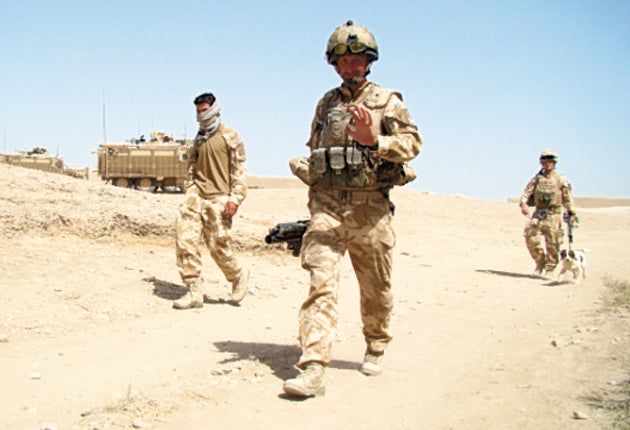
Soldiers, sailors and airmen returning from the war zones of Afghanistan and Iraq have been hitting the bottle in a dangerous fashion but have not suffered the tidal wave of mental problems that was predicted, researchers report today.
The British military appears to have avoided the heavy toll that the conflicts have exacted on their American counterparts, where rates of post-traumatic stress disorder in returning troops have soared.
One in seven UK military personnel deployed to the two countries were drinking heavily – at harmful levels – after returning, at rates 22 per cent higher than among those who remained at home. Alcohol is banned in war zones but is plentiful in overseas bases.
However, rates of post-traumatic stress disorder were low among British troops, affecting only 4 per cent overall. Despite fears that the length of the war in Iraq – from 2003-09, it was longer than the Second World War – and the intensity of the fighting in Afghanistan would have devastating effects on the minds of troops, it has not turned out as some predicted.
Alcohol misuse, which is mostly ignored by the military, is now a bigger problem than post-traumatic stress disorder itself, the researchers from King's College London said.
The study of the mental health of almost 10,000 troops was commissioned as the military came under pressure from its twin commitments in Iraq and Afghanistan, with rising casualty rates and a requirement for repeated deployments. There were warnings that the intensity of the fighting would lead to an epidemic of mental problems later, as had been seen in the US.
That this has not transpired may be due as much to luck as judgement, the researchers said. US forces deploy troops for longer periods – 12 to 15 months compared with six months for the UK – and they tend to be younger and less experienced. They also include three times more part-time reservists, who may be less psychologically robust than professional soldiers.
Free health care in the US is only available to military personnel more than two years after their return (now extended to five years) for conditions that are combat related – providing an incentive to link mental problems with their earlier military service.
The authors of the study, led by Professors Simon Wessely and Mathew Hotopf from the Academic Centre for Defence Mental Health, said: "Our main finding is that, overall, the prevalence of mental disorders in the UK armed forces remained stable between 2003 and 2009."
Even among those troops repeatedly deployed to war zones, mental problems did not increase. Nicola Fear, chief investigator on the study, said: "That may seem counter intuitive, but if you come back and are suffering problems you are unlikely to be deployed again. Those deployed multiple times are likely to be more psychologically robust."
An earlier study by the same group, from 2003 to 2005, found no evidence for Gulf War syndrome, as had been widely reported, and no deterioration in mental health, except in reservists. It also highlighted alcohol problems.
The new report paints a similar picture, despite the increased intensity of the fighting. Professor Wessely said the NHS, military mental health services and charities should nevertheless prepare for an increase in the number of personnel returning with mental health problems, because of the increased numbers being committed to Afghanistan. "It doesn't mean things are getting worse. It is because of the increasing numbers being deployed. It is not because morale or mental health of the armed forces has suffered a catastrophic decline," he said.
But Professor Wessely said the problem of alcohol misuse presented the military with a challenge. "Alcohol plays a positive role in bonding among the armed forces – and it works. What we are saying is that there is no such thing as a free lunch. There are side-effects and they are harmful."
Join our commenting forum
Join thought-provoking conversations, follow other Independent readers and see their replies
Comments