Antibiotics blamed for child deafness
Treatment for premature babies triggers hearing loss in the genetically susceptible
One child a week is being made deaf by treatment with antibiotics and many more may suffer damage to their hearing, doctors report today.
The serious side-effect causing life-long disability occurs among children with a pre-existing sensitivity to powerful antibiotics widely used in premature baby units to treat infections.
The discovery by researchers at the Institute of Child Health in London triggered calls yesterday for a national screening programme for pregnant women to detect babies at risk. An estimated 20,000 premature babies are treated each year with the powerful antibiotics, called aminoglycosides. The drugs are also used to tackle infections in children with cancer and chronic illnesses such as cystic fibrosis, and in adults. Genetic specialists at the Institute of Child Health, who reviewed blood samples from over 9,000 children, found one in 500 had a genetic mutation that made them vulnerable to aminoglycosides.
The antibiotics are "broad spectrum" drugs – they tackle a wide range of infections – which are given in hospitals by injection. They are not prescribed by GPs and there is no risk from other antibiotics.
Maria Bitner-Glindzicz, consultant geneticist at the institute who led the study, published as a letter in The New England Journal of Medicine, said: "All [the affected children] are permanently deaf. It is possible there are more children with a lesser degree of hearing loss who have not come to the notice of doctors. Adults can also be affected. If you have this mutation and get this class of antibiotics, they have this rapid and extreme effect."
Dr Bitner-Glindzicz said children likely to need treatment with aminoglycosides, such as those with cancer or cystic fibrosis, should be screened so that those with the genetic mutation could be offered a different drug. But in most cases, very sick children must be treated immediately with antibiotics. "Waiting for a gene test may sometimes not be clinically right, particularly on neonatal units. Universal pre-natal testing of mothers should be considered for this reason," she said.
The antibiotics have been available for decades and are cheap and effective, but the precise nature of the risk they posed has been misunderstood.
Dr Bitner-Glindzicz said: "It was known a side effect was hearing loss, but if doctors found a case of hearing loss in a premature baby, they tended to ascribe it to prematurity or that the dose of antibiotics was too high. Now we have established it is to do with genetic susceptibility, and it affects one in 500 babies."
Case study: 'It never occurred to me she was deaf. It was a terrible shock'
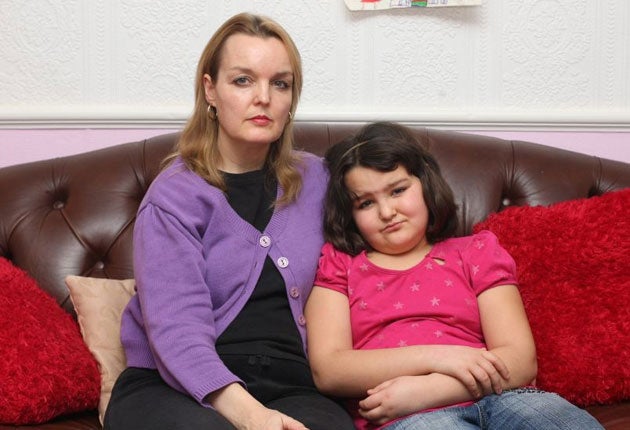
Laila was two when she got leukaemia. During her first year of chemotherapy she developed a series of infections, treated with repeated courses of aminoglycosides.
Louise MacDougall, her mother, a teacher in north London, said: "Before she got ill she was singing nursery rhymes and speaking. Then she went silent. I thought she was upset and angry with me because I had made her go through all this horrible treatment. It never occurred to me she was deaf." Only when a friend pointed it out did the penny drop. "It was a terrible shock. I had to wait months for a test and they confirmed she had profound irreversible hearing loss."
Now aged eight, Laila has a cochlear implant which gives her rudimentary hearing and she uses sign language. Her mother said: "There was a very simple genetic test they could have done and alternative drugs they could have given."
Join our commenting forum
Join thought-provoking conversations, follow other Independent readers and see their replies
Comments