Billions wasted on swine flu pandemic that never came
How did the World Health Organisation get its prediction of a 7.5 million death toll so wrong?
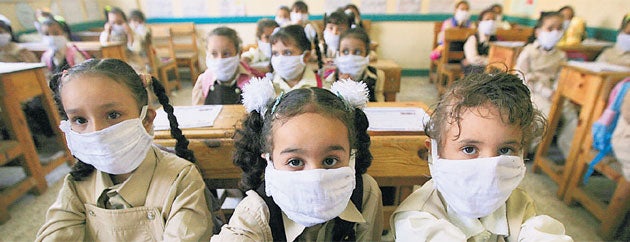
The spectre of plague stalked the world last year with its constant companion, fear. Schools and stadiums were closed in Mexico, tourists from Egypt to Singapore were quarantined, and the surgical mask became a universal fashion accessory across Asia. Yet predictions that the global death toll from swine flu could reach 7.5 million were well off the mark. At most, the virus killed 14,000 people, and some of those had pre-existing conditions or had been infected by other dangerous bugs as well. Against a background death toll from seasonal flu of up to 500,000, the new H1N1 strain was invisible.
Professor Ulrich Keil, a World Health Organisation (WHO) adviser on heart disease, said the decision to declare a pandemic had led to a "gigantic misallocation" of health budgets. "We know the great killers are hypertension, smoking, high cholesterol, high body mass index, physical inactivity and low fruit and vegetable intake," he told the Council of Europe. Yet governments "instead wasted huge amounts of money by investing in pandemic scenarios whose evidence base is weak".
The suspicion that the response to the outbreak was an unnecessary panic has been spreading since the virus slipped from the front pages. Even the WHO, the UN body that first punched the big red button, may be having doubts. An external committee has been set up to review its reaction and will deliver an interim report this week, though at the moment no bombshells are expected.
The WHO faces two main charges. The first is that between the first cases of H1N1 being reported in March and the declaration of a full, phase 6 pandemic by its director-general, Dr Margaret Chan, in June, the organisation changed its definition of a pandemic. Critics say the old definition required that a virus result in "enormous numbers of deaths and illness". The new definition applies only if the virus is new, if it spreads easily between people, and if the population has little or no immunity to it. A bug that causes a mild case of the sniffles could qualify.
A spokesman for the organisation insists there has been no change at all – that the old definition was an error on a single web page about bird flu, the last great influenza scare. But Peter Doshi, a doctoral candidate at MIT whose thesis is on science, politics and influenza policy, argued in a paper in the British Medical Journal in September that the old definition had been widely applied by the WHO since at least 2003.
The second charge, prominently made by Dr Wolfgang Wodarg, the former head of health at the Council of Europe, is that the WHO is unduly influenced by the drugs industry, which stood to make a fortune from selling anti-virals and vaccines. The Swiss giant Novartis, for example, saw its profits jump by nearly a third in the first quarter of this year to $2.95bn, much of it from delivering swine flu vaccines ordered last year. Debate rages over allegations that some experts who recommended the pandemic be declared, have links to drugs companies, although this has been denied. But critics note that it's hard to become an expert in the field without having some funding from big pharmaceutical companies.
Others say that the problem is due to the spread of false assumptions. Most people think, for example, that when they have flu symptoms they must have influenza. But Dr Tom Jefferson of the Cochrane Collaboration, which reviews the evidence for various medical treatments, notes that more than 200 agents can cause flu-like illnesses. Only 7.5 to 15 per cent of cases are actually influenza. Anti-viral drugs and vaccines are aimed just at this group. "To stop one new case of H1N1, you'd have to inoculate 100 people," says Dr Jefferson "or you could get four people to wash their hands." Masks work too, he says, and so does sending people home from work if they have symptoms.
The usual justification for the massive response to H1N1 is that no one wants a repeat of the 1918 pandemic, which killed an estimated 50 million people. But scientists are not even sure if that plague was caused by influenza at all. The virus was not discovered until 1933. And outbreaks since then have been much milder.
The last time H1N1 showed up was in 1976, at a US army base. Washington ordered the immunisation of 40 million Americans before it discovered that it had only one death from the flu but hundreds of cases of severe side-effects to the vaccine. A review headed by Dr Harvey Fineberg put much of the blame on the "influenza fraternity", arguing that expert panels tend towards "group think" and should be backed up by independent scientific advice. Dr Fineberg is now chairman of the WHO's external committee evaluating its response to the 2009 outbreak whose final report next May could well lead to a radical rethink of the world's reaction to new viruses.
Join our commenting forum
Join thought-provoking conversations, follow other Independent readers and see their replies
Comments