Death wish: Routine use of vital antibiotics on farms threatens human health
As Europe and the US face up to the menace of antibiotic-resistant superbugs, UK farmers have dramatically increased their use of the drugs most likely to cause these lethal strains
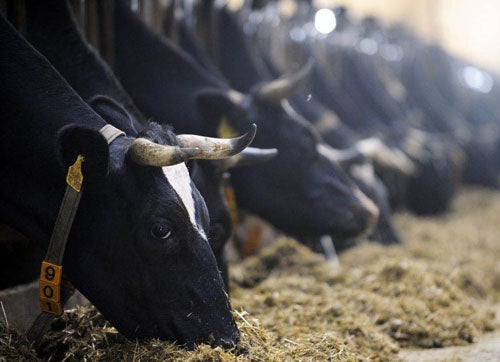
The use of modern antibiotics on British farms has risen dramatically in the past decade, fuelling the development of resistant organisms and weakening the power of human medicine to cure disease.
Click HERE to view graphic (218k jpg)
Three classes of antibiotics rated as "critically important in human medicine" by the World Health Organisation – cephalosporins, fluouroquinolones and macrolides – have increased in use by up to eightfold in the animal population over the past decade.
Over the same period, livestock numbers have fallen, by 27 per cent in the case of pigs, 10 per cent for cattle and 11 per cent for poultry. Experts say intensive farming, with thousands of animals reared in cramped conditions driven by price pressure imposed by the big supermarket chains, means infections spread faster and the need for antibiotics is greater. The widespread use of antibiotics in livestock farming is recognised as a major contributor to the growth of antibiotic-resistant bacteria. Last month British scientists identified a new type of MRSA in milk, the first time the resistant organism had been found in farm animals in the UK. Although the superbug is killed by pasteurisation, there are fears it could spread from cattle to humans.
Resistant genes for toxic forms of E.coli can jump from animal to human strains. The outbreak of a virulent antibiotic-resistant strain of E.coli in Germany last month, which has claimed 39 lives and left more than 3,300 people requiring hospital treatment, has been blamed on the overuse of antibiotics in farming.
The developments highlight the global threat from the spread of untreatable superbugs. An estimated 25,000 people die each year in the European Union from antibiotic-resistant bacterial infections, according to the WHO.
The Health Protection Agency (HPA) today publishes the latest figures showing a sharp rise in bacteria resistant to carbapenems, a new and strong type of antibiotic, which it says are a "global public health concern". The first resistant organisms were identified in 2003 and until 2007 there were fewer than five cases a year. This year 657 cases have been identified up to May, more than twice the total for 2010. In some patients they caused fatal blood poisoning.
The HPA, the European Medicines Agency and independent scientists have warned about the link between the use of modern cephalasporins and the incidence of MRSA. Use of the drugs has also been linked to the emergence in farm animals of resistant organisms, including E.coli and salmonella. Mark Holmes, lecturer in veterinary medicine at the University of Cambridge who led the research into the new type of MRSA, said: "[Cephalosporins] are some of the most effective, most modern antibiotics which are heavily used in farming. Maybe we should hold them back for human use."
Norway, Denmark and Sweden have strict controls on the use of antibiotics in farming, requiring a specific diagnosis to be made with laboratory tests to show which antibiotic is required. But in Britain, the drugs are used routinely in cows to prevent mastitis, an infection of the udder, which occurs much more frequently in animals that are intensively milked.
"We are the only country in the EU that allows drug companies to market antibiotics direct to farmers. I think it is unreasonable for the authorities to expect individuals to restrict their use," Dr Holmes said. "There are 18,000 dairy farmers and many are barely making a living – to point at them and say stop using antibiotics is ridiculous. The authorities should be more proactive – they need to think very hard about how we can guard against generating antibiotic-resistant strains."
The Soil Association has demanded an end to routine antibiotic use in dairy farming and the introduction of comprehensive tests for MRSA of farm animals, farm workers, milk and meat.
Richard Young, policy adviser to the Association, said the increasing medicinal use of antibiotics was driven by the unnatural demands of intensive farming. "The basic problem is that supermarkets see animals as cogs in a big industrial process. The profit margins are incredibly tight. Most of these problems can be avoided by having less intensive systems so the animals are naturally healthier," he said.
Scientists have been warning about antibiotic resistance for decades, but the problem has become acute as the supply of new drugs has dried up. At a WHO briefing last month, they warned that the reckless use of antibiotics could return the world to a pre-antibiotic era where infections did not respond to treatment.
A bill was introduced in the US Senate yesterday to encourage the development of new antibiotics to fight drug-resistant infections.
Join our commenting forum
Join thought-provoking conversations, follow other Independent readers and see their replies
Comments