Defect risk 'higher for assisted births'

A new study suggests that fertility treatment can increase the likelihood of congenital problems
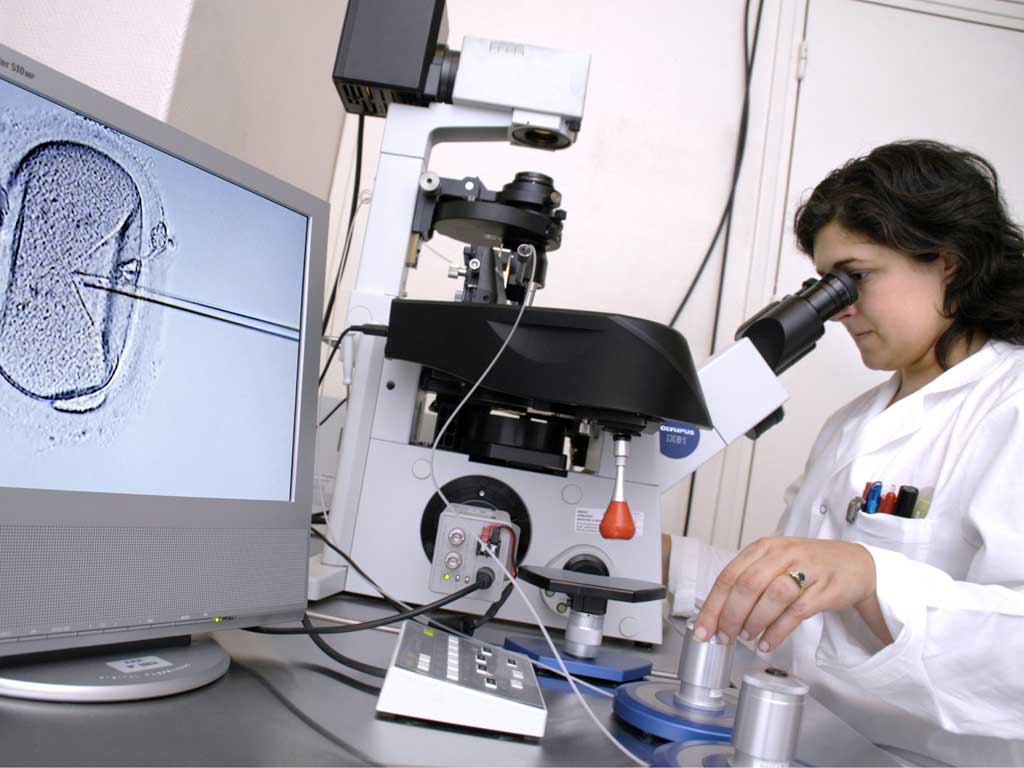
Fertility treatment increases the risk of birth defects in babies, according to the largest scientific study of its kind. Babies conceived by assisted techniques are at least one-third more likely to suffer from congenital problems than those conceived naturally, the new research has found.

Birth defects including heart, spinal and urinary tract problems, limb abnormalities and cleft palates were present in more than 8 per cent of fertility-assisted pregnancies, compared with almost 6 per cent of babies conceived naturally, according to researchers at the University of Adelaide in Australia.

The new study – believed to be the most comprehensive such research in the world – indicated that the risk of defects was different for various infertility treatments. Following examination of more than 300,000 births, researchers found that couples who did not need fertility treatment had a 5.8 per cent risk of having a baby with a birth defect, while the defect risk rose to 8.3 per cent where parents underwent assisted conception.

The study's leader, Professor Michael Davies, insisted the research team did not "want to scare people", pointing out that the vast majority of babies are born healthy.

Not all treatments were equally risky, the survey suggested. The results showed that in vitro fertilisation (IVF) posed the least risk to women opting for assisted conception, with defects occurring in 7.2 per cent of pregnancies. IVF's main alternative, intracytoplasmic sperm injection (ICSI), which involves the injection of a single sperm directly into an egg, was found to pose a higher risk, with major birth defects occurring in 9.9 per cent of births, almost one in 10.

Professor Davies said there were several theories about why ICSI was riskier, involving the potential use of damaged sperm or damage caused by manipulation of the sperm and egg in the laboratory. "There are factors associated with ICSI that require further research," he said.

The study takes into account other factors linked to birth defects including the underlying fertility problems and influences such as smoking.

One surprising finding is a tripling of risk among the small number of women who used the drug clomiphene citrate to stimulate ovary production. The drug, which is cheap and widely available on the internet, is known to cause foetal abnormalities if the woman taking it is unaware that she is already pregnant.

Professor Davies said: "While confined to a small group in our study, this is of particular concern as clomiphene citrate is now very widely available at low cost."

Since the birth of the first "test tube baby", Louise Brown, in Oldham in 1978, the number of births worldwide resulting from artificial fertilisation has grown to about a quarter of a million annually, with techniques ranging from stimulating the ovaries to produce eggs to the artificial insemination of a woman.

The latest Australian findings follow a report published in April by Nanjing Medical University, which found a similar level of risk among assisted pregnancies. Yet the Australian team's conclusion on the risk from ICSI clashes with that of the Chinese researchers, who found no difference compared with IVF.

Independent Comment
blog comments powered by Disqus
News in pictures
World news in pictures
Life & Style blogs

Your chance to live in Winnie the Pooh’s home

Plus London's buy-to-let hotspots and a new property portal

How can the mortgage market recovery be helped?

Guest post by Richard Sexton, business development director of e.surv chartered surveyors

Where do most millionaires live in the UK?

Plus lateral thinking and living on London's waterways


ES Rentals

    Independent Dating
    and  

    By clicking 'Search' you
    are agreeing to our
    Terms of Use.

    Day In a Page

    Andrew Mitchell: 'It's no good feeling hard done by'

    Andrew Mitchell: 'It's no good feeling hard done by'

    In his first interview since 'plebgate', the former Chief Whip opens up just enough to concede that, in politics, you have to take the rough with the smooth
    Corruption and the FCO: Blue skies, white sands, dark clouds

    Corruption and the FCO: Blue skies, white sands, dark clouds

    Special report: Met police call for criminal inquiry into former diplomat's Cayman Islands rule
    Fallen angel: Winona Ryder on bouncing back from her decade in the wilderness

    Fallen angel: Winona Ryder bounces back

    She owned the 1990s... but then she disappeared. Now, Ms Ryder is back with quite the bang in her latest role, as the wife of a notorious real-life Mob hitman.
    Roman Polanski shakes Cannes Film Festival

    Roman Polanski shakes Cannes Film Festival

    The director's new film, 'Venus in Fur', is one of the raciest on offer
    Rev Richard Coles: 'I don’t have any concerns that God is cross with me for being gay and eventually the Church won’t either'

    Rev Richard Coles on the Church and homosexuality

    The mellifluous, erudite and witty Coles is the nation's most pop-culture-friendly priest
    'Baghdad likes to live from crisis to crisis': Civil war looms in Iraq

    Patrick Cockburn: Civil war looms in Iraq

    The governor of Kirkuk - one of the country's most violent but successful provinces - fears the worst
    Written on the body: Tattooists at pains to point out their artistic credentials

    Written on the body

    Tattooists at pains to point out their artistic credentials
    Conquering Everest: 60 facts about the world's tallest mountain

    Conquering Everest: 60 facts about the world's tallest mountain

    The IoS marks the sixtieth anniversary of Sir Edmund Hillary and Tenzing Norgay first reaching the peak of the highest mountain on Earth
    A new, and irreversible, Dust Bowl looms

    Rupert Cornwell: A new, and irreversible, Dust Bowl looms

    The destructive power of tornadoes will be as nothing once the Great Plains' vast underground water reserve dries up
    Every creature's needless death diminshes us all

    Philip Hoare: Every creature's needless death diminishes us all

    A 60 per cent decline in our national species should alarm us, yet few of us act. But to mind more about animals would reflect well on society
    Killing with kindness: Burma's religious battleground - and the monks at the heart of it

    Killing with kindness: Burma's religious battleground

    Six years ago, the world cheered the monks behind Burma’s Saffron Revolution. Now, a horrific new eruption of religious slaughter is being blamed on a 'Buddhist Bin Laden'.
    Let's take it outside: Bill Granger's Bank Holiday feast

    Let's take it outside: Bill Granger's Bank Holiday feast

    You can’t always depend on the weather – but you can avoid the pitfalls of the British barbecue by preparing an elaborate outdoor feast indoors ahead of time...
    The Calvin report: Stirring Champions League final shows how far English game must advance

    The Calvin report

    Stirring Champions League final shows how far English game must advance
    10 big questions for the British & Irish Lions to answer

    10 big questions for the British & Irish Lions to answer

    Warren Gatland's squad fly Down Under aiming to do justice to the expectations – and hoping the Wallabies stay in the pub
    The Last Word: Golf must end the hypocrisy before its halo slips totally

    The Last Word

    Golf must end the hypocrisy before its halo slips totally