Doctors admit disabled patients receive poor care
The troubling and at times shocking neglect of people with learning disabilities by the NHS is revealed today.
Almost half of doctors (46 per cent) and a third of nurses (37 per cent) admit that people with learning disabilities receive a poorer standard of healthcare than the rest of the population, a survey for the charity Mencap found.
The survey of more than 1,000 healthcare professionals discovered that almost half of doctors (45 per cent) and a third of nurses (33 per cent) had personally witnessed a patient with a learning disability being treated with neglect or a lack of dignity, or receiving poor-quality care.
Nearly four out of 10 doctors (39 per cent) and a third of nurses (34 per cent) said that people with a learning disability are discriminated against by the NHS. The research followed a report by the charity in 2007 which highlighted six cases of people with learning disabilities dying unnecessarily in British hospitals.
Mencap discovered that these were not isolated cases, but a sign of a wider problem. It concluded there was institutional discrimination within the NHS and that ignorance and indifference by doctors and nurses was damaging the standards of healthcare received by people with learning disabilities.
Under the Disability Discrimination Act 2005, all healthcare professionals must ensure that people with learning disabilities have access to equal healthcare by making reasonable adjustments to their care. This can include allowing more time during consultations; understanding and using the patient's preferred communication method and using their "hospital passports", documents which set out their needs.
The poll also revealed that more than a third of health professionals have not been trained in how to cope with patients with a learning disability. This can often mean the difference between life and death for vulnerable patients, the charity warned.
More than half of doctors (53 per cent) and over two-thirds of nurses (68 per cent) said they needed specific guidelines on how care and treatment should be adjusted to meet the needs of those with a learning disability.
A learning disability is caused by the way the brain develops before, during or shortly after birth. It is always lifelong and affects someone's intellectual and social development, but is not classed as a mental illness.
Mark Goldring, Mencap's chief executive, said: "Healthcare professionals have recognised they need more support to get it right when treating people with a learning disability. Our charter sets out a standard of practice and will make health trusts accountable to people with a learning disability, their families and carers.
"The fact that so many healthcare professionals recognise the gaps in their own training and the need for specific guidelines for treating people with a learning disability, shows the need for urgent action before more people suffer."
A spokeswoman for the Equality and Human Rights Commission said: "Under the law hospitals, doctors and dentists surgeries and other primary care providers funded by taxpayers' money have to make sure that disabled people are able to use their services and are not put at any disadvantage. It also means that they have to take steps to address any inequalities."
A DoH spokeswoman said: "The NHS is for everyone and removing inequalities is a priority. Improvements have been made in delivering healthcare for people with learning disabilities but there is still much to do."
Case study: How a catalogue of hospital mistakes resulted in death
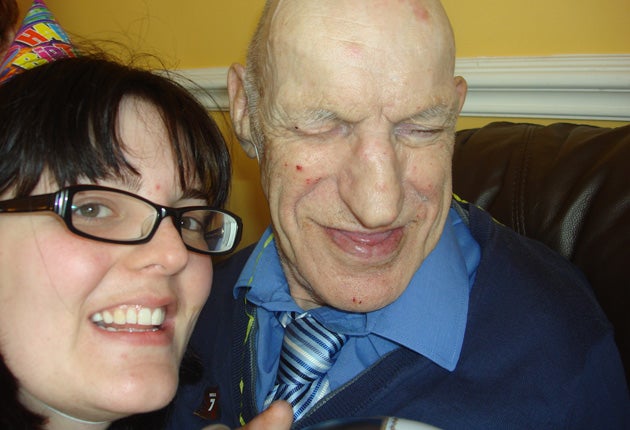
Ronnie Eaton, 76, Eaton died last year after hospital staff ignored his carer's pleas to tailor his care to his disability. He had a significant learning and physical disability and often used body language, gestures or behaviour to communicate. He was admitted to hospital with no apparent injuries, and was initially diagnosed with a urinary infection after collapsing at his care home. He had no family and was accompanied to hospital by his support worker, Laura Platt.
Ms Platt, 24, also took Mr Eaton's Traffic Light Passport, a document explaining his needs to help nursing and medical staff manage his care. Before leaving, she told staff that bed rails should not be used as they made Mr Eaton distressed and confused. She left at midnight, after she had made sure the bed rails were not being used.
During the night, the admitting nurse raised his bed rails. Mr Eaton was found in the early hours of the morning, having fallen over the side of his bed, with a cut to the back of his head. He had apparently become claustrophobic and attempted to crawl out. The next day he was moved to another ward, but staff were not told about his injury.
When Ms Platt returned she was concerned that Mr Eaton's behaviour was abnormal. Tests were taken and showed a dangerous level of neurological deterioration, and four hours later he was scanned, revealing a life-threatening brain haemorrhage. Despite having surgery, he died three days later. A coroner's inquest concluded that a catalogue of mistakes contributed to his death.
Join our commenting forum
Join thought-provoking conversations, follow other Independent readers and see their replies
Comments