Doctors to vote on industrial action in protest at changes to pensions
BMA to stage first ballot of its kind for 40 years in an angry stand-off between the Government and the medical profession as the crunch day looms for David Cameron's flagship health service reforms
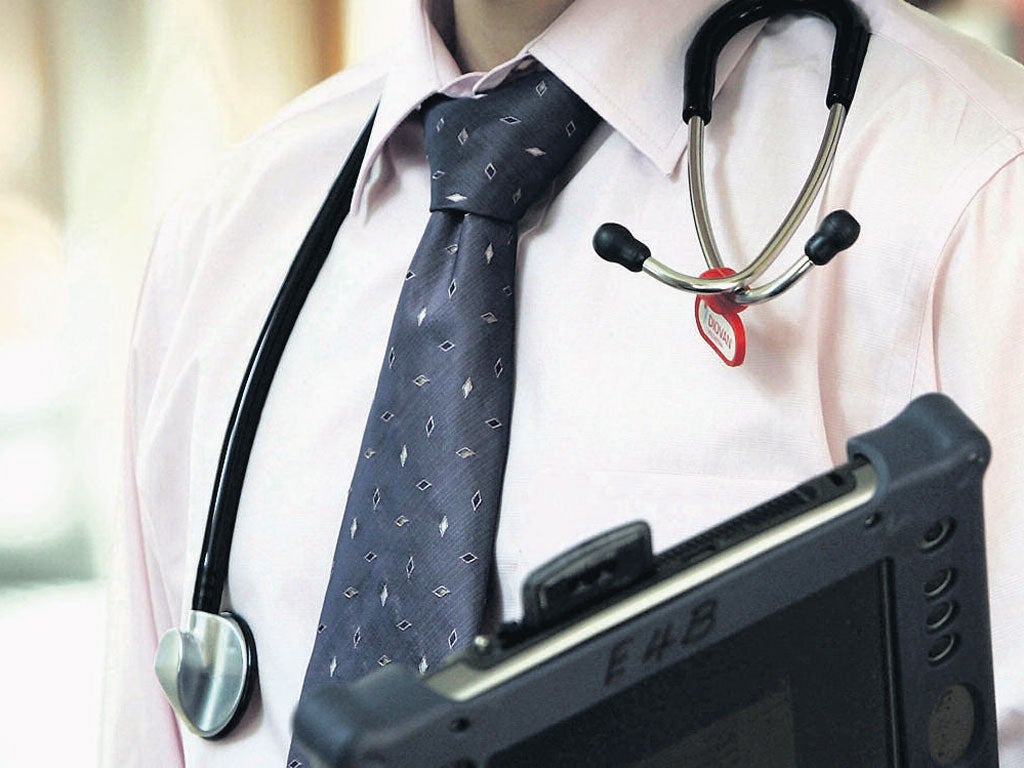
More than 100,000 doctors are to be balloted on industrial action as the stand-off between the Government and the medical profession escalates.
The British Medical Association will ask doctors whether to take action over changes to their pensions.
It is the first ballot of its kind for almost 40 years and is the latest stage in the souring relationship between the coalition and health workers. Options being considered short of strike action include a work-to-rule, a refusal to fill in forms and only dealing with emergencies.
David Cameron is already under fire for his planned NHS reforms, which have attracted fierce opposition from royal medical colleges, as well as coalition MPs and peers. This week the Health and Social Care Bill is expected to face a further drubbing in the Lords, as ministers battle to get the legislation on to the statue book.
Relations with doctors hit a new low yesterday, when the BMA announced the vote on industrial action. In January, doctors and medical students overwhelmingly rejected the Government's "final" offer on pensions, claiming younger doctors would have to pay more than £200,000 extra over their lifetime in pension contributions and work eight years longer, to 68.
Ministers argue that pensions enjoyed by doctors are among the most generous in the country, and say the lowest paid will be protected.
But doctors' leaders claim the changes go back on a deal struck with the government three years ago.
Dr Hamish Meldrum, chairman of the BMA Council, warned yesterday that the pension changes could trigger an exodus of experienced doctors from the NHS, and left the BMA with "no other option" but to ballot for industrial action.
"We've pursued every avenue we possibly could to bring the Government back to meaningful talks," he said. "With no signs of movement, we simply cannot ignore this strength of feeling by medical staff."
The pension changes affect England and Wales, but the Scottish government is to begin a similar process which the BMA believes is likely to produce the same result. Similar plans are expected in Northern Ireland. Last week, the union UCAC, which represents thousands of teachers, head teachers and lecturers in Wales, rejected pension changes and warned that further strikes could occur.
Under current rules, a full-time consultant retiring at 60 receives an annual pension of more than £48,000 and £143,000 tax-free lump sum. A doctor joining the new scheme after 2015 would face higher contributions but could expect a pension of £68,000 a year at his state pension age of 68.
Andrew Lansley, the Health Secretary, insisted it was fair that higher earners paid greater contributions. "Doctors and consultants are among the highest earners in the NHS and have benefited hugely from the current final salary scheme compared to other staff groups. Lower-earner members should not be footing the bill – that is why we have protected those on lower salaries."
The stand-off with doctors comes at a difficult time for Mr Lansley. Tomorrow, the Royal College of Physicians will hold an emergency meeting to consider balloting members over whether to support the Government's Health and Social Care Bill.
And the Bill returns to the Lords with the most controversial sections on competition in the NHS likely to be challenged. The Government is expected to make some concessions, with Lib Dem peers tabling a raft of amendments to limit the role of the private sector in the health service.
A government source said Wednesday was "crunch day", when Lib Dems will seek to cut out Competition Commission involvement in reviewing the NHS watchdog, Monitor, and exempt the NHS from EU competition law. Department of Health insiders have made clear that getting the Bill passed is the priority. "We'll do pretty much whatever it takes," said one.
The Lib Dems are demanding a "belt and braces" approach to plans allowing hospitals to earn up to 49 per cent of their income from private patients. Baroness Barker called for any foundation hospital which intends "to increase significantly its private income must have prior approval from its board of governors".
Last week the Royal College of Paediatrics and Child Health called for the Bill to be withdrawn, warning that it "carries risk for children".
GSK chief's accusation: Cancer drugs 'held back to save NHS money'
New cancer drugs are being held back from patients to allow the NHS to save money, the head of Britain's biggest pharmaceutical company claimed yesterday.
Sir Andrew Witty, the chief executive of GlaxoSmithKline, accused ministers of making false economies with "oncology drugs being systematically delayed from introduction".
He said governments across Europe had already cut drug prices by 5 per cent a year – costing GSK around £300m. "The bit I'm much more frightened about is that what's now beginning to become clear is that, in addition to price reductions, governments are delaying the approval of innovative new drugs," he told the BBC. "So a second way they can save money, they think, is 'Let's just not buy the next round of innovation'.
"If you are a minister and you need to cut costs, it is a lot easier to cut drug prices than to close a hospital or reduce the size of the Civil Service."
A Department of Health spokesman said spending on health has increased, which includes new drugs, and thousands more patients are getting access to the most advanced treatments.
Matt Chorley
Join our commenting forum
Join thought-provoking conversations, follow other Independent readers and see their replies
Comments