Dramatic advance in treatment of breast cancer
One-off radiotherapy as effective as six-week course
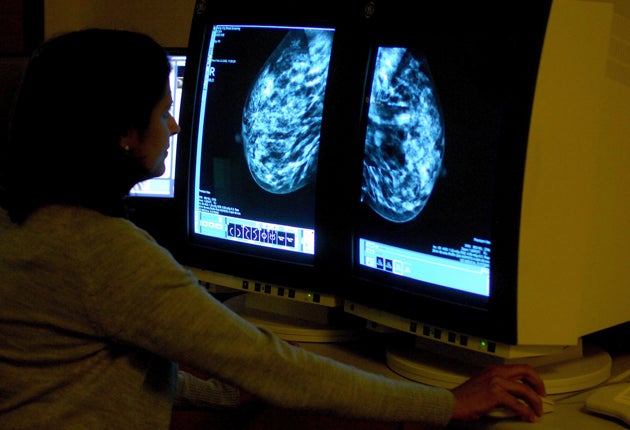
Doctors have made a dramatic advance in the understanding of breast cancer, which could shorten treatment, save the NHS millions of pounds and mean that fewer women undergo mastectomies.
The discovery gives new hope to women facing Britain's commonest cancer, whose incidence has doubled in the past 40 years. Doctors cannot prevent the disease, but they are starting to reduce the impact of the diagnosis on a woman's life.
More than 45,000 women are diagnosed with breast cancer every year and face the uncertainty, discomfort and anxiety of prolonged treatment.
For the past two decades the standard approach has been surgery to remove the lump, followed by a course of radiotherapy – lasting up to six weeks, to mop up remaining cancer cells – for women whose cancer has not spread. But there are long waiting times for radiotherapy because of the large number of women affected. There are also risks from the radiation dose unavoidably delivered to the lungs and heart, and many find the treatment exhausting.
In remoter parts of the country, women are choosing mastectomy rather than face delays and long journeys to their nearest radiotherapy centre, which may require 20 to 30 visits.
Now researchers have found that delivering a single dose of radiotherapy during the operation, directly to the affected tissue, is as effective as a course lasting five or six weeks delivered to the whole breast after surgery.
A 10-year trial involving 2,000 women in nine countries, comparing the two approaches, found the recurrence of cancer in those treated with the new method was no higher.
Jayant Vaidya, consultant oncologist and breast surgeon at University College London Hospitals NHS Trust, and the chief investigator on the trial, said: "The results change the way of thinking about breast cancer. They suggest that in selected patients the whole breast does not need to be treated and that the radiation dose can be much lower. The new treatment ... saves time, money and breasts."
Professor Jeffrey Tobias, who led the trial, said: "The reason it works so well is because of the precision of the treatment. It eradicates the very highest risk area – the part of the breast from which the tumour was removed. It is given in a single dose via a probe and surgery is extended by just 30 to 40 minutes ... The surgery and radiotherapy which would otherwise take around five weeks is done and dusted."
The results of the trial were presented at the American Society for Clinical Oncology conference in Chicago yesterday, and are published in The Lancet. The researchers estimate that by reducing the need for radiotherapy the new method could save the NHS £15m a year.
Josephine Ford, 80, was diagnosed with breast cancer in February 2008 and was successfully treated with a single dose of radiation during surgery in May 2008. She said: "It simplified everything and made the process less traumatic. I felt once the operation was done that was it, and I would be up and running. It made life much easier."
Writing in The Lancet, the authors say: "The main factors women are concerned about are tumour recurrence, the need for radiation therapy and speed of recovery. As treatment with radiation can be completed at the time of the surgery, two of the patients' major concerns are immediately addressed. Furthermore, since the risk of local recurrence is similar to that with conventional radiotherapy, this approach should effectively deal with all three of the major concerns of women with breast cancer.
"In countries such as the UK where the waiting list for postoperative radiotherapy could rapidly diminish with use of targeted intraoperative radiotherapy, we estimate savings of around £15m."
Join our commenting forum
Join thought-provoking conversations, follow other Independent readers and see their replies
Comments