IVF clinics 'are ripping off desperate couples'
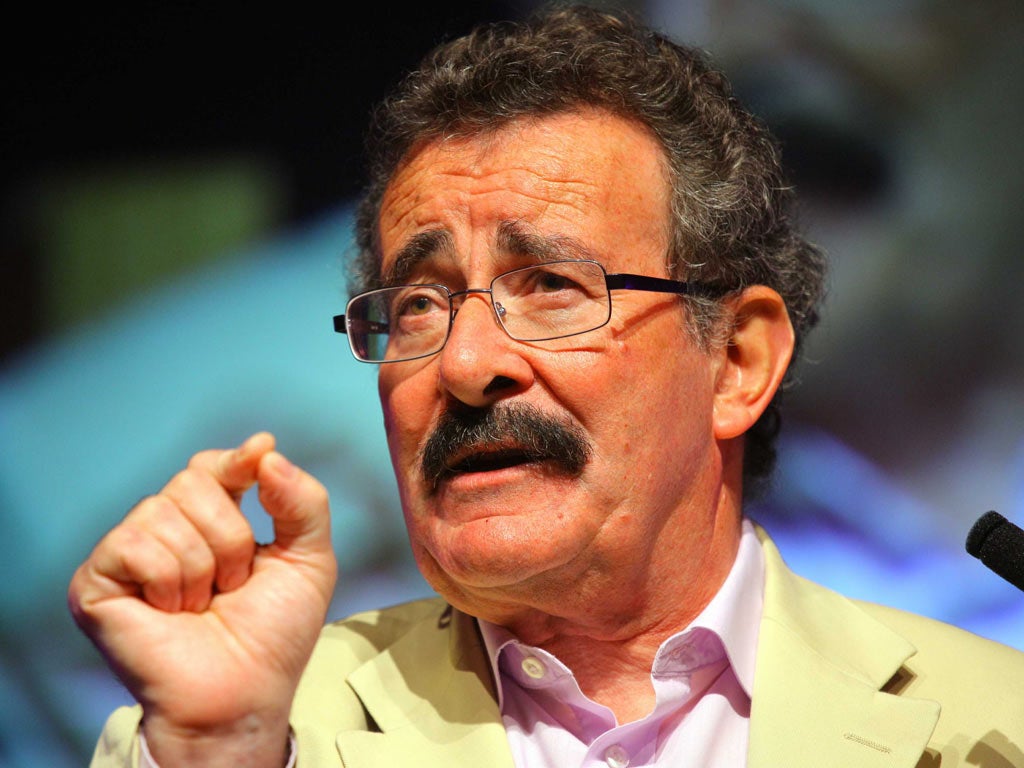
Fertility clinics are charging women who want to have children three times the actual cost of their treatment – with the NHS as guilty as private practitioners in exploiting desperate couples.
The accusation comes from the fertility pioneer Lord Robert Winston, who today launches a scathing attack on the high cost of fertility treatment in the UK and the unfettered use of expensive, unproven tests by private clinics.
The Labour peer and former head of the NHS IVF clinic at Hammersmith Hospital said there was a "huge amount of exploitation going on" and that some of the charges were a "scandal". "A combination of avarice on the part of the clinics and desperation on the part of the women is driving this market," he said in an interview with The Independent.
Figures show over 45,000 women had IVF in 2010, with 60 per cent paying for themselves and 40 per cent treated on the NHS. The National Institute for Clinical Excellence recommends that eligible women aged from 23 to 39 be offered three cycles of treatment on the NHS but primary care trusts vary widely in how closely they follow the guidance.
For the majority of patients, who must pay privately, the average basic cost of treatment is £2,500 a cycle in clinics run by the NHS and £3,500 in private clinics. The price of drugs and tests is added to the bill which can double the cost. Lord Winston said: "My view is that both NHS and private clinics are charging much more than the cost of delivering the treatment." He calculated the costs, taking account of salaries and overheads, for a large unit treating 2,000 patients a year where economies of scale meant it could carry out treatment more efficiently.
"I costed the salaries very generously and concluded you could deliver treatment for £700 per cycle. Adding in the overheads [equipment, materials, rent] takes that to £1,200 to £1,300 a cycle.
"NHS clinics are charging their private patients around £2,500 a cycle and private clinics around £3,500 a cycle. It is pure exploitation. The NHS is basing its fees not on what it costs but on what it thinks the market will bear."
He said some clinics were charging annual fees of £350 to store frozen embryos and eggs when liquid nitrogen cost 70 pence a flask and the storage costs amounted to no more than £10 a year.
"It is a scandal," he said.
Lord Winston also attacked the growing use of experimental techniques for which there was little evidence by private clinics trying to enhance their success rates. "There are no randomised controlled trials and without trials we cannot know that they work. Can you imagine going into hospital with cancer and a doctor saying, 'I am going to give you this treatment because I think it might work?'
"If you are doing experimental treatment there should be a cast-iron rule that you don't charge vast sums to the patient. What they are doing is profiting from something that has not been trialled."
Responding to the criticism, Simon Fishel, managing director of Care Fertility, the largest private provider of IVF in the UK, challenged Lord Winston to defend his own private practice at the Royal Masonic Hospital during the 1990s. "Why did he charge what he charged then? His clinic was not achieving the best success rates but charged among the highest prices."
Mr Fishel said the ethics of using new tests on patients for which there was only anecdotal evidence was one he "wrestled with". He was the first to use a screening technique called array-comparative genomic hybridisation, which led to the birth of a baby to a mother whose 13 previous attempts at IVF had failed.
"Anecdotal evidence is never enough. But you can't always start off with [better] evidence. When was sperm injection ever proven to be safe before it was introduced in the UK? The largest cause of miscarriage is chromosomal abnormality. If we can screen out embryos which are chromosomally abnormal, the patient may have a better chance [of giving birth].
"If we were paying credence to Robert Winston's view we wouldn't be treating patients and we wouldn't have won the Nobel Prize [awarded to Sir Robert Edwards in 2010 for the world's first IVF baby born in 1978]. In the end treatment must be evidence-based but it doesn't mean you have to start off from there."
Lord Winston said all the money raised from his private work had gone to charity and was ploughed back into treating NHS patients. "I raised millions of pounds. I don't think I could sleep at night paying into my personal account the large sums that women are paying for treatment."
IVF treatment conceivable changes
Getting fertility treatment on the NHS could be about to become more difficult. The National Institute for Health and Clinical Excellence is updating its guidance on infertility treatment and is due to publish new recommendations in February.
Current guidance says that women aged 23 to 39 who have been trying for a baby for a year without success should be offered three cycles of IVF. But provision for the one in seven couples in the UK which has difficulty conceiving is patchy.
Campaigners fear criteria for treatment may be tightened under the new guidelines. In addition, they say the NHS reforms which include plans for GPs to take over commissioning of services could exacerbate the existing postcode lottery.
Susan Seenan, deputy chief executive of the Infertility Network, said IVF must be commissioned nationally to ensure equality of access: "IVF treatment is the only example of an accepted medical intervention that is routinely rationed. Local commissioning of fertility services will only serve to widen this postcode lottery, further entrenching inequalities in the health service."
Case study: 'The treatment is hugely expensive'
Gill Tinsdeall and her husband Mark spent £20,000 on five failed attempts at IVF before turning to adoption. "It was absolutely shattering. IVF treatment is hugely expensive. We were able to afford it by going without things but it is a huge amount of money."
Gill, a human resources manager and Mark, who works for a water company, began treatment in West Yorkshire in 2007. She was then 34, and though one cycle of treatment was offered on the NHS, there was a year-long waiting list and they felt they could not wait. They paid around £3,000 as private patients to be treated at their local NHS hospital, but were unsuccessful. Another attempt at a private clinic led to a pregnancy but Gill miscarried.
Two failed attempts with donor eggs followed, and a final attempt, paid for this time by the NHS, was also unsuccessful.
Gill said: "The fight to get access to NHS treatment added hugely to the stress. The only thing that kept me going was the friends I met through Infertility UK. They helped me through the nightmare." Contact infertilitynetworkuk.com
Join our commenting forum
Join thought-provoking conversations, follow other Independent readers and see their replies
Comments