Pig-to-human tissue transplants 'imminent'

Trials could begin in the US within two years – but British expert warns that safety fears remain
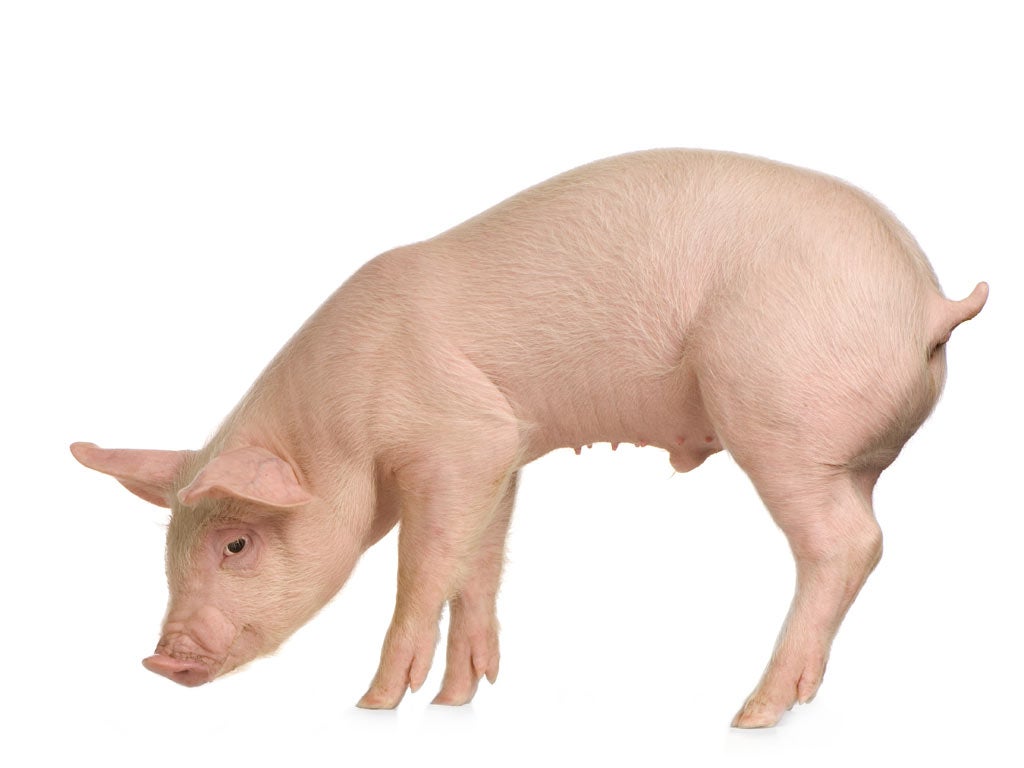
The world is on the cusp of a medical revolution which will see transplants of tissue from genetically engineered pigs to treat a range of human diseases, US scientists say today.

Click HERE to view graphic (103k jpg)

Human trials could begin within two to three years of tissue taken from specially bred pigs to help the millions of sufferers from diabetes, brain diseases and blindness.

But a British expert challenged their findings saying the safety issues were still "unresolved". The fear is that a retrovirus could jump from pigs to humans and trigger a new pandemic – HIV is thought to have started from a cross-species infection.

In a review of xenotransplantation – using animal tissue and organs to replace human ones – experts from the Thomas Starzl Transplantation Institute at the University of Pittsburgh say the technology has made "great strides".

During the mid-1990s, Imutran, a small biotechnology company in Cambridge, became the first in the world to transplant pigs' hearts into monkeys, demonstrating that cross-species transplantation was possible. However, immune system rejection problems proved more difficult than expected and safety fears dampened enthusiasm.

A decade on, attention has focused on the transplant of cells and tissues rather than organs – pancreatic islets for diabetics, brain cells for Parkinson's disease and corneas for the blind.

Problems remain, including loss of transplanted cells, blood clots and other rejection problems. New, genetically modified pigs will shortly become available which could overcome these issues and make human trials of transplanted tissue "imminent".

The US scientists discount safety fears saying retroviruses "do not pose a substantial risk".

That was challenged by Robin Weiss, professor of virology at University College, London, and an expert on retroviruses. He said yesterday: "I don't think the risk issues have been resolved. That doesn't mean clinical trials shouldn't go ahead but there would need to be very close monitoring of patients to ensure they were not picking something up from pigs."

Independent Comment
blog comments powered by Disqus
Career Services

Day In a Page

Is Ridley Scott the most macho man in movies?

Ridley Scott: The most macho man in movies?

His cinematic CV is unparalleled. Yet the Alien director is still obsessed with beating his rivals.
Being Gary Lineker: The clean-cut anchorman is this summer's Mr Sport

Being Gary Lineker

The clean-cut anchorman is this summer's Mr Sport...
Gallic gourmets are putting French cuisine back on the culinary map

Gallic gourmets put France back on culinary map

Overdone, out of touch and old-fashioned: French cuisine has never been at a lower ebb...
So Moorish: Mark Hix offers his own take on classic Moroccan dishes

So Moorish: Mark Hix's Moroccan dishes

Why not create a north African-inspired feast to share with your friends?
Sin and the single mother: The history of lone parenthood

Sin and the single mother

Maureen Paton explores the history of lone parenthood.
The outsider: Margaret Howell is British fashion's queen of minimalism

The outsider: Margaret Howell

The designer tells Susannah Frankel why she has never felt part of the fashion industry.
The 50 Best luggage

The 50 Best luggage

From chic cases to compact baggage, pack it all in this summer
For men only: A pilgrimage to Mount Athos in Greece

For men only: A pilgrimage to Mount Athos

On a secluded peninsula in north-east Greece lies an enclave that's way off the tourist map, especially for women...
48 Hours In: Faro

48 Hours In: Faro

More than just the gateway to the Algarve, this city has much to tempt you off the beach.
Here, the coast is always clear: Celebrating sixty years of Pembrokeshire's National Park

60 years of Pembrokeshire's National Park

Mick Webb reveals a land of puffins, tanks and Hollywood blockbusters.
Free Range: Meet the designers of tomorrow

Free Range

Meet the artists of the future
Feeding a hungry world – or meddling with laws of nature?

Feeding a hungry world – or meddling with laws of nature?

As scientists at Rothamsted's GM trials plead with activists not to sabotage their work, Michael McCarthy visits the battle field
Monkey meat that could be behind the next HIV

Monkey meat that could be behind the next HIV

Deep in Cameroon's rainforests, poachers are killing primates for food. Evan Williams reports from Yokadouma on a practice that could create a pandemic
Catcalls, whistles, groping: just another day for a young woman

Catcalls, whistles, groping: just another day for a young woman

Government urged to take abuse more seriously as London study shows 41 per cent are harassed
Jailing of Maori separatists stirs colonial-era resentment

Jailing of Maori separatists stirs colonial-era resentment

Militant Tuhoe tribe members defiant amid claims race relations had been set back 100 years