Public advice on suntanning may mean vitamin deficiency risk

Health bodies to acknowledge need to tan during peak hours – despite cancer risks
By Steve Connor, Science Editor

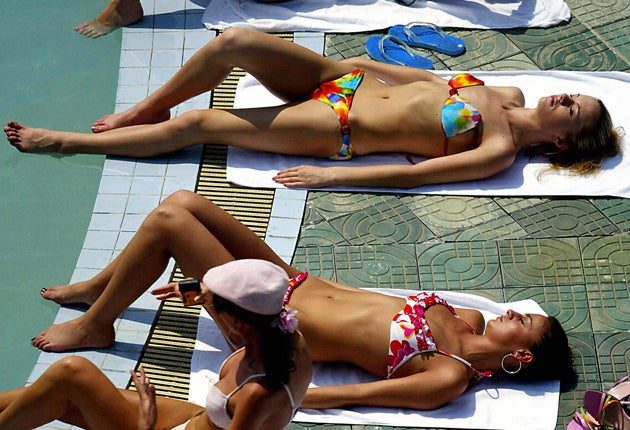
Exposure to sunlight can boost levels of vitamin D

GETTY IMAGES

Exposure to sunlight can boost levels of vitamin D

Concerns over the link between rising skin cancer rates and exposure to sunshine may have led to overly precautionary advice being given to the public about staying out of the sun at midday, according to a confidential "position statement" by leading health organisations.

The current advice to the public from the leading research charity on skin cancer, Cancer Research UK, states to spend between 11am and 3pm in the shade and to cover the skin with clothing, hats and sunscreen if out. But a confidential position statement being prepared by the charity in collaboration with other health organisations – and seen by The Independent – acknowledges the changing evidence and emphasises the importance of exposing the skin to the midday sun without any protection in order to maximise production of vitamin D.

Many experts are concerned that past advice designed to protect against skin cancer may have resulted in an increased risk of other illnesses linked to a lack of vitamin D, which the body can only produce when skin in exposed to bright sunlight. New concerns about Britain's policy on sun exposure led to this review of the evidence about the risks and benefits of staying in the shade and covering up during the sunniest part of the day.

The confidential document, seen by The Independent, says: "The time required to make sufficient vitamin D is typically short and less than the amount of time needed for skin to redden and burn. Regularly going outside for a matter of minutes around the middle of the day without sunscreen should be enough. When it comes to sun exposure, little and often is best. However, people should get to know their own skin to understand how long they can spend outside before risking sunburn under different conditions."

The wording of the draft document is being seen by come commentators as a tacit admission by Cancer Research UK that it had got it wrong in the past about telling people to avoid the midday sun, to apply sunscreen and to stay in the shade in order to avoid exposure to the cancer-causing rays of the sun.

"Cancer Research UK is working on a new position statement on vitamin D and sunshine which it expects to agree with other health organisations," said Oliver Gillie, a health writer who has championed the case for vitamin D. "Their new position is expected to break with 20 years of advice to seek the shade and is expected to suggest that people go out in the sun in the middle of the day for at least a few minutes. Several health bodies have agreed to the wording but others are still discussing the details."

Organisations such as the British Heart Foundation, the Multiple Sclerosis Society, Diabetes UK and the National Osteoporosis Society are discussing what their public position should be on sunshine and vitamin D in the light of several new studies suggesting a link between various illnesses and a chronic lack of the vitamin.

The draft position statement says: "Cancer Research UK's SunSmart campaign encourages people to enjoy the sun safely and avoid exposures that lead to sunburn. However, for most people, sunlight is also the most important source of vitamin D, which is essential for good bone health.

"It is important to ensure that skin cancer prevention messages are balanced with the need to make enough vitamin D, and reflect the latest scientific evidence." Sara Hiom, director of health information at the charity, said that the draft consensus statement has not yet been finalised, agreed or released. "It is not our advice to the public and should not be interpreted in that way," Ms Hiom said.

"Even once we reach a consensus we will not be advising the public to go in the sun in the middle of the day without sunscreen. This is because, for some people – those most likely to be at risk of skin cancer – a few minutes in the middle of the day is enough for them to burn and cause serious and lasting skin damage.

"The very fact that messages around safe sun exposure times cannot be generalised to the population means that our advice needs to be general and is, and will remain, to enjoy the sun safely, spend time in the shade around midday and know your own skin type."

  • gillyp
    The UK RDA is I think 200 IU per day - it has been known for years that this is woefully short of what vitamin D experts recommend - ie a minimum of 1,000 IU per day! Loads of research exists to prove that these levels are safe and yet even at 1k IU per day you may not have sufficient levels - the sun is by far the best way of getting your vit D- and it only needs to be a few minutes at mid-day during May-September (our northern hemisphere position means the sun isn't strong enough outside of those months) to get the levels going - but then again we don't get enough guaranteed sunshine on a daily basis during those months either - hence large vitamin doses - which is fine or alternatively - 2-3 mins a couple of times a week on a sunbed.
  • gillyp
    Yes - completely! It's impossible to get sufficient vitamin D from a regular diet - even eating oily fish 2-3 times a day won't do it! Fortifying milk etc may help - but that's not on the agenda as far as I'm aware?
  • gillyp
    What is bizarre is that the UK adopted the Australian SunSmart message in the first place - it's not comparing like with like at all - the sun is much stronger in Australia, much of the important UVB for vitamin D production is filtered out in that neck of the woods. It's about time CRUK and other northern European countries changed their advice. The problem is there's too much conflicting advice and mis-informed advice being given from everything including suncreens, sunbeds, acceptable vitamin D levels etc etc. Vitamin D deficiency in the UK is costing the NHS £billions annually - it's about time someone got hold of this in Government if they are seriously committed to reducing deficit - let alone saving lives!
  • kaefer71
    It is not surprising that Cancer Research UK wants to change its recommendation regarding exposure to mid-day sun. Surprising, however, that it has taken so long. A Vitamin D deficiency may cause other problems, such as rickets in growing children, osteoporosis in older people, problems with the heart and the nervous system and with blood clotting. Vitamin D is also supposed to protect from cancer.

    As someone who had a 4 mm deep malignant melanoma (the most dangerous form of skin cancer) removed six years ago in Scotland where I had lived for over 10 years, I have never been entirely convinced that exposure to the sun is the main cause of skin cancer. My skin type is Mediterranean, my hair was dark brown when younger, I have always disliked baking in the sun for hours and took few holidays in countries with strong sunshine. And yet, one of the Scottish doctors treating me wrote in my medical notes ??that [I] was a keen sunbather in [my] younger years?, a statement which clearly did not come from me but probably is now incorporated in an official statistic which is supposed to prove ?how bad sun is for you?. So, why did I have a melanoma? Why do people have melanomas in places where they have never been exposed to the sun? I am not medically trained, but would, nevertheless, suggest that there must be a number of other factors which cause a melanoma: depletion of the ozone layer which was particularly severe at times over Scotland during the years 2000 to 2004 (in one year the authorities even gave out a warning in early Spring when the depletion was at its worst) when I was still a very keen gardener, environmental pollution of all kinds - including fall-out from nuclear plants of which there were three not too far away from us in S.Scotland, and one army training area (no more than 4 miles away) using depleted uranium shells - genetic disposition (although I am the only member of the family to have had a melanoma), overhead powerlines (three within a distance of 1/2 mile from our house), weakened immune system etc., etc. Since the cancer diagnosis I have continued to live as before: Shortish bursts of sunshine (even midday), often without applying sunscreen, a healthy lifestyle, additional vitamin D. Thankfully, during the six years since the diagnosis there have been no further secondary melanomas nor metastases. And I now live in Germany since 2005 without a depleted ozone layer, power lines, nuclear plants etc.
  • allenn007
    Seems the advice was always too cautious for this country. We don't get hardly any sunshine and then they tell you to stay out of it. It is perfectly natural and essential that the body is exposed to sun. Sitting in the sun for an hour or so is fine, but stripping and spending all day sunbathing is clearly stupid.
  • the_electrician
    I thought that the average, modern diet contained enough daily Vitamin D. Have I misunderstood that?
  • How many people actually avoid going into the sun at midday? How many people put on sunscreen properly? I can't help but think that this "warning" is purely based on theory, not on practice.
  • iancpurdie
    Vitamin D doesn't require long exposure to sunlight. Coming from the skin cancer capital of the world I can tell you there is some dodgy advice being given here. None of it would be supported by skin cancer specialists in Australia. For confirmation, ask my legs, arms, face and particularly my ears where a large Basal cell carcinoma was removed several years back. I was very lucky it was the lowest level. I have had many friends die of melanoma. As the OZ health ads say "Slip, slop, slap" [sunscreen] and cover head, neck and arms. In the work place that's compulsory for outside workers. "Health bodies to acknowledge need to tan during peak hours ? despite cancer risks" Don't you believe it.
  • iancpurdie
    Requires a very modest amount of daily sunshine. Sun bathing doesn't come under the heading of "modest".
  • WaywardPython
    The critical statement to this piece is CRUK's spokesman Hiom stating: "It is not our advice to the public and should not be interpreted in that way."

    The amount of time needed for the synthesis of Vit.D is actually very small, a few minutes is sufficient, and certainly far far less than the time needed to develop a tan. The time needed will vary dependent on skin tone. For the particularly fair skinned a few minutes could be excessive and result in skin damage. For the darker skinned it will be insufficient to trigger Vit.D synthesis. In addition we also have cultural factors of some groups where exposing skin outdoors is discouraged. Inferring that the public is being put at risk and placing pictures of sunbathers against this piece is certainly what I expect from the Daily Fail. Avoiding discussion on the cultural and racial factors is what I expect from the Guardian. Misrepresenting scientific opinion is not what I expect of the Independent.
  • iancpurdie
    Additionally, seriously consider this. The mother of one of my grand-daughter's best friend died at age 38. A deadly melanoma in the sole of her foot. That was what motivated me to see the skin cancer specialist. Had I neglected that BCC for a few more months I wouldn't even have a right ear or perhaps even worse. On reflection I can't believe this faulty, misleading advice is being given.
  • zandeman
    If I'm eating outdoors in the sun or sitting outdoors on holiday, I always sit under some sort of cover. Irish skin you see.
  • dinsdale_piranha
    what chance have we got when we receive contradictory "medical advice" every bloody week ?
  • 360_degrees
    You've got to laugh at the Independent when it posts an inaccurate report such as the "What really happens when the UK deports failed asylum-seekers", full of one sided reporting and bogus allegations of secret flights but is then so uncertain of its case that it forbids comments! No this is not the stuff of "investigative reporting" Indie, this is the stuff of campaigning for a pet cause. Not the same thing at all.
  • kodak321
    What about vitamin pills? I take a mutivitamin daily. They claim 100% rda for vitamin D. If they work, why haven't they been mentioned/promoted as a safe substitute?
  • Lucy1977
    Sitting in the sun for an hour or so might be fine with your skin type, but with my very sun-sensitive skin I can burn in 15 minutes in the middle of the day, even in the UK. People are different, that's why it's so difficult for organisations like CRUK to give advice on this sort of thing. Having said that, it doesn't take a genius to work out how long your own skin can cope with being in the sun without getting damaged (i.e. not changing colour - either sunburn or a tan implies skin damage). I think we just need to be told clearly that we shouldn't allow the sun to cause our skin to change colour, and then let people use a bit of common sense to work out how they personally need to behave to achieve this, it's not rocket science!
  • allenn007
    Most people won't burn in the sun in the UK from sitting out for an hour, so you may be an exception if you burn after 15 minutes. Midsummer is the time to be more careful than the rest of the year for example. You also have to look at the balance between the requirement for Vitamin D and any perceived damage caused to your skin. It seems the problem is a shortage Vitamin D caused by people scared of any exposure to the sun, even those that don't burn easily.
  • Do_they_get_it
    Cancer research UK may have got it wrong but how many people listen to them anyway??? These charities can do good work but have a good look at how much money they consume in the form of "administration" and the sums are astonishing! I wonder did they change their stance after a long term study costing £££? They raise hundreds of millions of pounds to be used on research etc and then the ever so cost effective NHS doesn't even use the most effective techniques, drugs and equipment because it costs money. Well of course it does! That's why it gets such good results. The US has about 15 proton accelerators for treating the most difficult to cure cancers, we've got just one but try and get your consultant to even mention it and you'll be doing well. Lets be clear, you get treated with these machines or you are DEAD. Consultants will go on about the disastrous effects of non getting enough funding from large charities to do further research, um..... Have a look at this extensive wine list from the website of the Royal college of Physicians and Cameron says that the NHS budget shouldn't be touched. Yes these people are almost on their last legs financially speaking. It's whole new world out there. http://www.rcpevents.co.uk/CateringMenus/Pages/Winelist.aspx nice isn't it? We treat people that are dragged into A&E completely out of their heads on alcohol or drugs but one women in my home town of Preston, Lancs had her breast cancer treatment rejected that would have only cost £3,000! People were sending in donations to get sorted out! Sorry, how much do Cancer Research UK raise per year?? Well their income was £498 MILLION!! for 2009. They are doing amazing work. Doctors for reform, most of whom are employed by the NHS, say that ten of the best anti-cancer drugs that are available in Europe, just aren't available on our wonderful NHS and so it goes on... and on.... Some consultants have even told patients to go home and rest because they cant do anything more for their patients but when getting second opinions from private consultants, the consultant has said "what were you told!!" there conditions were treatable and went into full remission! eg Mr hussain, I believe was under Bournemouth PCT and then there was the young lady in London with cervical cancer she was told the same thing. How many times has this happened?? We don't know because dead men cant talk! Labour more than doubled spending on the NHS but where did all the money go???? just the GP overspend is running at £600 million per year. GPs average sallaries are now around £110,000 per year and many consultants are on£200,0000 per year. Add to all this, the various levels of management and its not hard to see where its gone is it?
  • collinbrown
    Here's something the media is less than keen to talk about: Africans, living in shady climates - such as Britain, are at high risk of developing Rickets disease unless they supplement their dietary intake with vitamin D.
  • conan_drum
    No one has mentioned the situation of Muslim women wearing the type of garments they often do. How do they make their Vit D?
  • Lucy1977
    I agree that I do have exceptionally sun-sensitive skin (I once got sunburnt on a very sunny day in February in the UK, although I was working outdoors for about 8 hours that day, not 15 minutes!). I also agree that you have to be more careful at certain times of the year or certain times of the day. I also agree that there's a balance between getting your Vitamin D and skin damage, as I said before it's all about common sense. For example, if I go for a walk in my lunch hour at this time of year, I'll choose a route that's mostly in the shade, a little bit of sun exposure for a few minutes during part of my walk is fine, but I need sunscreen if I'm going to be in the sun for a large part of the walk. In contrast in the evenings I can spend longer in the sun without worrying about getting burnt. Someone with less sensitive skin could adapt their behaviour to their own skin type - if their skin is less sensitive to the sun they might need to spend longer in the sun to get their Vitamin D.
  • conan_drum
    The sun is the same everywhere, the intensity depends on the season and the time of day. Where the days are more uniform and there are no seasons as we know them, as in the tropics there is obviously more exposure. Cloudy skies will give you sunburn as well as sunny skies.
  • kodak321
    Thank you. I believe I'm taking 5 micrograms which is equal to 200 IU....but I actually take four pills per day...
  • Do_they_get_it
    Vitamin D deficiency, its usually a lifestyle issue. A good example was a cluster of 42 women living in Burnley that went down with rickets but that was because they were wearing the burka! Yes it was their right to wear whatever they wanted but mother nature bit back and anyway this tradition as most muslims will tell you, unless you live in some of the most poorest and run down areas of northern working class towns, is not Islamic, it pre-dates Islam and goes back to the nomadic traditions of the Arabian countries.

    However you have to feel for the Scots because they get such high levels of rain and cloud that they tend to suffer from vitamin D defficiency, well at least they got the oil.
  • gillyp
    If you are taking a multi-vitamin pill - taking 4 of these a day could well mean you are having too much vit A which would not be good! I suggest you check this out!
  • Do_they_get_it
    In short, women that wear say for example the burka, just can't synthesize vitamin D. The only thing that stops them from going down with rickets is a diet that is rich in vitamin D or by taking supplements. They only get away with it in the middle east etc because the sun is so intense in those countries that even the small amount of exposure that their hands get is enough to keep them well. They may also take off these garments when sitting at home in their courtyard or private walled garden in the heat of mid day.
  • kodak321
    Thanks...I will..
  • You get more sun when you go out later in the day, it hits your whole body broadside.
  • kodak321
    Surely, the same thing occurs earlier in the day??
  • Recommend good website http://www.nike-alliance.com Discount activity 40%discount Supply . Air Jordan Shoes.All kinds of goods. Fast Shipment.5-7 days you can receive your order product. No min order request.You can order only one product Free Shipping.The price on our website are including everything. Let me introduce CHAOYUE. CHAOYUE is CHINA registered company, we are located in CHINA and Australia, website is http://www.nike-alliance.com nike-alliance,Inc. We are the best online dealer,about all kinds of nike.run retailing and wholesale trade wordwidely for years. Free Shipping And Customs,Super Sale Off Retailing,With 1Week Delivery to your door. (nike-alliance).(com) hjlkj
  • banscience
    err yeah but it comes through more of the atmosphere
  • WaywardPython
    "Public advice on suntanning may mean vitamin deficiency risk" What complete rubbish and not supported by either the article or current medical opinion. But when has a national newspaper ever been right on medical advice? This is just another fine example in the long tradition of mainstream journalism never letting the facts get in the way of a story / 2000 words. Ionising radiation from sunlight is the main way in which the body synthesises vitamin D. You do NOT need to tan for synthesis to occur and the greater the pigment in the skin the greater the synthesising effect of the sun is inhibited. In fact exposure to more sun simply results in the Vitamin degrading as fact as it is generated. Words describing how ridiculous this article is are truly unprintable.
  • Kashpot
    This is precisely the problem - it is not 'fine' to sit in the sun for an hour - for some people with certain skin types, perhaps, but for others - 60 minutes of direct exposure, particularly for pale skins, can have painfully red repercussions. I think people should stop moaning about how we hear a different thing every day: we don't, we just live in a scientifically progressive community! Medical/health recommendations have to keep up with advancing research and new findings which, if anything, supports their intergrity rather than undermining it. Having said that, it is usually, though not always, the case that knowing your own body, your skin type and reactions is a pretty good indicator of how long you should or shouldn't spend in the sun. Nonetheless, we should at least give the experts a chance to look out for things that we may not ourselves be familiar with, and introduce guidelines to help us look after ourselves to the best standard possible.
  • flydlbee
    They don't; they have a problem there. The local library used to be full of leaflets in Arabic explaining about the risks.
  • Al the scientific information needed can be found here: http://bit.ly/9Hg7NE
  • geminibooney
    I am suffering from osteomalacia, the adult form of rickets, and so have been taking up to 10,000 iu vitamin D3 per day to get my 25OHD into the middle to upper end of the normal range. Sufficiency is not good enough. It used to be for just bone health, but now we know we can protect ourselves from many other chronic diseases by getting our levels between 50ng/ml and 80 ng/ml. See vitamindcouncil.org.

    One benefit of having a good level of D3 in your blood stream is that you can spend more time in the sun without burning. Many people have noticed this. My family is full of red heads and fair skin and now that they are taking D3, they are not burning straight away and are actually developing light tans!
  • I have been an active tanner since as long back as I can remember and since I lately also have made this my passion also my occupation, I have thoroughly studied a lot of information about both indoor and outdoor tanning. You can find some of my conclusions in my blog at: thetanningguru.com. There is a post where i draw exactly the same conclusions about when (and where) to tan for optimal UVB, like in this article. And there is also a post describing how some of the largest cosmetics companies have managed to create a 30 billion US$ market by scaring us away from the sun. Please note that everything negative about sunlight and its effect on our bodies comes from ABUSE of the wonderful, natural and renewable source of health, and if the same amount of money would have been spent on advice of how to best use UV-light (from the sun or from a solarium), we would have been able to minimize the risks and maximize the health benefits a long time ago.
  • I'd like to slip, slop, slap them across the face!
  • DrFlinton
    I have learned an important thing until this time of my life. Nothing comes just with advantages. Staying in the sun can increase the natural metabolic production of vitamin D, but don't forget that the ozone layer has grown short in the past 20 years and other polluting factors have appeared as well. ___________________________________ discount health supplements

Free gym pass

Get fit for summer with Fitness First gyms in London

Download a free gym pass from Fitness First today

Article Archive

Day In a Page

Sun | Mon | Tue | Wed | Thu | Fri | Sat

Select date