Public outcry at health reforms forces Cameron to back down
The U-turn reflects the demands of Nick Clegg for the Lansley blueprint to be watered down to one his party can back
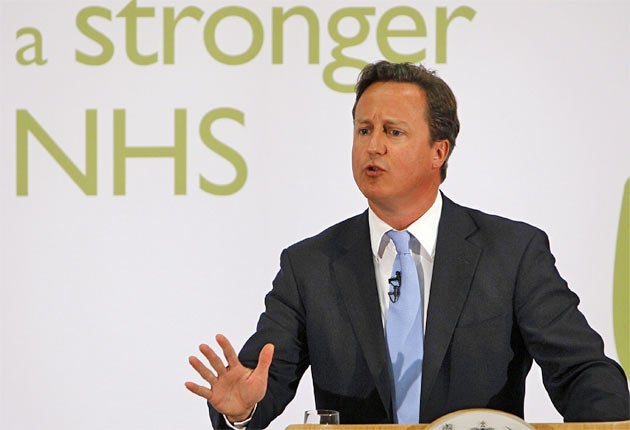
David Cameron announced a huge climbdown over NHS reforms yesterday as he tried to halt a slide in public confidence in him and his party on health.
In a startling U-turn, the Prime Minister unveiled a raft of concessions to critics of the reorganisation proposed by the Health Secretary Andrew Lansley. Speaking in London, Mr Cameron disclosed that:
* Plans for GPs to commission services will be replaced by "clinically led commissioning" involving hospital doctors and nurses as well;
* Monitor, the regulator designed to promote competition inside the NHS, will now have a duty to "integrate" health services to allay fears of back-door privatisation;
nLocal commissioning will go ahead only when groups of GPs are "good and ready", scrapping Mr Lansley's April 2013 deadline for the shake-up;
* New "clinical senates" will allow groups of doctors and healthcare professionals to oversee the integration of care across a wide area.
He also promised that the 18-week maximum wait between GP appointment and hospital treatment brought in by Labour would be kept. And he pledged that the NHS budget would rise in real terms even if inflation remained high, which could put new pressure on other government departments to make cuts.
Although Mr Cameron denied he was pre-empting the review of the reforms by the NHS Future Forum of outside experts, the group's report next Tuesday is expected to reflect yesterday's announcements. His speech could create further tension between him and Mr Lansley, who has seen the reforms on which he has worked for several years filleted – when his NHS and Social Care Bill had almost completed its passage through the Commons. Downing Street was confident he would back the changes and not resign.
Mr Cameron's U-turn also reflects the demands of Nick Clegg for the Lansley blueprint to be watered down. It showed Mr Cameron's determination to gain the credit for the changes rather than allowing Mr Clegg to reap the political benefit. Last night the Deputy Prime Minister gave an upbeat progress report to the weekly meeting of Lib Dem MPs and peers, saying the Government was now "in the right place" on the reforms. Although some details remain to be settled, he is confident that next week's package will be one his party can back and intends to join forces with Mr Cameron to "sell" it to the public.
Mr Cameron promised that "fair competition" would not result in private firms "cherry picking" the most profitable NHS work and said they would have to contribute to the cost of training NHS staff.
"Monitor's main duty is to protect and promote the interests of people who use healthcare services and it will use competition as a means to that end," he said. The regulator would support integration between GPs and hospitals; between mental and physical care and between health and social care.
Councillors were unlikely to sit on local commissioning bodies but would join "health and well-being boards" including representatives of the main health professionals.
Mr Cameron faces criticism from some Tory MPs for making too many concessions. And Ed Miliband accused him of being " in a panic" about the reforms and warned that they would divert hundreds of millions of pounds away from patient care.
The Labour leader offered to work for an all-party consensus on social care. "Let's get round the table, work in the national interest, towards real change which addresses one of the big long-term problems in our country," he said.
Join our commenting forum
Join thought-provoking conversations, follow other Independent readers and see their replies
Comments