Smoking will 'kill up to a billion people worldwide this century'
Governments must do far more to control the global tobacco industry, say cancer experts
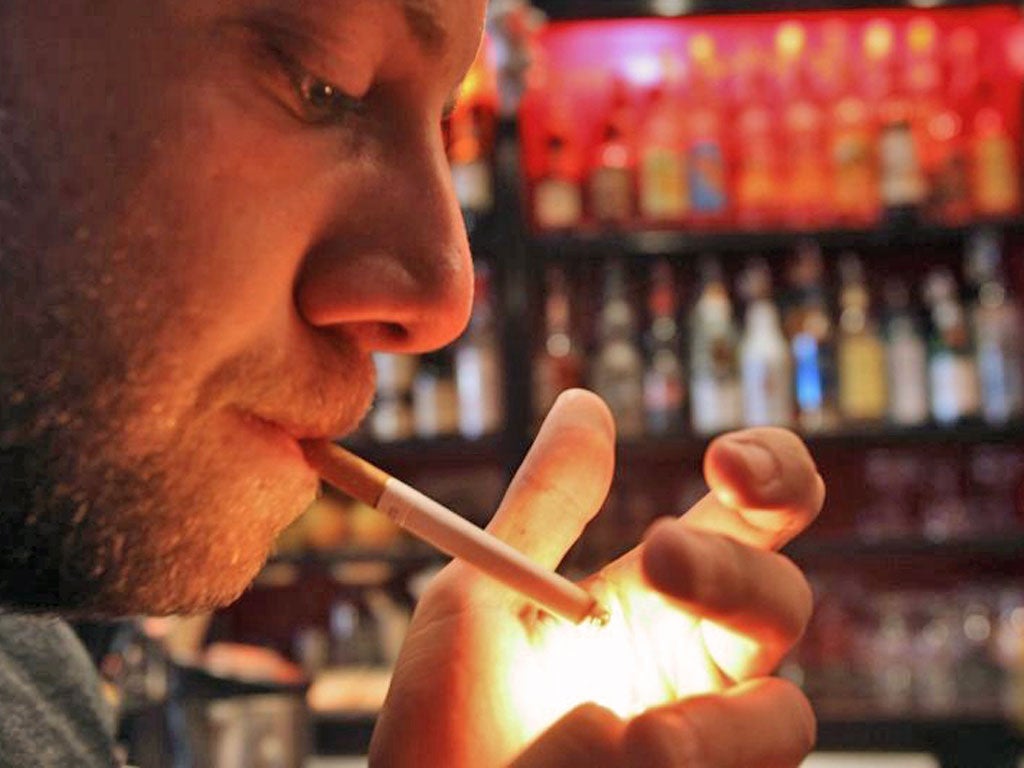
It is described as the biggest public health disaster in the history of the world, with its perpetrators likened to terrorists. Smoking will kill up to a billion people worldwide this century, unless governments across the world stamp down on the half-trillion-dollar tobacco industry.
These are the words of John Seffrin, chief executive of the American Cancer Society, who was speaking this weekend at a high-level forum of the world's 100 leading cancer experts gathered in the Swiss resort of Lugano, who issued a stark warning to governments worldwide. They said governments must do far more than they have done to control the global tobacco industry, either by raising cigarette prices dramatically, outlawing tobacco marketing or by taxing the multinational profits of the big cigarette firms.
Smoking kills more than half of all smokers, mostly from cancer, and yet despite it being the single biggest avoidable risk of premature death, there are about 30 million new smokers a year, scientists have calculated.
If current trends continue, with cigarette companies targeting the non-smoking populations of the developing world, then hundreds of millions of people will be dying of cancer in the second half of this century, they said.
Some of the experts attending the World Oncology Forum went further by calling for an outright ban on cigarettes and for the tobacco industry to be treated as a terrorist movement for the way it targets new markets with a product that it knows to be deadly when used as intended.
"We have a major global industry producing a product that is lethal to at least half the people who use it. It will kill, if current trends continue, a billion people this century," said Dr Seffrin, who leads the US national society dedicated to eliminating cancer.
"It killed 100 million in the last century and we thought that was outrageous, but this will be the biggest public health disaster in the history of the world, bar none. It all could be avoided if we could prevent the terroristic tactics of the tobacco industry in marketing its products to children," Dr Seffrin told The Independent.
"There is a purposeful intent to market a product that they know full well will harm their customers and over time will kill more than half of them. The industry needs to be reined in and regulated," he said.
The science showing that tobacco is the single biggest cause of cancer is now well established, following the publication of the earliest evidence in the 1950s by the late Sir Richard Doll, the Oxford epidemiologist who was born 100 years ago yesterday.
Worldwide, tobacco causes about 22 per cent of cancer deaths each year, killing some 1.7 million people, with almost 1 million of them dying from lung cancer. Yet the numbers of new smokers among the young is rising faster than the numbers giving up.
The latest study into the health effects of smoking, published last Saturday in The Lancet, involved 1.3 million women. It showed tobacco is even more dangerous than previously supposed, but the benefits of giving up smoking are greater than expected.
Sir Richard Peto of Oxford University, a co-author of the Million Women study who worked closely with Sir Richard Doll, is also the scientist who first calculated how many people this century will die from tobacco-induced cancers. "We have about 30 million new smokers a year in the world. On present patterns, most of them are not going to stop, and if they don't stop, and if half of them die from it, then that means more than 10 million a year will die – that's 100 million a decade in the second half of the century," said Professor Peto.
"So this century we're going to see something like a billion deaths from smoking if we carry on as we are. In Europe we have about 1.3 million premature deaths per year now, of which about 0.3 million are deaths by tobacco. There's nothing else as big as that," he added. "If you put all causes together, you wouldn't get a total that's half of that caused by tobacco, and tobacco kills more people by cancer than other diseases. Smoking is still the most important cause of cancer… If you smoke a few cigarettes a day, it will be the most dangerous thing you do."
European countries need to raise cigarette prices significantly because this is the one proven method of reducing consumption, Sir Richard said. They should adopt a "triple-half-double" strategy, which was tried in France in the 1990s, when cigarette prices were tripled, consumption halved and the tobacco tax revenues to the French government doubled.
"The governments of Europe desperately need to be able to raise taxes and to do so in politically acceptable ways. Doing it for health reasons, by tripling the price of cigarettes and halving the consumption, is a way of doing both," Professor Peto said.
"If we are talking of prevention in Europe then a quarter of all cancer deaths are due to tobacco. In many countries, the numbers of women dying of tobacco are rising."
Asked whether a policy of tripling cigarette prices would hit poor smokers harder than the rich, Sir Richard said: "They are hit hardest already. Almost half of the social inequality in death is tobacco deaths. If you can help them to stop, then you are doing them and their families a favour."
The World Oncology Forum, organised by the European School of Oncology, agreed governments must do more to combat tobacco marketing, especially when directed at younger non-smokers. One suggestion was that the profits of multinationals should be taxed globally so they cannot exploit national differences in revenue collection. There was agreement among the experts that more legislation and controls were needed to stop the "global scandal" of tobacco marketing.
Professor Paolo Vineis of Imperial College London said the developing world will see an explosion in cancer in the coming decades as the disease suffers from "globalisation" caused in a large part by smoking.
"It is a scandal that tobacco is the biggest risk factor for cancer, and that more people will be smoking next year. And yet we know that some things will make a really big difference at very little cost," Professor Vineis said.
Stubbing out: France
The French government implemented a series of sharp price rises for cigarettes in 2003 and 2004 in a bid to slash the numbers of smokers. The rises pushed up the price of smoking by 40 per cent and led to nearly 2 million quitting smoking in France. The Government also introduced legislation to prevent the sale of cigarettes to children aged under 16. This month, François Hollande's government is further hiking the price of tobacco by 6 per cent, following similar rises in the past two years. Other measures planned include a €200 million tax on tobacco companies, extending no-smoking zones, introducing blank packets and more health campaigns.
Join our commenting forum
Join thought-provoking conversations, follow other Independent readers and see their replies
Comments